
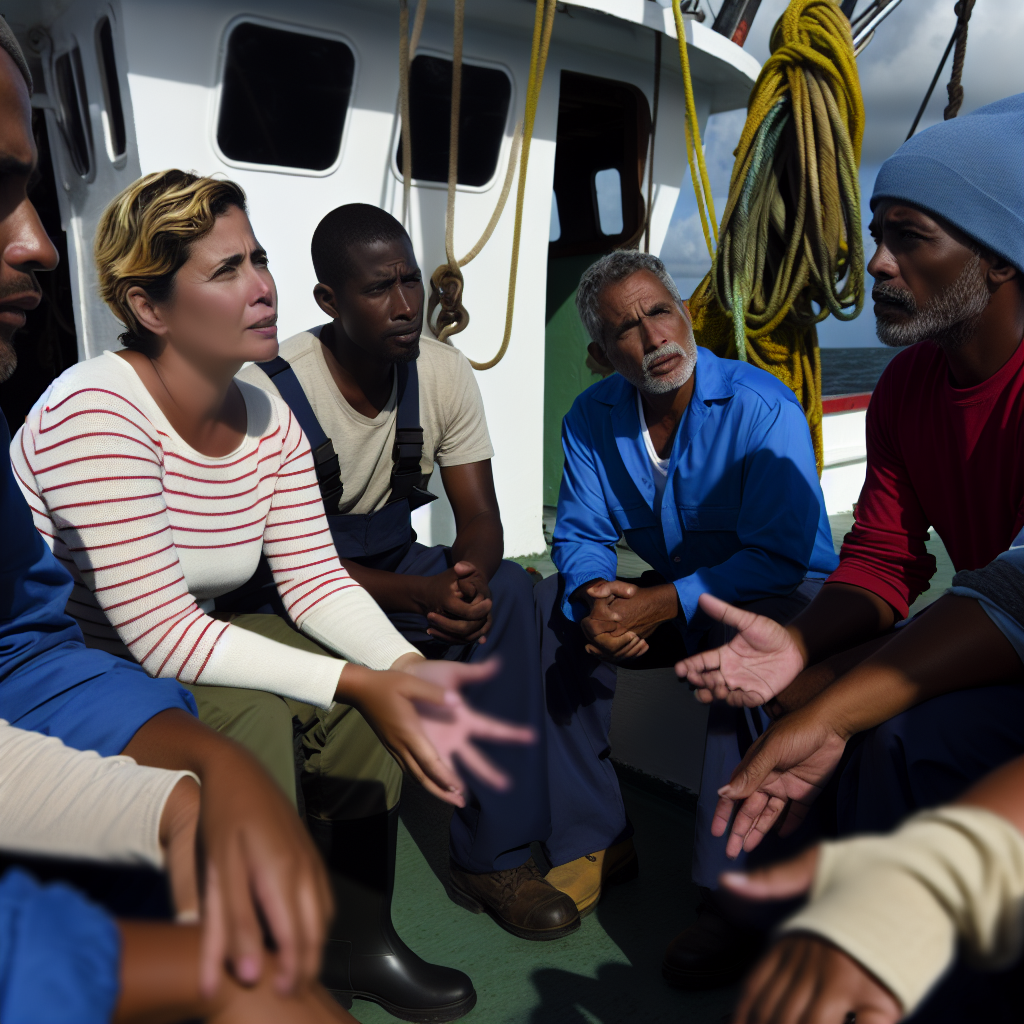
The Arctic has earned its title as “climate change’s ground zero,” prompting an urgent focus from researchers and biologists on the effects of rising temperatures on both nature and wildlife. Yet, amid all this scientific inquiry, it’s crucial to hear from those who inhabit this region daily. How do they perceive the shifting climatic landscape around them?
A recent report titled “Reports on the Cod Fishery,” developed by the Department of Fisheries in collaboration with industry experts, provides valuable insight into local perspectives. Coastal fishermen were asked about the factors they believe have the most significant impact on cod populations. Remarkably, 35 percent identified climate change as the foremost concern. This was followed by whale populations and issues related to lost fishing gear. The department notes that the predominant response referencing climate indicates a perception among fishermen that it plays a major role in shaping the future of the cod stock.
The report also sheds light on fishermen’s observations regarding fish size over the past year. Of the 190 respondents, 59 percent felt the fish were similar in size to last year, while 26 percent perceived them to be larger and 15 percent thought they were smaller.
Ice conditions, crucial for cod fishing, were another point of discussion. The survey sought to gauge how fishermen perceive changes in ice coverage compared to one year and five years ago. Results indicated that 30 percent of respondents believed there was more ice last year, 37 percent noted no change, and 33 percent felt there was less ice. When reflecting on conditions from five years prior, the responses mirrored this trend, suggesting a general stability in ice conditions with a slight inclination among fishermen to remember a time of greater ice presence.
The Department of Fisheries emphasizes that this survey marks a significant first step in blending local knowledge with scientific data, aiming to enrich the understanding of coastal cod fisheries. They plan to make this survey an annual endeavor, asserting that ongoing data collection will offer a more nuanced understanding of the coastal cod fishery’s dynamics. This declaration can be accessed on the self-government’s official website, highlighting the commitment to integrating community insights into broader environmental discussions.