
Closed Meeting of the Greenland Committee Delves into Defense Settlement Sub-agreement 2
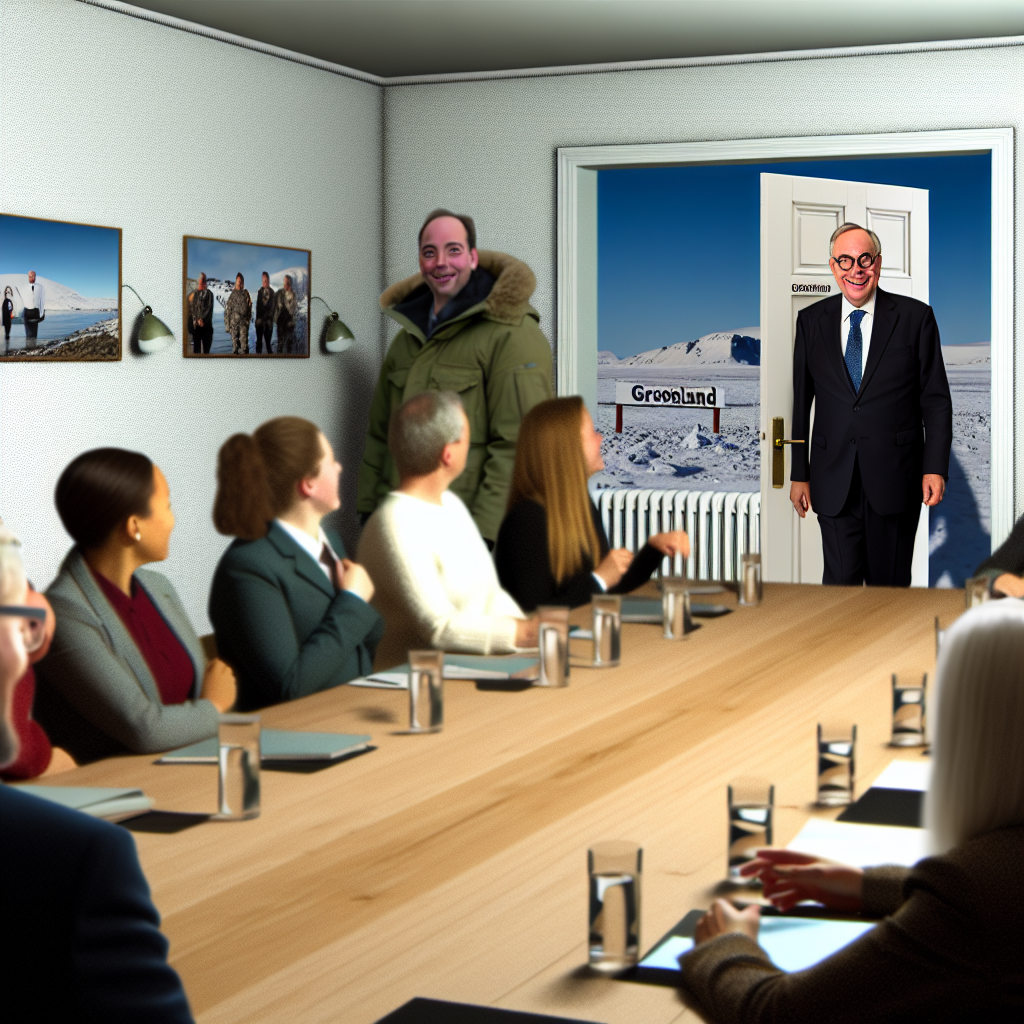
On Wednesday afternoon, a closed-door meeting of the Greenland Committee convened at Christiansborg to discuss Sub-agreement 2 under the defense settlement. Attendees included experts from the Defense Academy and the Minister of Defense, Troels Lund Poulsen.
A Full House of Stakeholders
The session attracted a diverse group, featuring members from both the Naalakkersuisut’s foreign and security policy committee and the Danish Parliament’s Defense Community Security and Emergency Preparedness Committee. Defense Minister Lund Poulsen also joined the discussion, emphasizing the importance of the topic at hand.
Insights from Defense Experts
The meeting included presentations by Peter Viggo Jakobsen and Anders Puck Nielsen from the Defense Academy, who examined the sub-agreements in relation to the low voltage objective. Also present was Christian Keldsen, director of Greenland’s Business, who participated remotely.
While the closed nature of the meeting limited the comments that Chairperson Aaja Chemnitz (IA) could make afterward, she shared insights with Sermitsiaq about the focus on the Arctic packages and Sub-agreement 2.
“It was crucial for us to discuss Sub-agreement 2 in detail, especially its military strategic implications for Greenlandic society,” Chemnitz noted. “The discussions highlighted the pressing need for greater public involvement, an aspect we aim to address in the future.”
Chemnitz expressed concerns regarding preparedness, suggesting that more attention is warranted in that area. She underscored the ongoing dialogues about critical decisions, including the potential basing of combat aircraft in Greenland versus other locations.
Observations from the Defense Minister
While Minister Lund Poulsen opted not to elaborate on his presence at the meeting, several participants indicated that he appeared interested in the discussions surrounding military strategy and community involvement.
Navigating Great Power Relations
Following the discussions, Professor Peter Viggo Jakobsen remarked on the broader geopolitical implications. He noted that the meeting aimed to enhance the defense’s situational awareness in the Arctic, responding to U.S. demands while avoiding provocation of Russian interests in the region.
“The Commonwealth is grappling with a resurgence of tensions between the great powers,” Jakobsen explained. “The U.S. is urging Denmark to assert greater control over the airspace and waters surrounding Greenland, especially amid concerns regarding Russian activities.”
Jakobsen highlighted that the Arctic capacity packages, designed to bolster defense capabilities through additional aircraft, vessels, and radar systems, are a strategic move to pacify U.S. expectations without escalating tensions with Russia. “Our fear is that if the U.S. ramps up its military presence, it may be perceived as a threat by Russia, upsetting the current low tension we have around Greenland.”
He also touched upon the ongoing high tensions in areas such as Norway and the Barents Sea, juxtaposed against the prevailing calm around Greenland, particularly given the limited actions taken by the U.S. in the region recently.
“The real uncertainty lies in understanding the U.S. intentions for Greenland,” Jakobsen concluded, reflecting the complexities that lie ahead for both Greenlandic and Danish policymakers.