
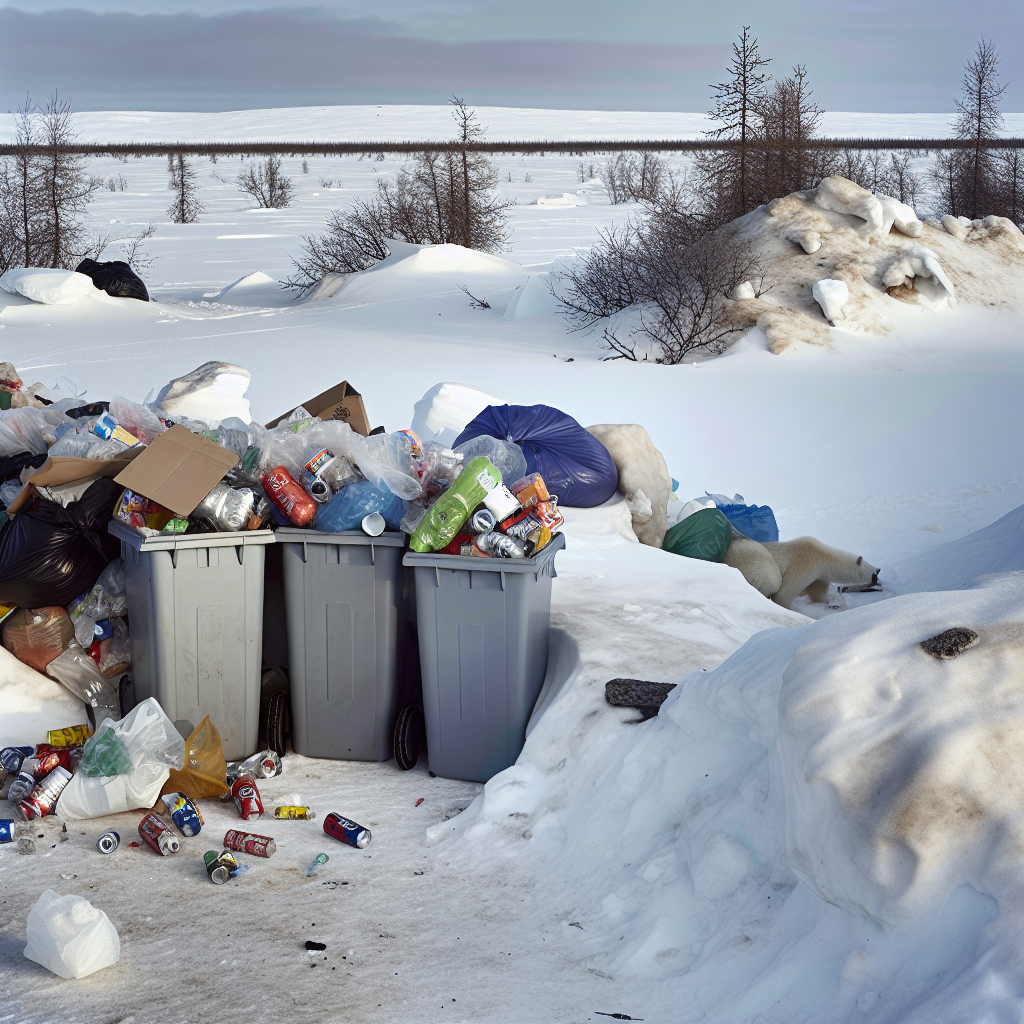
In the picturesque village of Uummannaq, located within Avannaata Kommunia, a troubling scene unfolded last week. An array of environmentally hazardous waste—including washing machines, tumble dryers, oil-fired heaters, and batteries—was carelessly discarded into the sea. This mishap has raised alarm bells, especially given that the contaminated area is earmarked for future construction projects.
Local resident Inuutersuaq Ulloriaq Løvstrøm, a member of the Democrats in Uummannaq, finds the situation deeply distressing. “For years, this waste has been a visible blight on our landscape. While it’s somewhat encouraging that action is finally being taken, the decision to push it into the ocean is profoundly unacceptable,” he asserts. Løvstrøm warns of the long-term consequences: “As the saltwater begins to degrade these materials, we risk severe pollution of our natural environment.”
### A Threat to Local Infrastructure and Economy
Løvstrøm highlights another concern: a nearby boat harbor that has already been impacted by drifting debris. “The ocean surrounding Uummannaq is not just a beautiful view; it’s a vital fishing ground,” he explains. “Our fishing industry is the cornerstone of our local economy, and to see it treated with such disregard by the municipality is completely unacceptable.”
Inuit communities like Uummannaq, Upernavik, and Qaanaaq currently lack incineration facilities. Løvstrøm advocates for a solution that involves shipping non-burnable waste to Denmark. “We should forge agreements with Danish waste management facilities to ensure this refuse isn’t simply dumped into the sea,” he emphasizes. “That waste holds value—it can generate revenue when recycled and repurposed.”
### Addressing the Situation
Sakio Fleischer, chairman of the Technical Committee in Avannaata Kommunia, attempted to clarify the municipality’s actions. He noted that the iron-laden waste has been accumulating on the coastline for years, and efforts have been made to mitigate the risk of storms scattering it further. “To be clear, the spreading of this waste was conducted in cooperation with environmental authorities,” he insists. “The intention was never for it to end up in the ocean.”
However, images from KNR depict iron scrap and containers visibly strewn across the water’s surface. Fleischer acknowledged the need for recovery efforts but expressed uncertainty over which specific items had been discarded. “I’m not informed about particular appliances involved, but I’m told that efforts are already underway to retrieve the containers and other materials that have fallen into the sea,” he said.
He also committed to collecting the iron scrap via ship next year, aiming for a more sustainable solution to this ongoing issue.
As Uummannaq grapples with this environmental crisis, the community awaits decisive action to protect their waters and livelihoods.