
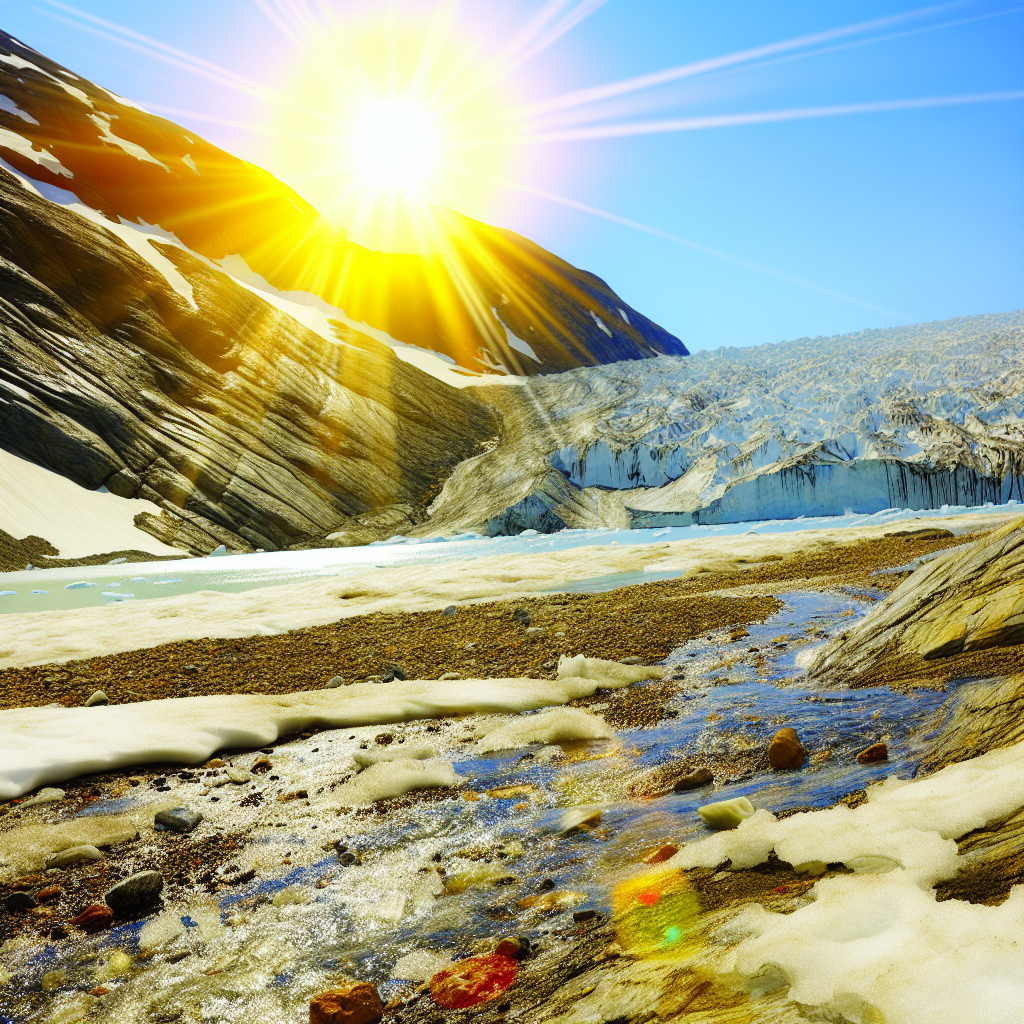
The Arctic Experiences Its Warmest Year on Record
In a significant revelation, the U.S. National Oceanic and Atmospheric Administration (NOAA) announced on Tuesday that the Arctic has had its warmest year since record-keeping began.
The data, outlined in NOAA’s annual Arctic Report Card, reveals that temperatures between October 2024 and September 2025 soared 1.6 degrees Celsius above the average recorded during the period from 1991 to 2020. This comprehensive report draws on data that spans back to the year 1900.
Tom Ballinger, a researcher at the University of Alaska and one of the report’s key contributors, shared his concerns with AFP, stating that these findings are “extremely alarming.” He emphasized that the pace of warming we’ve witnessed is unprecedented, raising alarms about the future of this fragile ecosystem.
Large swaths of the Arctic remain covered by ice, including the essential Greenland ice sheet. According to the report, temperatures in Greenland were above average during the spring of 2025, while summer temperatures hovered near the historical norm.
A Decade of Disturbance
This past year not only marked the warmest autumn on record but also the second warmest winter and the third warmest summer since 1900. In the Arctic, temperatures are rising at a staggering rate—three times faster than the global average. This phenomenon is largely driven by a series of self-reinforcing processes, collectively known as arctic amplification.
For instance, as temperatures rise, the atmosphere holds more water vapor, which effectively acts as a heat-trapping blanket, preventing warmth from escaping into space. The report estimates that the Greenland ice sheet lost a staggering 129 billion tonnes of ice in 2025 alone.
The impact of this melting ice is profound; as the reflective white surface diminishes, it is replaced by darker ocean or land, which absorbs more sunlight and subsequently more heat.
As we continue to document the rapid changes occurring in the Arctic, the urgency to address our warming world becomes ever more pressing.
— /ritzau/