
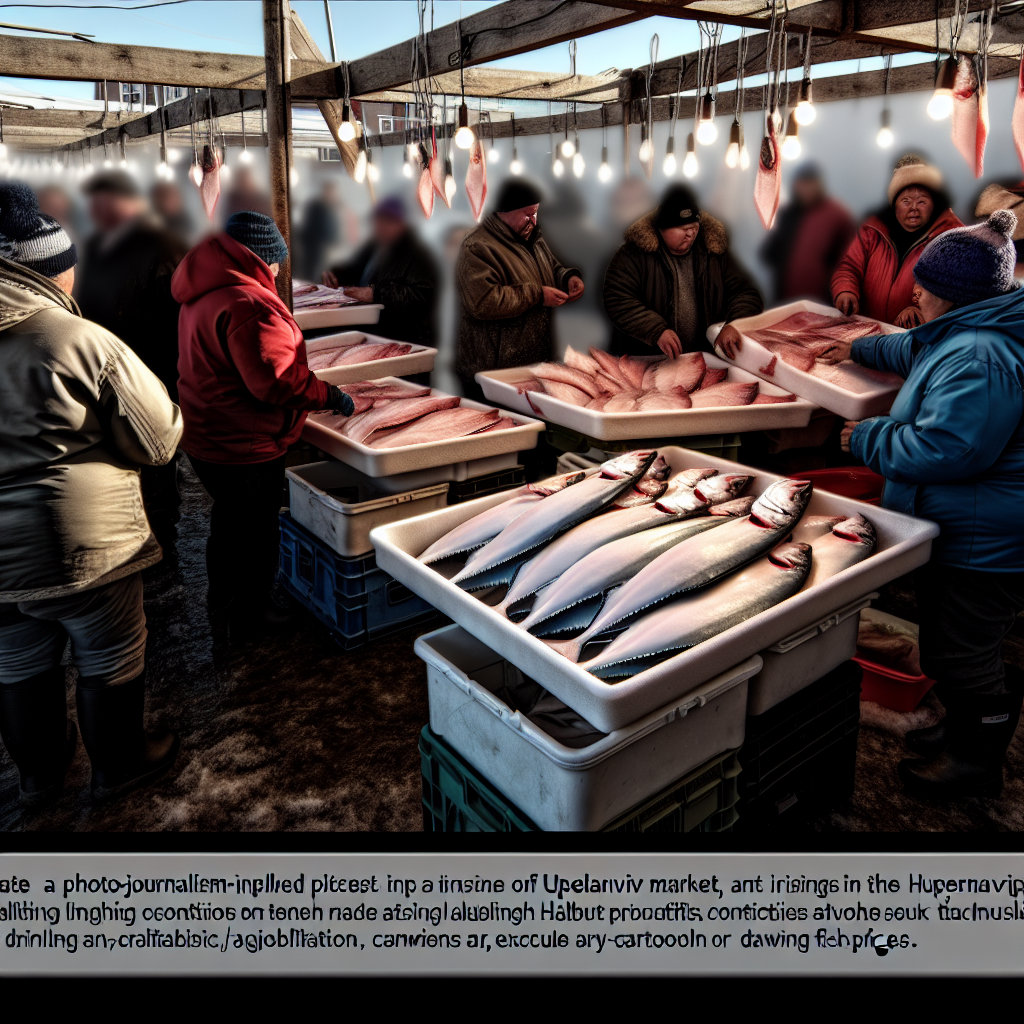
Increasing Competition in Greenland’s Fishing Industry: A Look at Halibut Procurement Prices
In 2019, when Polar Seafood A/S launched its new fish factory in Upernavik, co-owner and then-CEO Jens Salling downplayed any concerns about competition from Royal Greenland’s facility in the same town. Fast forward nearly six years, and the landscape is shifting. The once-stable waters of one of Greenland’s most important fishing regions are showing signs of increased competition, most notably reflected in the rising procurement prices for halibut.
A Market in Flux
The introduction of Polar Seafood’s factory initially led to a significant decrease in halibut procurement at Royal Greenland’s facility in Upernavik. However, as the competition has intensified over the years, procurement prices have begun to soar. As December approached, the race to secure halibut purchases heightened, resulting in a notable spike in prices.
As of early December, Polar Seafood raised its halibut buying price from DKK 27 to DKK 32 per kilo, adding an extra DKK 2 surcharge to this already competitive rate. Meanwhile, Royal Greenland has procurement facilities not only in Upernavik but also in surrounding settlements, and its subsidiary Arctic Fish Greenland sells halibut for DKK 31 per kilo at its factories in Kullorsuaq and Nuussuaq.
Unprecedented Prices Amidst Stiff Competition
Knud Mathiassen, the factory manager at Polar Seafood’s Upernavik location, acknowledges the fierce competition but remains optimistic about recent procurement success. He notes that while the summer and autumn seasons saw lower halibut procurement than in the previous year, the final stretch of the year has turned favorable, largely thanks to the increased prices.
“Procurement prices are higher than ever before, attributed to the heightened competition,” Mathiassen explains. With eight fish factories vying for halibut in and around Upernavik, he admits that competition is indeed fierce. However, Polar Seafood’s strategic pricing has resulted in more landings at their facility, contributing to their competitive edge in the market.
Polar Seafood’s factory operates year-round and currently employs about ten people, testifying to its significant role in the local economy.
Challenges in Catch Volumes
Despite the encouragement from rising prices, not all is smooth sailing. Royal Greenland has also adjusted its halibut procurement prices upwards, now set at DKK 31 per kilo. Frederik Olsen, director of Arctic Fish Greenland, observes a marked decline in catch volumes this year compared to last but refrains from disclosing specific figures. He notes that fewer catch volumes lead to reduced staffing at the fish factories.
Timotheus Petersen, a fisherman and trapper from Kullorsuaq, sheds light on possible reasons for the downturn in halibut catches. “Ghost nets, Greenland sharks, and altered current conditions are likely contributing factors,” he says, adding that the traditional abundance of large halibut seems to be diminishing.
In response to this challenge, Petersen mentions that Arctic Fish Greenland plans to expand its product line to include halibut with heads and pans, as well as “j-cuts.” Additionally, the company is collaborating with local fishermen by providing them with snowmobiles to facilitate better halibut procurement.
As Greenland’s fishing industry navigates this evolving landscape, it’s clear that competition is reshaping the marketplace, with both opportunities and challenges lying ahead.