
A Legacy in Reindeer Farming: The Journey of Isortoq’s Magnusson Family
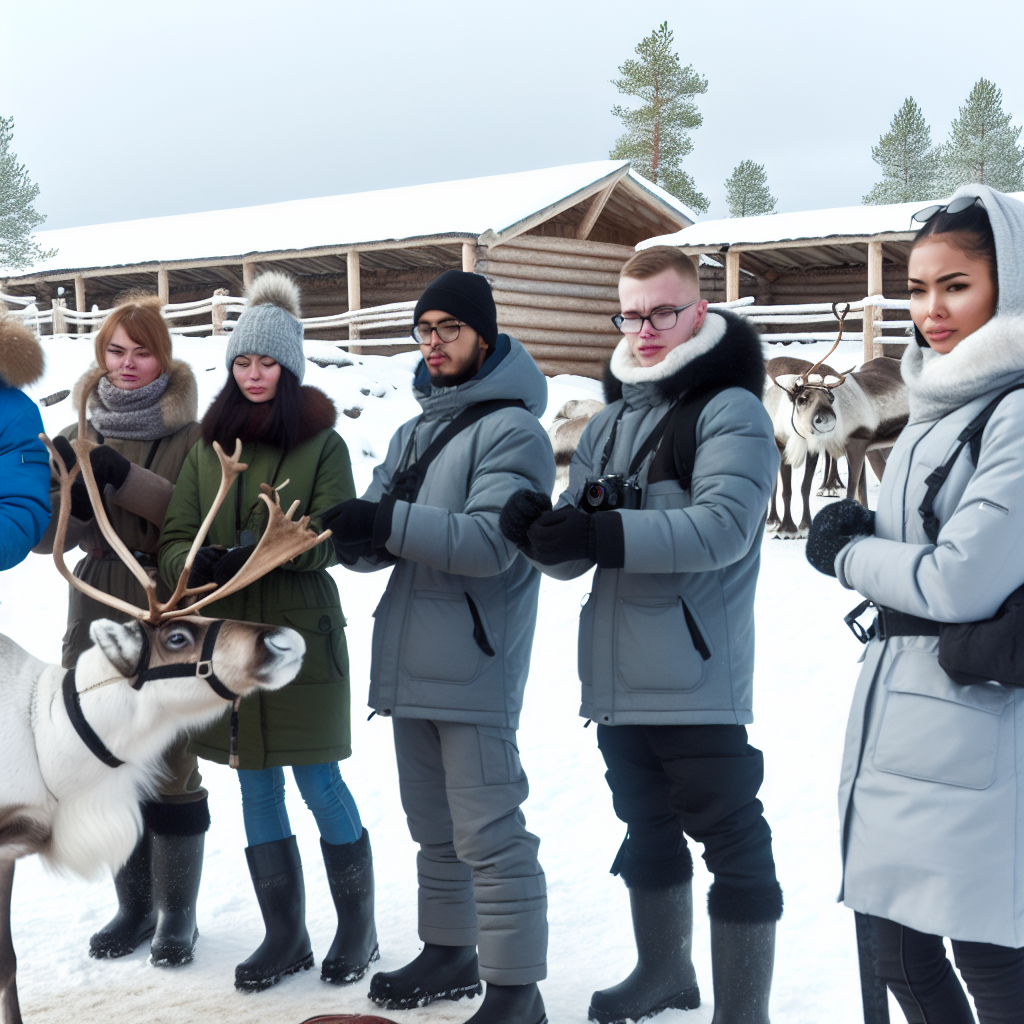
For nearly four decades, Stefan Hrafn Magnusson has cultivated a reindeer station in Isortoq, a venture that has now transitioned into the capable hands of his children. Manitsoq John Nielsen, 28, and Freyja Athena Stefánsdóttir, 23, are taking the reins of the family business, which has increasingly focused on offering tours to tourists and trophy hunting excursions.
At 69, Stefan serves as a consultant, guiding the next generation through the complexities of running a business that has become both a personal passion and a livelihood.
Stefan’s life story is far from ordinary. The English-language publication Icelandic Times recently reviewed “Isortoq: Stefán, the Reindeer Farmer,” a biography penned by Svava Jónsdóttir. In this work, Stefan reflects on his adventurous life journey, the challenges he faced, and the profound impact of climate change on his business.
Growing up, summers at his grandparents’ farm in Vestisland ignited his ambition to become a farmer, instilling in him a deep appreciation for the Arctic landscape and its allure. His first solo trip to Greenland at 15 marked the beginning of many explorations, allowing him to explore this stunning part of the world.
A Youth Surrounded by Reindeer
Stefan’s upbringing was steeped in reindeer herding, a skill he learned from the ground up.
After completing agricultural training in Iceland, he ventured to Norway at 19 to work alongside the Sami as a reindeer herder. His journey continued in Canada, where he worked on a cattle farm, and in Sweden, where he attended a high school program focused on reindeer husbandry. He later moved to Alaska, teaching reindeer herding techniques and introducing the use of Icelandic horses for transportation across the tundra.
Establishing Roots in South Greenland
In the early 1980s, Stefan brought his substantial reindeer expertise to Greenland, collaborating with Ole Kristiansen, a pioneer who reintroduced reindeer to the region in 1973, having brought them from Norway. By 1989, Stefan established his own reindeer station, which has since evolved over the past 30 years into a vital enterprise in South Greenland, aptly named Isortoq Reindeer Station.
The station sits on a vast expanse named Isortuusua—a nod to the glacial silt that marks the region, described as “Big Muddy Water.”
Challenges and Triumphs in Reindeer Breeding
The station once boasted a vibrant population of over 5,000 reindeer, a testament to Stefan’s dedication to developing the business without assistance from the local authorities, which seemed indifferent to reindeer farming. He recalls a time when reindeer farming constituted a staggering 30% of Greenland’s agricultural production and accounted for the entirety of its agricultural exports.
However, support primarily flowed to sheep farmers, leaving reindeer herding largely overlooked. “We slaughtered using our own funds, while sheep farmers received subsidies,” Stefan comments, underscoring the financial disparity.
He does, however, mention the support of Kaj Egede, a former Minister of Agriculture, who recognized the importance of the agricultural sector in South Greenland.
A Slaughterhouse Built on Determination
Stefan’s commitment extended to establishing a slaughterhouse compliant with EU and CFIA regulations. His facility, still operational today, met the veterinary requirements meticulously, even in the face of financial rejections from the government for business development support.
“The government claimed it wasn’t agriculture,” he states. Despite facing tremendous obstacles, Stefan offered to handle animal slaughter for other facilities and was met with resistance.
He emphasizes the importance of agricultural subsidies not only for the farmers but for the community, advocating for inclusivity in the support mechanisms that can help bolster food production and lower costs for consumers.
The Expanding Horizons of Tourism
Unable to sell all his reindeer meat within Greenland, Stefan turned his gaze abroad. Over the years, he has forged connections across Iceland, Norway, Sweden, Canada, and beyond, exporting reindeer meat to various countries, including exclusive restaurants in Montreal.
Recently, rising production costs—exacerbated by climate change—have prompted a pivot toward trophy hunting. Frequent increases in expenses, notably for helicopter rentals required during reindeer collection and complying with new government tagging laws, have made this shift necessary.
The impacts of climate change are palpable. The reindeer’s natural food—lichen and heather—becomes encased in ice, hindering access for the animals. “In the future, we may have to supplement their diets,” he shares, looking toward sustainable practices like local feed production.
Navigating Complexities in Management
Navigating the complexities of reindeer herding often brings Stefan into conflict with public policy. Seasonal ice conditions can force reindeer to migrate across borders, complicating ownership claims. He expresses his frustration regarding the confiscation of animals without compensation, highlighting the need for collaboration with local authorities to safeguard his herd’s wellbeing.
Embracing Change and Innovation
Throughout his journey, Stefan has embraced change and innovation, even when faced with opposition. In the 1990s, he introduced trophy hunting into Greenland’s practices and has played a significant role in establishing outfitting programs.
Today, tourism forms the backbone of their operations, marketed heavily from Iceland and social media channels. Yet, he notes a concerning trend where profits are flowing out of Greenland, highlighting a need for financial reinvestment within the local ecosystem.
In the realm of reindeer farming, local competitor Hans Janussen carries forward the tradition with his own herd on Tuttutooq island, yet the Magnusson family’s legacy remains a symbol of resilience and adaptation.
In a world increasingly shaped by both environmental challenges and evolving economies, Stefan Hrafn Magnusson’s story is a poignant reminder of the enduring bond between people and the land, as well as the forward-thinking required to navigate the uncharted waters ahead.