
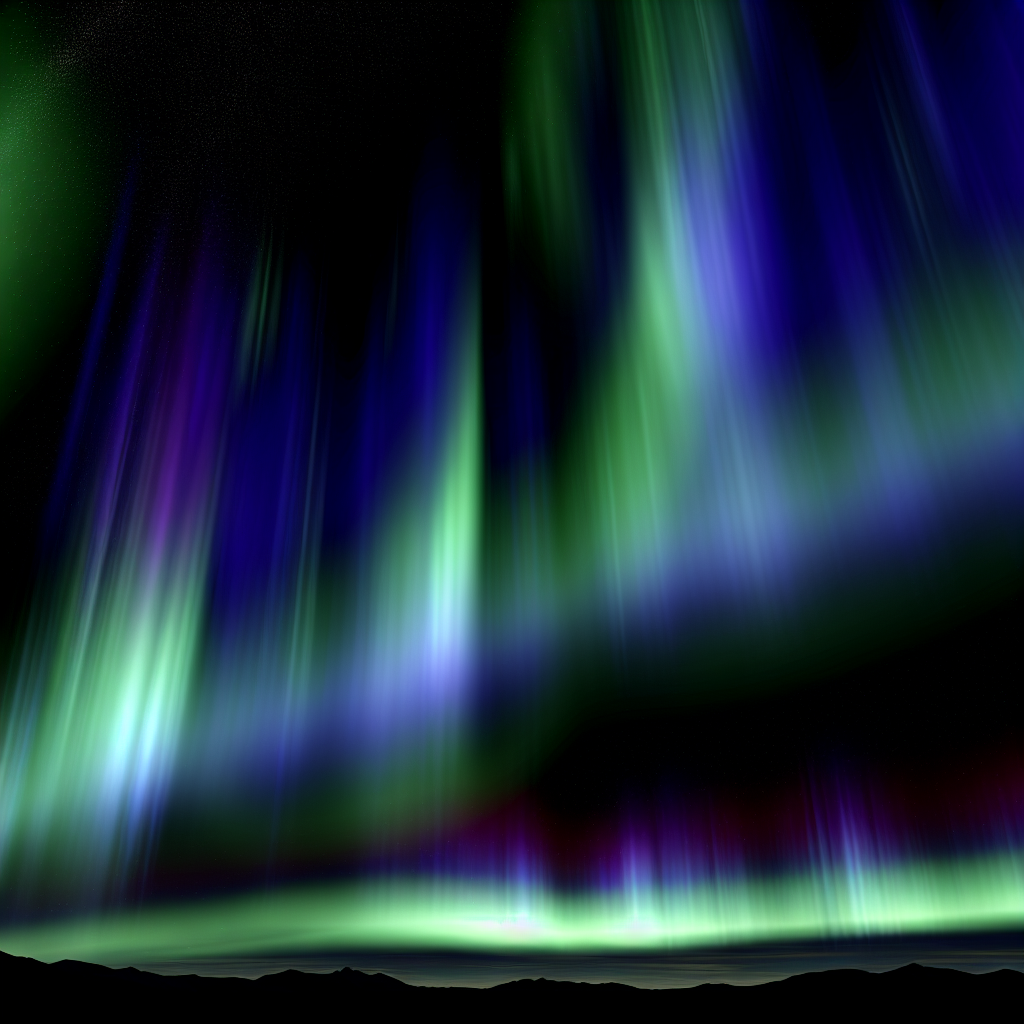
The Northern Lights are a breathtaking spectacle, casting vibrant hues across the winter Arctic skies. From glowing greens to rich purples, radiant pinks, and even hints of yellow, these celestial displays have captivated onlookers for centuries. But have you ever paused to consider what these dazzling lights really are? This post will unravel the science behind this natural wonder in an approachable way.
    <p>If you're already eager to witness this phenomenon, feel free to skip ahead to our Private & Package page to explore this year’s Northern Lights tours.</p>

    <h2><strong>The Short Answer:</strong></h2>
    <p>Formally known as the Aurora Borealis, the Northern Lights arise from electrically charged particles emitted by the sun—collectively known as solar winds. These solar winds collide with the oxygen and nitrogen in our atmosphere, predominantly producing that striking green glow.</p>

    <p>Simple enough, right? Not quite. Let’s dig a little deeper into the fascinating science behind this winter wonder.</p>

    <h2>Where Do the Northern Lights Begin?</h2>
    <p>Let’s start with those electrically charged particles. It’s often said that solar winds take just a couple of days to reach Earth. While it’s true that it takes that long for them to journey from the sun’s surface to our atmosphere, the tale actually begins far earlier—about a million years prior, to be exact.</p>

    <p>Around that time, our Sun, a massive nuclear fusion powerhouse, was busy condensing elements and generating a tremendous amount of energy and fast-moving particles as by-products. These particles, eager to break free from their stellar confines, began their journey toward the cosmos.</p>

    <h2>Breaking Free from the Sun</h2>
    <p>Just like a commuter navigating a crowded station, these particles pushed their way to the surface of the Sun, bouncing off everything in their path at dizzying speeds. Despite the overwhelming gravitational forces holding them back, some managed to escape, becoming what we know today as *solar winds*. When these particles are expelled with enough energy and heat, they can also lead to phenomena called solar flares, although that’s a slightly different story.</p>

    <p>Solar winds vary in density and velocity, typically reaching our atmosphere in about two days. A particularly fast and dense solar wind is termed a solar storm, which adds an extra layer to the narrative. So, the next time someone mentions that solar winds take just a few days to arrive, you can confidently add, “Well, it’s really a journey of a million years and a couple of days!”</p>

    <h2>The Solar Winds Reach Our Atmosphere</h2>
    <p>Two days later, those electrically charged particles make contact—arriving not at our surface, but rather at our atmosphere.</p>

    <p>Here’s a fascinating tidbit: if you could condense all the particles in our atmosphere down to the density of concrete, you'd end up with a wall 15 feet thick surrounding the planet. This invisible shield is essential for life, protecting us from the myriad threats posed by solar and cosmic radiation. It’s also instrumental in creating the Northern Lights.</p>

    <p>The earth’s magnetic field, or magnetosphere, plays a crucial role in deflecting some of these cosmic rays. Without it, our satellites might fail, our power grids could be disrupted, and air travel would become nearly impossible. Fortunately, when a strong solar flare strikes, most of the particles are redirected back into space. What remains, however, produces the captivating lights of the aurora borealis.</p>

    <h2>The Formation of the Northern Lights</h2>
    <p>The Northern Lights predominantly occur near the poles—both the North and South Poles—because the magnetosphere there is less robust, allowing for greater interaction with incoming cosmic radiation.</p>

    <p>As for the array of colors? They stem from the interaction between these charged particles and the gases in our atmosphere, primarily oxygen and nitrogen. While many hues have been reported, most displays are characterized by shades of green or pink. The common green light arises from reactions with oxygen, while that beautiful pink shade typically results from interactions higher up in the atmosphere and is relatively rare.</p>

    <p>And there you have it!</p>

    <p>Next time you find yourself fortunate enough to witness the Northern Lights, remember that this shimmering display is a vivid reminder of how our little planet is continually influenced by the vastness of space. Thanks to our remarkable atmosphere, we're protected from most of this cosmic bombardment.</p>

    <p>Now that you’ve gained insights into this natural marvel, you might be asking yourself how to catch a glimpse of them. You can delve into that information here, or if you’re venturing out independently, check the most current forecast.</p>

    <h2 style="text-align: center;">Explore Our Selection of Luxury Northern Lights Tours</h2>
    <br/>
    <p style="text-align: center;">I’m Ryan Connolly, a guide with experience across multiple countries and years spent traveling the globe. For the past two years, I’ve dedicated my spare time to studying glaciers, climate change, and the wonders of Iceland.</p>
</div>
Add A Comment