
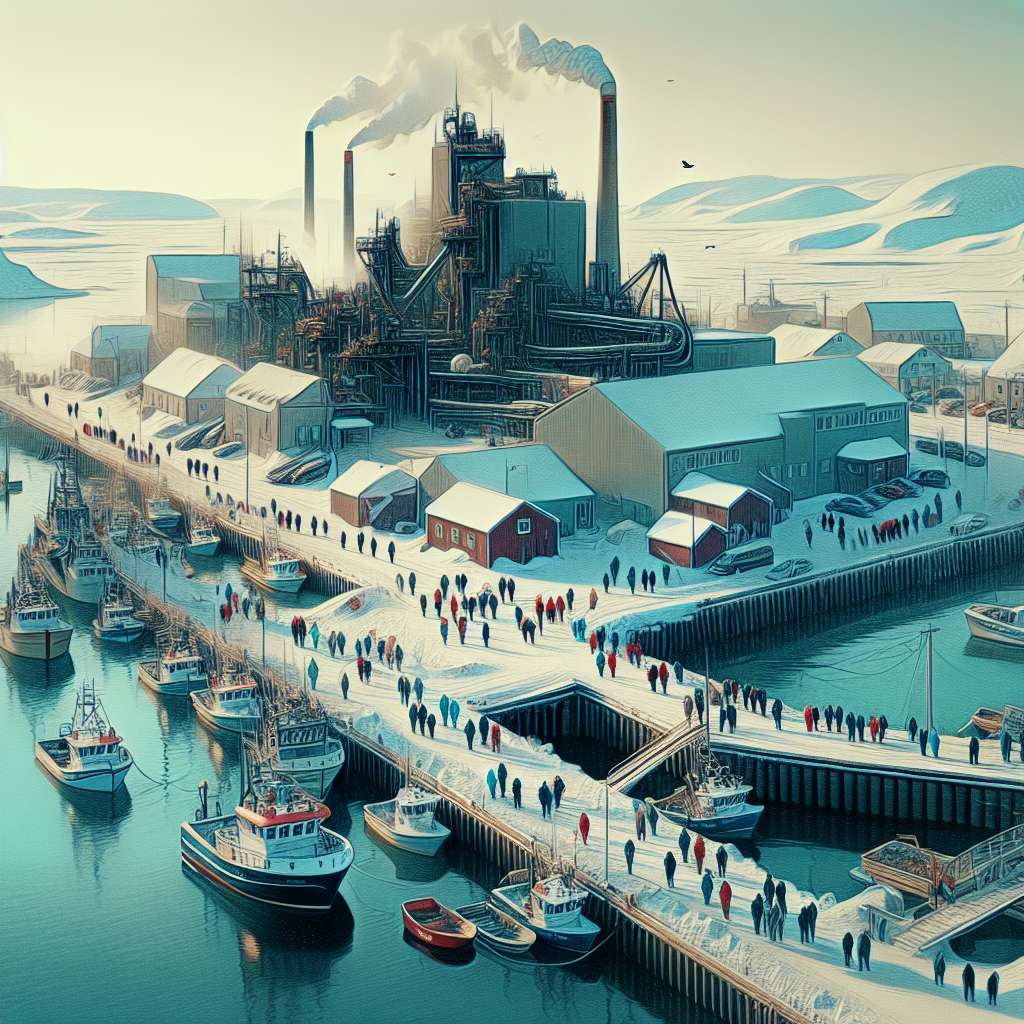
Royal Greenland Plans Major Investment in Land-Based Facilities
In a bold move set to reshape its future, Royal Greenland has announced a staggering investment of DKK 500 to 600 million over the next three to five years. This decision, reaffirmed by the company’s board of directors, signals a significant commitment to enhancing land-based facilities in Greenland, as revealed in an exclusive interview with Toke Binzer, the new managing director of the self-governing fishing group.
Just prior to Christmas, Binzer and his predecessor, Preben Sunke, unveiled this historic investment plan to the board. With the plan now gaining approvals, it’s undoubtedly good news not only for Royal Greenland but for Greenland as a whole. Many of the company’s 38 processing plants across various towns and cities have long awaited modernization, with Binzer acknowledging, “We have made a plan for how to do it.”
The reality is that some of these facilities are quite antiquated. Binzer describes them as “very old and run-down,” adding that while they are outdated, their potential can be unlocked through substantial investments that will enhance production efficiency.
A Call for Care
Recognizing the urgent need for improved infrastructure, Binzer candidly states, “Royal Greenland’s land-based operations require a loving hand in many areas.” The company has already invested DKK 2.5 billion in cutting-edge trawlers, part of an extensive effort to modernize its fleet. Now, it’s time for the land-based operations to undergo a similar transformation.
“The goal is to ensure that our production apparatus on land becomes efficient and modern,” he emphasizes.
Significant Upgrades in Sisimiut
This year alone, Royal Greenland plans to direct around DKK 20 million into maturation tanks at its sizable shrimp processing plant in Sisimiut. These tanks are vital for preparing shrimp for peeling and cooking. “These maturation tanks will allow us to enhance our income from shrimp, which is a core part of our business,” explains Binzer, who is currently finalizing tender materials for the project.
Expanding to Attu and Sarfannguit
Binzer also outlined plans for new pilot projects in the settlements of Attu and Sarfannguit, with a total investment of approximately DKK 30 million. These ventures involve extending and modifying existing facilities to create efficient freezing layers, mirroring successful models used in Tasiilaq. “The pilot projects will demonstrate how we can quickly and cost-effectively expand our smaller operations,” he asserts.
A New Focus on Cod
Binzer shares that the rationale behind these investments is threefold. First, there’s a pressing need to address the historical backlog of underinvestment in many facilities. Second, he aims to streamline production across all operations to maximize the potential of raw materials. Lastly, and perhaps most importantly, Royal Greenland is pivoting to produce more cod. With rising quotas for cod and declining quotas for shrimp, the company is preparing for what Binzer terms “the new gold.” Cod is witnessing skyrocketing global prices, and Binzer believes it is crucial to adapt production accordingly to meet increasing demand.
Having taken the helm at Royal Greenland’s Nuuk headquarters on December 1, Binzer previously served as a top executive at the telecommunications firm Tusass. Under his leadership, Tusass reported a profit after tax of DKK 124 million in 2024—an impressive feat.
Embracing the Challenge
Binzer’s entry into Royal Greenland comes during a tumultuous period for the company, which has faced severe losses, particularly in its foreign operations in Chile and Norway. Last year, the company recorded a pre-tax deficit of nearly DKK 200 million, and the upcoming financial report for 2025 is eagerly anticipated.
Reflecting on his new role, Binzer expresses enthusiasm: “I have a super exciting job. Moving forward, our goal is to transform Royal Greenland into a more efficient, commercially viable, and profitable entity as we progress with investments amounting to half a billion kroner.”
With Binzer at the helm and a robust investment plan in place, the future looks promising for Royal Greenland and the communities it serves.