
Power, history, and the responsibility of leadership in a changing Arctic
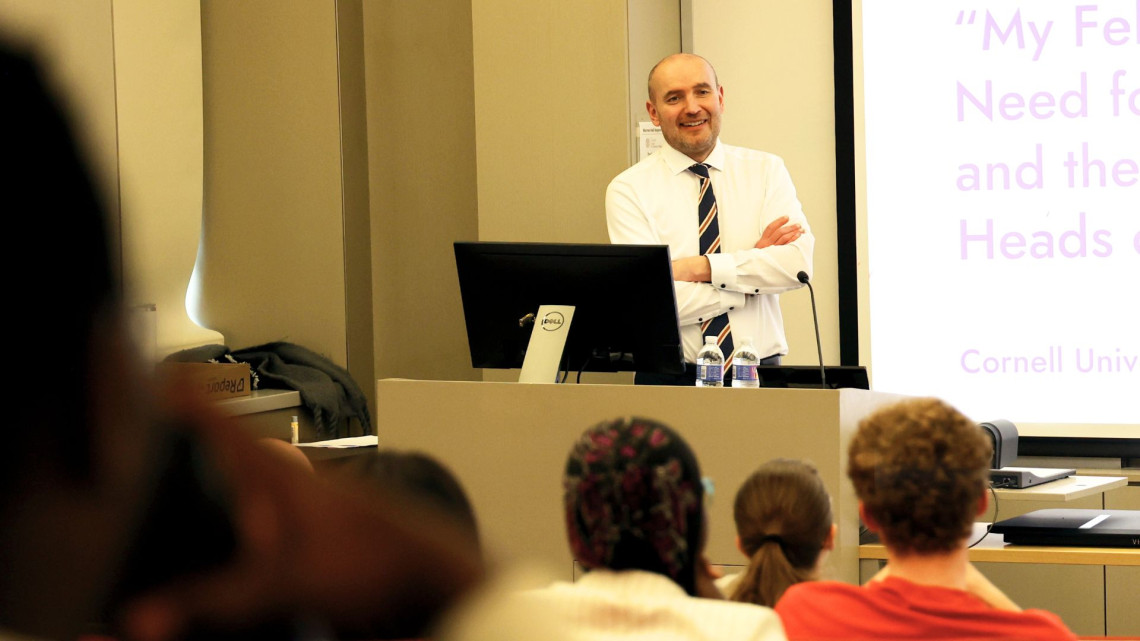
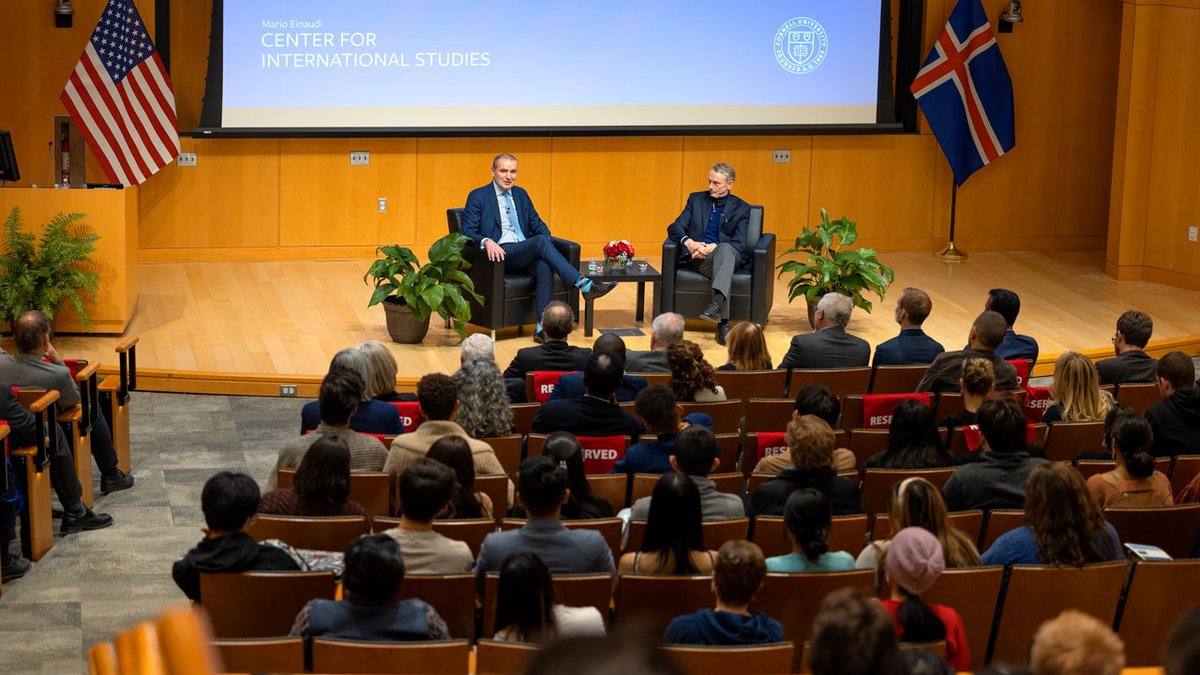
In the refined academic setting of Cornell University, former President of Iceland, Guðni Th. Jóhannesson, returned to what he describes as his “natural environment” — scholarship.
Delivering three lectures as part of Cornell’s prestigious Messenger Lecture Series, Jóhannesson addressed one of the most geopolitically sensitive topics of our time:
Greenland — often described as Europe’s last colony.
Greenland: The Last Colony in Europe
At the center of his talk was a powerful thesis:
Greenland is not just a remote Arctic landmass — it is a symbol of unresolved historical narratives, geopolitical tension, and shifting global interest.
Jóhannesson emphasized how global discourse surrounding Greenland intensified following controversial political statements in recent years, drawing unprecedented international attention to the region.
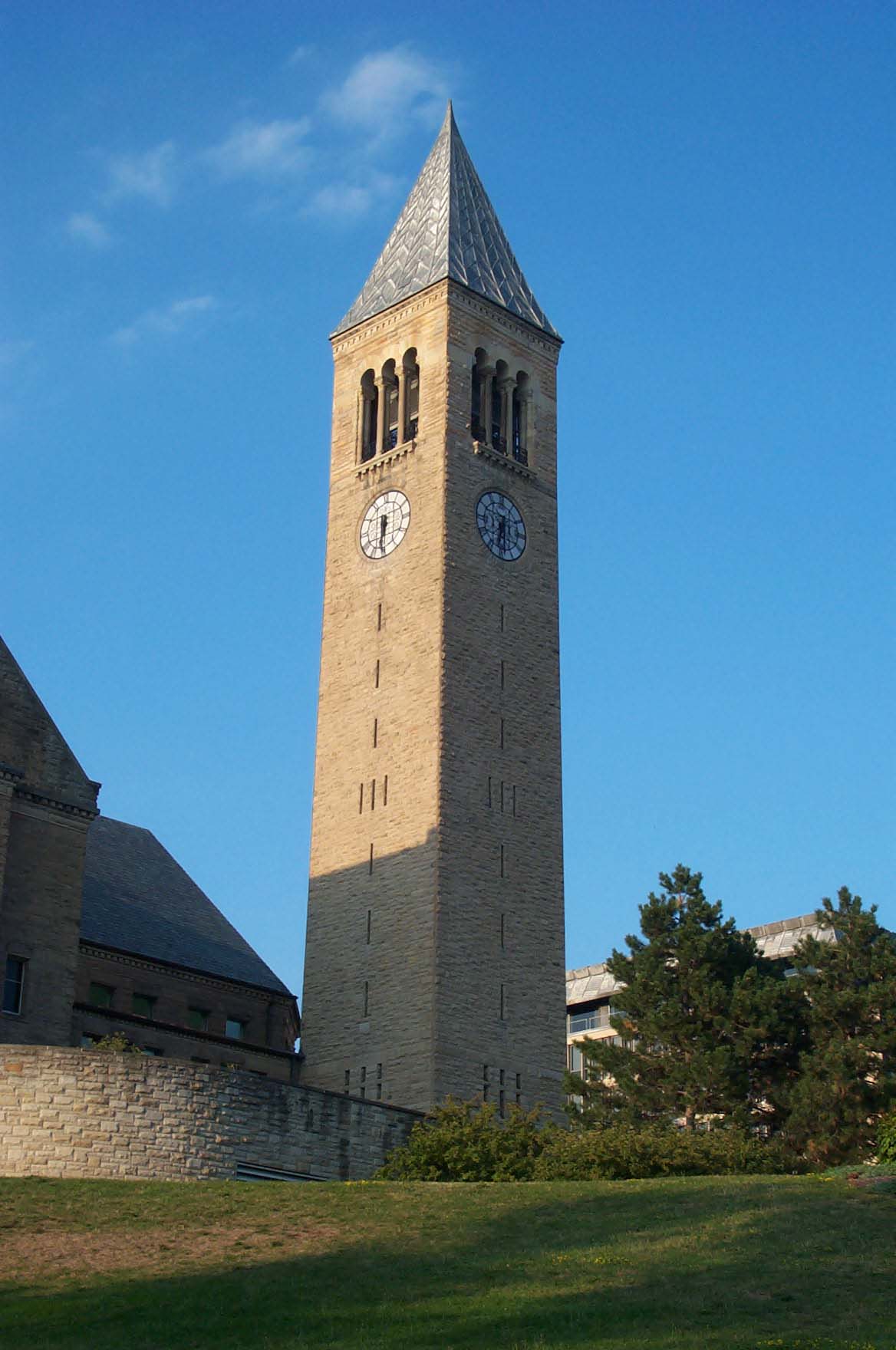

Located in Ithaca, New York, Cornell provided the perfect intellectual backdrop for these discussions — a place where global history meets contemporary policy debate.
The Misuse of History
One of the most striking warnings in Jóhannesson’s lectures was directed at political leadership:
“History can be — and often is — misused by those in power.”
He pointed out that throughout time, leaders have selectively interpreted historical narratives to justify political agendas.
This, he argued, is precisely why:
- Critical thinking
- Academic independence
- Multiple perspectives
are essential in modern governance.
A Return to Academia
For Jóhannesson, the experience was deeply personal.
After years in the highest political office, returning to academic discourse allowed him to re-engage with ideas in a setting defined not by power, but by inquiry.
“This is my natural environment,” he noted — a sentiment echoed in his calm, analytical delivery.


Academic Freedom Under Pressure
The conversation extended beyond Greenland.
Jóhannesson addressed a growing concern across democratic societies:
the tension between governments and academic institutions.
He stressed:
Academic freedom must be respected.
It is a cornerstone of any functioning democracy.
In an era where political narratives increasingly intersect with research and education, this message resonated strongly with students and faculty alike.
A Growing Global Focus on Greenland
Interest in Greenland is no longer niche.
It has become:
- A geopolitical focal point
- A climate research hub
- A strategic Arctic asset
What was once considered peripheral is now central to global discourse.
Closing Reflection
Jóhannesson’s lectures were not merely historical — they were a call to intellectual responsibility.
In a world shaped by narratives, power, and perception:
Understanding history may be the most important tool we have.