
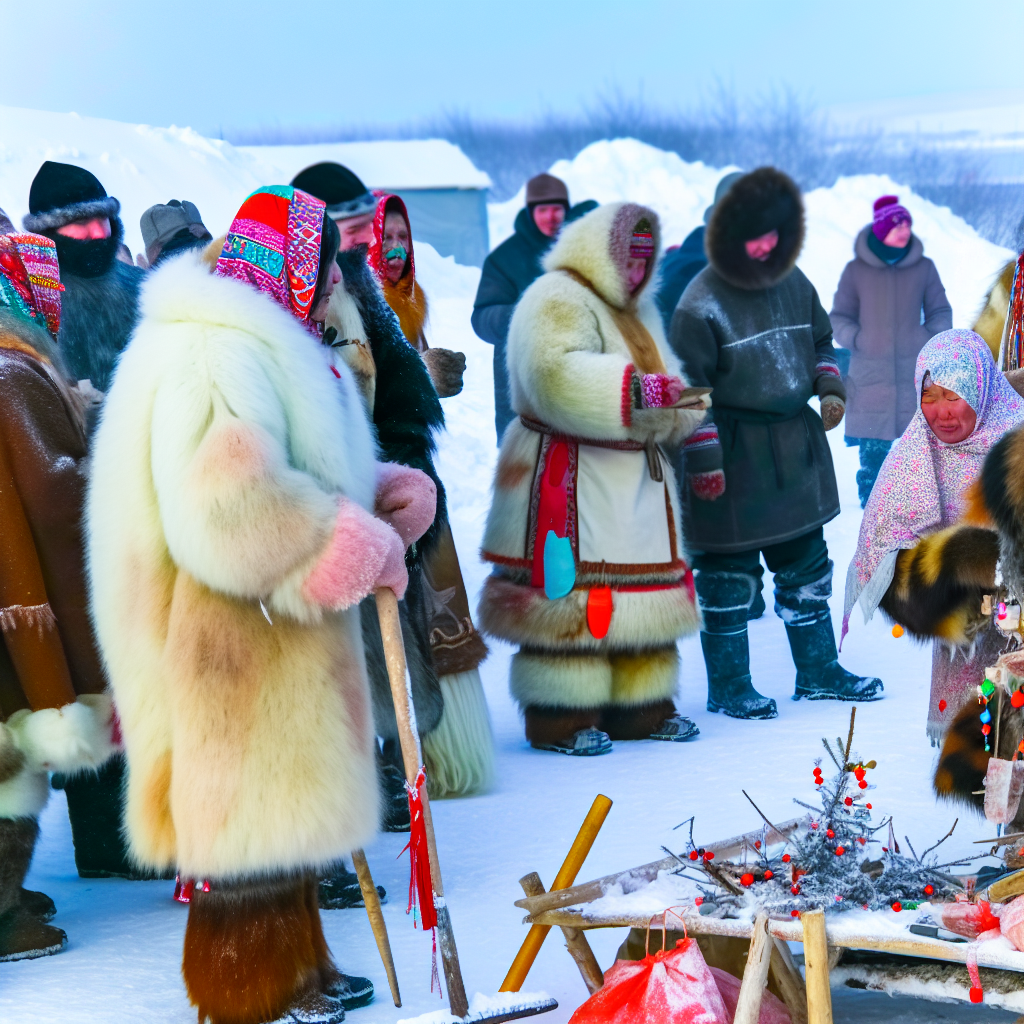
In the Arctic, Christmas is a tapestry woven from diverse traditions, blending threads from both American and European customs. As homes sparkle with festive lights and the rich aromas of baked goods fill the air, families gather to celebrate the joyous season through carols and communal gatherings. Yet, amidst these shared practices, each community brings its own flavor to Christmas, infusing the holiday with local customs that create a distinct character in this northern landscape. This Christmas Day, December 25, we’ll explore some of these unique traditions that our neighbors in the Arctic hold dear.
Iceland
In Iceland, where distances can be vast, the expression of Christmas cheer was once slow to travel. However, that changed dramatically in 1930 with the establishment of the national radio station RÚV. It began broadcasting Christmas greetings, swiftly bridging the gap between family members separated by miles. Today, on December 23, the airwaves are filled with messages of goodwill, a cherished tradition that unites nearly all Icelanders in a shared sense of community.
As the radio plays, many families are busy preparing a traditional dish of stingray, honoring “Þorláksmessa,” a day commemorating the saint Þorlákur helgi who died on December 23, 1193. The pungent aroma of the fish tends to linger on guests’ clothes and hair, and legend has it that this distinctive preparation makes Christmas dinner the following day particularly delightful.
Inuit in Canada
In Nunavut, the spirit of Christmas extends across several days, emphasizing community as much as the holiday itself. The countdown to Christmas is filled with communal dancing, sharing of meals, and traditional games that bring neighbors together. One such game, known as Ajagaq, involves tossing a bone with holes into the air and catching it with another pointed bone—a practice that traces its origins back 2,500 years to Greenland.
On Christmas Eve, which falls on December 25, the community gathers in the local hall for a grand feast. Trappers and fishermen have filled their freezers with reindeer, seal, and muktuk (known elsewhere as mattak), which they lay out in bountiful spreads for families to enjoy together.
Inuit in Alaska
Residents of Alaska also celebrate Christmas on December 25, but many begin decking their homes with lights and decorations as autumn’s darkness descends. Winter brings opportunities for ice skating and hockey, popular pastimes during the chilly months.
On Christmas Eve, children traverse their towns carrying poles adorned with colored stars, singing carols as they knock on doors. With phrases like Gristuusaaq suu’uq, meaning “Christ is born,” and concluding with Mnogaya leta, which translates to “God give you many years,” these carols foster a sense of togetherness. In gratitude for their songs, the children are rewarded with delightful treats—donuts drizzled in maple syrup, cookies, and traditional dishes like fish pie and smoked salmon.
Inuit in Siberia
In the snowy expanse of Siberia, Christmas traditions reflect a unique fusion of Russian Orthodox practices and ancient local customs. Celebrated on January 7 according to the Orthodox calendar, many families observe a fast leading up to a hearty Christmas dinner, typically featuring reindeer meat and fish.
During the sacred period known as Svyatki, which stretches from Christmas to Epiphany on January 19, families come together to share stories, play games, and sing. Some regions still host small divination games rooted in shamanistic traditions, adding a touch of warmth and story to the long, cold winter nights.
The Sami
For the Sami people, December was once a month filled with rituals to ensure survival through winter’s harshness. Offerings of reindeer meat, fish, and other gifts were made to nature spirits, honoring their deity of the season, Juovlahearrá, to whom reindeer blood was sacrificed.
With the rise of Christianity, many Sami integrated Christian Christmas practices while maintaining elements of their spiritual heritage. Today, their holiday meals often spotlight reindeer or fish once used in sacred offerings. Gathered around the wood stove, families share tales of their ancestors, nature, and the enchanting creatures of winter, while traditional yoik songs fill the air. Handcrafted gifts, such as wooden figures and textiles, reflect the Sami’s artistry, adding a personal touch to their Christmas celebrations.
As we explore these rich customs, it becomes clear that Christmas in the Arctic is a celebration not just of a holiday, but of community, culture, and deep-rooted tradition.