

Legal Developments in Greenland: A Closer Look at Recent Agreements and Disputes
Chamber Attorney Poul Schmith has maintained a partnership with the local government in Copenhagen since 2016, focusing on the provision of legal assistance. This collaboration has evolved over time, now expanding into a more comprehensive framework agreement that encompasses all authorities, institutions, and enterprises within Greenland’s self-government.
In addition to Schmith’s agreement, the Attorney General has established a new initiative to lend legal expertise to local authorities. This move acknowledges the increasing complexity of tasks within Greenland, prompting the Attorney General to open an office in Nuuk, conveniently located at Issortarfimmut 7, alongside Mediehuset Sermitsiaq.
Subpoenas from Mineral Companies
One significant use of this legal assistance arises from two subpoenas involving the Ministry of Raw Materials. The first, from the Chinese-owned company London Mining, dates back to November 15, 2022, when they claimed they had been unjustly stripped of their exploitation permit for iron ore in Isukasia, located north of Nuup Kangerluaq. London Mining asserts that the self-government’s decision to revoke their permit stemmed from their requests for time extensions and a perceived stagnation in project development. Notably, the company also failed to deposit the required funds into their collateral account, despite several reminders.
Photo courtesy of Poul Krarup
The ongoing legal dispute involves London Mining’s claim regarding their exploitable license at Isukasia, which is currently under review by the Chamber of Advocates for the self-government.
London Mining contends that their exploitation permit from 2013 should remain valid, provided they submit an appropriate exploitation and decommissioning plan within 18 months of a court ruling. Alternatively, they seek DKK 20 million in damages and the release of their DKK 6 million collateral.
While the issues surrounding the extension of the permit and the compensation claims appear straightforward, the complexity arises with London Mining’s request for access to internal documents exchanged between various departments within the Naalakkersuisut. Initially, the Greenland court sided with the government on this matter, but London Mining has since escalated the dispute to the High Court, which is now reviewing the appeal. This document access issue has delayed the overall proceedings, pushing back a resolution regarding the claim to extend the license.
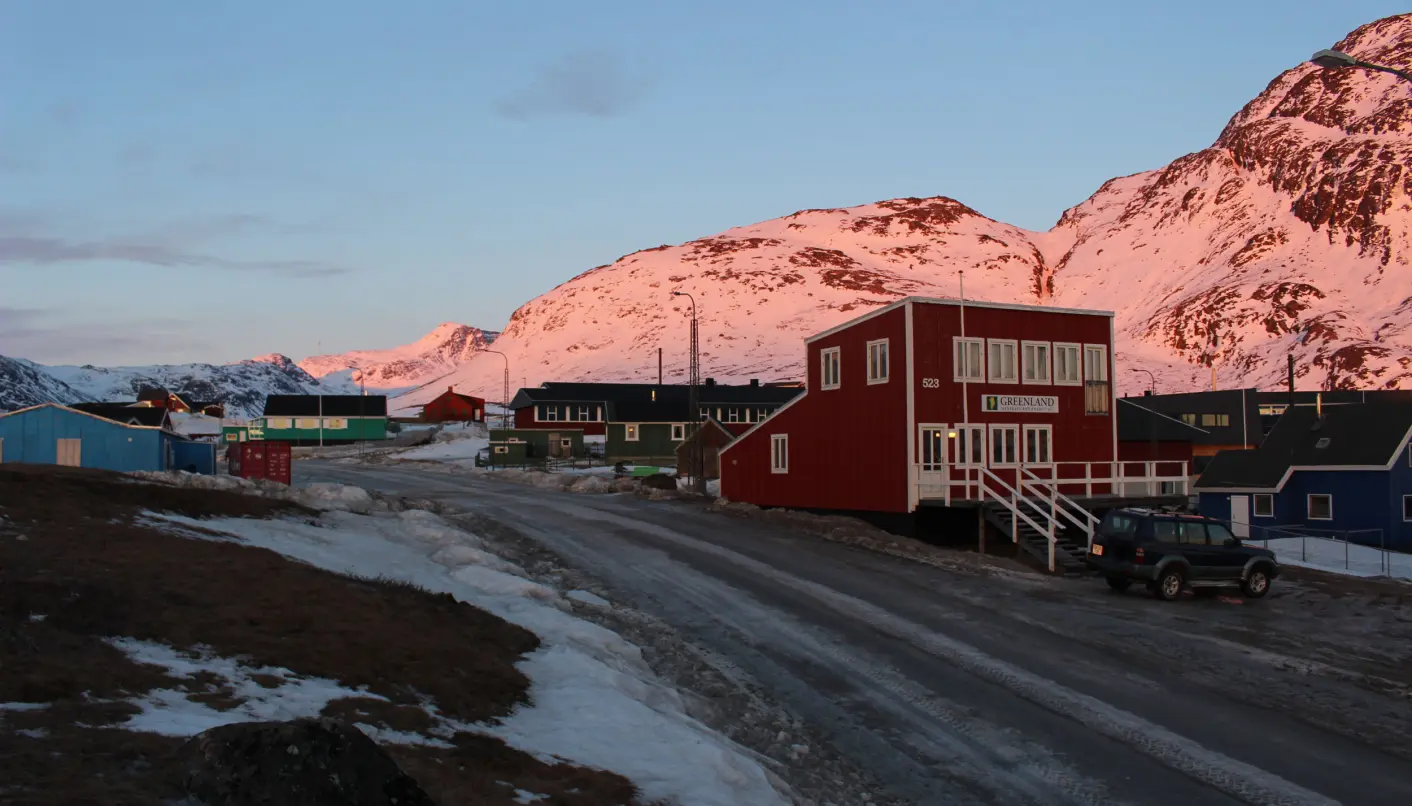
Photo courtesy of Trine Juncher Jørgensen
Energy Transition Minerals argues they have been wrongfully denied an exploitation license for their project at Kuannersuit, with claims based on legislative changes in 2021.
Energy Transition Minerals
The Attorney General is also currently representing the self-government in a case involving Energy Transition Minerals. This company claims it has been unjustly deprived of its license at Kuannersuit, stalling their project. They demand an exploitation permit or alternatively seek DKK 76 billion in compensation. Legal expenses for the self-government in this case have already reached DKK 18.7 million.
In November, after three years of deliberation, an arbitration court concluded it lacked jurisdiction over the matter. Following this decision, the self-government asserted it should cover all associated legal costs, and the arbitration court is now deliberating on the extent of that coverage.
Shortly thereafter, the Copenhagen City Court ruled that the self-government could not face litigation in district court. Subsequently, the Chamber of Advocates has submitted a statement regarding costs, prompting the court to determine whether the company should be liable for the legal expenses incurred by the self-government.
Looking ahead, the case against Energy Transition Minerals is set to advance to Greenland’s High Court. However, estimates suggest it may not be scheduled until at least 2027, leaving many questions unresolved in this complex legal landscape.
The unfolding situation highlights the intricate interplay between legal frameworks and mineral rights in Greenland, as stakeholders navigate the challenges posed by both local and international interests.