
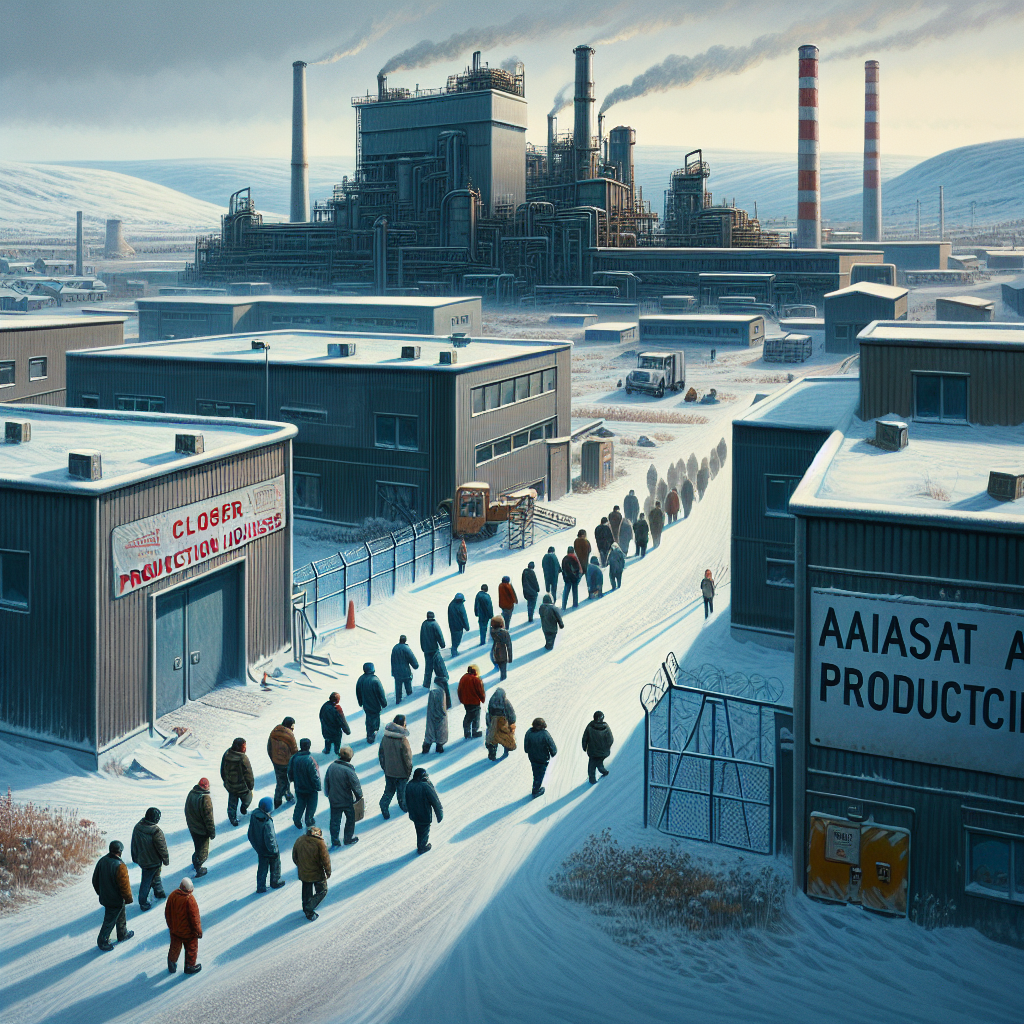
Polar Raajat Factory Faces Uncertain Future in Aasiaat
For years, the Polar Raajat factory in Aasiaat has been a cornerstone of the local economy, processing shrimp, halibut, cod, roe, and crabs. However, it now stands on the precipice of closure, a development that could cost 115 employees their jobs.
Chairman Bent Salling conveyed the dire situation to Sermitsiaq following a board meeting on February 9. “If we don’t find a permanent political solution soon, we will be forced to shut the factory down by autumn 2026,” he stated, emphasizing the urgency of the matter. The factory has struggled to operate sustainably due to a dwindling supply of raw materials, reminiscent of a ship adrift without enough wind in its sails.
The polarizing discussion surrounding the factory’s fate coincided with a municipal board meeting in the Municipality of Qeqertalik the previous week, where local politicians received an alarming message from Polar Raajat: without intervention, the factory will cease operations.
A Shrimp Supply Crisis
The situation is critical. The factory requires a minimum of 10,000 tons of shrimp annually to remain operational throughout the year. Yet, ongoing reductions in shrimp quotas have left it 4,000 tons short over the next two years—an imminent crisis that could deal a fatal blow to this vital establishment.
“There is an urgent need for decisive action from the relevant authorities to secure the necessary supplies for the factory,” Salling urged, calling for a swift political response to preserve jobs in the community. The factory’s looming three-month closure each year spells further trouble, pushing it closer to potential permanent shutdown.
Ownership Dynamics
Polar Raajat, nestled within the private Greenlandic-Danish fishing enterprise, is part of a larger network owned by Polar Seafood Greenland A/S and Polar Seafood Denmark A/S, both co-owned by Salling and Miki Brøns, who lead Polar Seafood Greenland as managing directors. Henrik Leth serves as the managing director of Polar Seafood Denmark.
“We are advocating for a political solution,” Salling stated firmly, highlighting that among the 115 employees at risk, 87 are local residents, intertwined with the social fabric of Aasiaat.
Legislative Obstacles
Salling attributes the factory’s precarious situation to a mix of biological challenges and a shifting political landscape, which has drastically affected operations. Recent attempts to engage with Fisheries Minister Peter Borg and Royal Greenland have yielded little progress.
“We have been pressing for solutions, but past efforts have been futile,” he said. Both Polar and the local municipal council share a desperate need for a resolution to avoid a significant downturn in Aasiaat, the factory being its economic heartbeat.
For years, uncertainty about shrimp populations has plagued operations. “We can adapt to biological fluctuations, but we cannot control political issues,” Salling remarked. He points out that the new fisheries law, enacted on January 1, 2026, was foreshadowed by previous discussions with lawmakers about potential ramifications for the factory.
With roots in over two decades of legislative work, the law aims to ensure sustainable management of fishing resources, yet its immediate impact has been anything but favorable.
The Call for a Comprehensive Solution
The recent provisions in the Fisheries Act have exacerbated the factory’s challenges, particularly restrictions that limit the buying and selling of quotas. Salling claimed these barriers hinder Polar Seafood’s ability to respond to the biological variability of shrimp stocks.
As the company calls for a long-term political resolution to secure the factory’s future, Salling warns that any sustainable operational strategy must also consider the repercussions for Royal Greenland’s autonomously owned factory in Ilulissat, which may be forced to alter its shrimp procurement practices.
“In our view, the continued operation of our Aasiaat factory hinges on a political outcome,” he asserted. “We urge the authorities to act quickly and decisively to safeguard jobs and the factory’s operations. Without intervention, the consequences will resonate beyond just our company; the entire community of Aasiaat stands at risk.”
The clock is ticking for Polar Raajat, and the stakes have never been higher.