
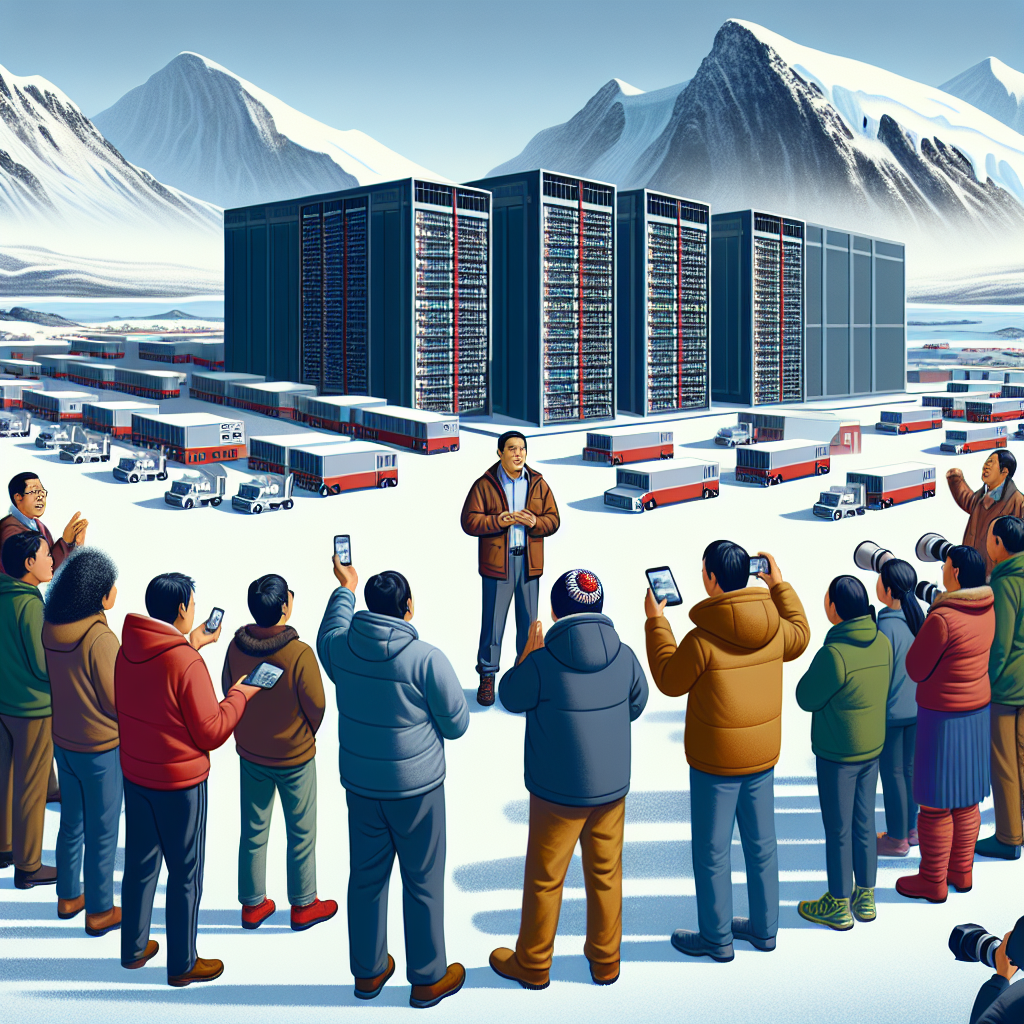
Groundbreaking Collaboration: A Data Center in Kangerlussuaq
On February 9, Svend Hardenberg, the former head of the President’s Department, engaged in discussions with American investors about a monumental venture—the establishment of the world’s largest data center in Kangerlussuaq. This gathering culminated in the signing of a memorandum of understanding that outlines a partnership not only aimed at the data center but also at potentially bidding for the hydroelectric power plant at Taseriaq and Tarsartuup Tasersua.
Among the American stakeholders is Drew Horn, a former Trump administration official, alongside Dan Whaley, who has founded AmForge Corporation. According to AmForge’s website, Horn, Whaley, and Neil Cohn are listed as key figures in this ambitious project.
KNR scheduled an interview with Hardenberg for February 13, hoping to delve into details about these plans. However, this meeting was abruptly canceled the night before, as KNR had already referenced a press release concerning the project—a document we have yet to receive.
Why This Matters
The involvement of foreign companies seeking to tap into local resources and construct new facilities is always of public interest. It’s crucial to note that the origin of these investments—be it from the USA, the EU, Denmark, or Greenland—does not alter their relevance. However, the American connections in this particular case merit additional scrutiny, especially given Horn’s past role under Donald Trump and his controversial statements about Greenland during a crisis in January 2026, where he labeled the local government as “ridiculous and childish.”
In a recent interview with the Danish media outlet Frihedsbrevet, Horn hesitated for six seconds when questioned about possible ties to American intelligence services, an acknowledgment that is particularly notable given ongoing speculations about his influence in Greenland. Although Horn has denied being an agent of influence to the Wall Street Journal, the whispers surrounding his involvement persist.
A Shared Vision
Inuit Development Company, led by Hardenberg, is the entity collaborating with AmForge on this memorandum. Whaley expressed excitement regarding the partnership, emphasizing Greenland’s unique geographical advantages for such a venture. He believes that the energy from a new hydroelectric plant will be pivotal: “This plant will be functional for over a century, providing sustainable value for Greenland,” he stated.
Prior reports indicated Hardenberg’s interest in the Taseriaq water resource, paving the way for this ambitious data center project, expected to utilize liquefied natural gas from the USA. Initial operations are anticipated to begin as early as next year, with full-scale operations—powered by 1.5 gigawatts of hydroelectric power—envisioned by 2028.
An Ambitious Timeline
While partnerships between Greenlandic entities and American investors are not inherently surprising, the specifics of this collaboration draw heightened attention due to Horn’s controversial background.
Recently, Malik Berthelsen, the mayor of Qeqqata Municipality, confirmed discussions at the official level regarding the project, although he acknowledged that no formal proposals had been submitted as of yet. Berthelsen remarked on the importance of initiating projects that generate business opportunities for the local community, signaling a willingness to consider formal applications when they arrive.
However, skepticism remains among experts about the project’s feasibility. Signe Ravn-Højgaard, a director of the Think Tank Digital Infrastructure, raised concerns over the proposed timeline, noting that the announcement precedes the necessary permits and agreements typically required for such an undertaking. “It’s merely an idea at this stage,” she asserted, stressing that the extensive permissions needed for a project of this magnitude would likely render the timeline unrealistic.
Moreover, Ravn-Højgaard questioned the financial viability of the venture. The initial reliance on liquefied natural gas could be both costly and complex, complicating not only the construction of the data center itself but also the surrounding infrastructure, including submarine cables that need special permits.
Conclusion
As Kangerlussuaq stands on the brink of what could be a transformative project, the community watches closely. The implications of a large-scale data center extend far beyond economic potential—they touch on political dynamics, environmental concerns, and the aspirations of a rapidly changing Arctic landscape. Whether this ambitious vision will become reality remains to be seen, but it has undoubtedly sparked dialogue that will shape the future of both Greenland and international investment in the region.