
Understanding Operation Arctic Endurance and Its Implications
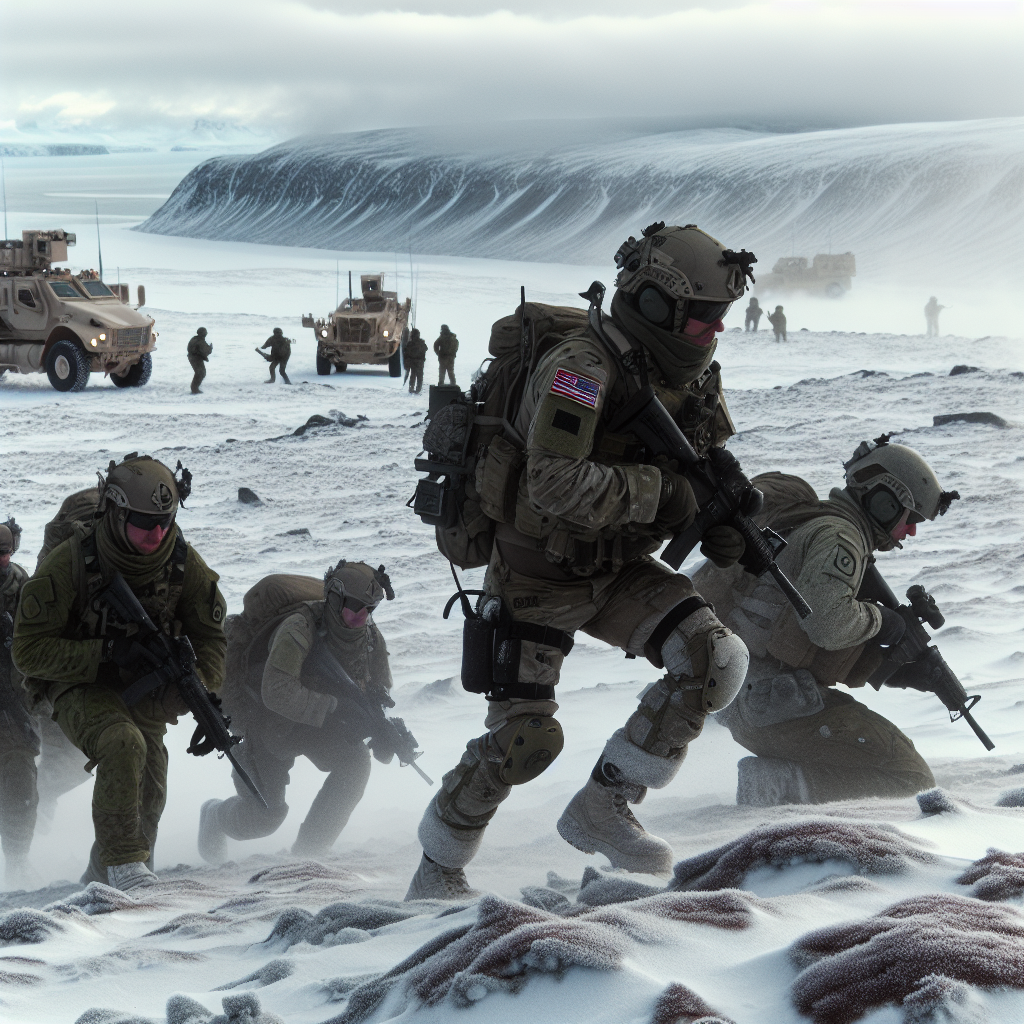
Operation Arctic Endurance and Arctic Sentry may seem like an intricate web of military terminology and exercises, but the reality is quite straightforward: they signal a notable increase in U.S. military activity within the Arctic, particularly near Greenland.
Recently, while delegates from Greenland and Denmark convened in Washington, D.C. to discuss the U.S.’s aspirations regarding Greenlandic ownership, a press conference unfolded in Denmark regarding Operation Arctic Endurance. This military endeavor aims to establish a more permanent military presence in Greenland, a notion that has not been universally embraced.
Just three days later, Inuit citizens took to the streets in protest against the U.S. presence. Around the same time, KNR had the opportunity to speak with Major General Søren Andersen, head of the Arctic Command, aboard the inspection ship Vædderen. During our conversation, Andersen emphasized that Operation Arctic Endurance should be regarded as a natural extension of last autumn’s military exercises.
A New Chapter in Arctic Defense
Recent developments indicate a shift in the operation’s framework. Originally intended as a voluntary endeavor for participating nations under Danish oversight, it has now integrated into the broader NATO exercise, Arctic Sentry, which the United States leads with participation from several Arctic nations.
The Danish Ministry of Defense confirmed this transition in a recent press release. This shift may correlate with the American submarine that made headlines by surfacing off Nuuk last weekend.
A Controversial Foundation
Mikkel Runge Olesen, a researcher specializing in foreign policy at the Danish Institute for International Studies, notes that Operation Arctic Endurance aligns with U.S. calls for increased Arctic defense in light of perceived threats from Russia and China. However, he asserts that what was intended as a straightforward military exercise has become viewed as a provocation against the United States.
“There is little doubt that Donald Trump interpreted it as a direct affront,” Olesen remarked, referencing the U.S. president’s subsequent threats of punitive tariffs against participating nations. He described two possible interpretations: either the exercise was a miscalculation on the part of leaders involved, or it was, indeed, aimed at the U.S.
Illustrating this point, Olesen recalled how, during the same period, French President Macron expressed intentions to participate in the exercise while also articulating a stance against American dominance. Similarly, the Swedish Prime Minister communicated solidarity with Denmark and Greenland on social media, downplaying U.S. backlash.
Reframing the Narrative
In light of these tensions, Olesen argues that it became essential to reframe the narrative surrounding Operation Arctic Endurance once the initial political firestorm had settled. “We must accept that we will continue to coexist with the U.S.,” he stated, adding that the exercise should be portrayed not as a confrontation with the Americans, but as a strategic response to Russian and Chinese interests in the region.
The establishment of NATO’s Arctic Sentry under U.S. leadership appears to provide a more palatable frame for operations like Arctic Endurance. This shift could minimize perceived hostilities while allowing Greenland and Denmark to maintain a military presence that balances American influence.
“This arrangement fulfills the intentions of both Denmark and Greenland, even if they might not openly acknowledge it,” Olesen concluded.
Recent Developments and Future Perspectives
Earlier this week, Jens-Frederik Nielsen, chairman of Naalakkersuisut, addressed the submarine incident during an interview with KNR. He reaffirmed that the submarine forms part of a defense cooperation agreement with the United States, asserting there’s little cause for alarm.
Moreover, Nielsen remarked on the anticipated increase in military presence from the U.S. and other nations around Greenland, expressing optimism about this engagement. “While the Americans are not partaking in Operation Arctic Endurance, they will be involved in the newly established Arctic Sentry, and we welcome that involvement,” he stated.
As the geopolitical landscape in the Arctic continues to evolve, the interplay between military exercises, international cooperation, and local perspectives will remain crucial for understanding the region’s future.