
Support for Greenlanders in Denmark: A Call for Financial Responsibility
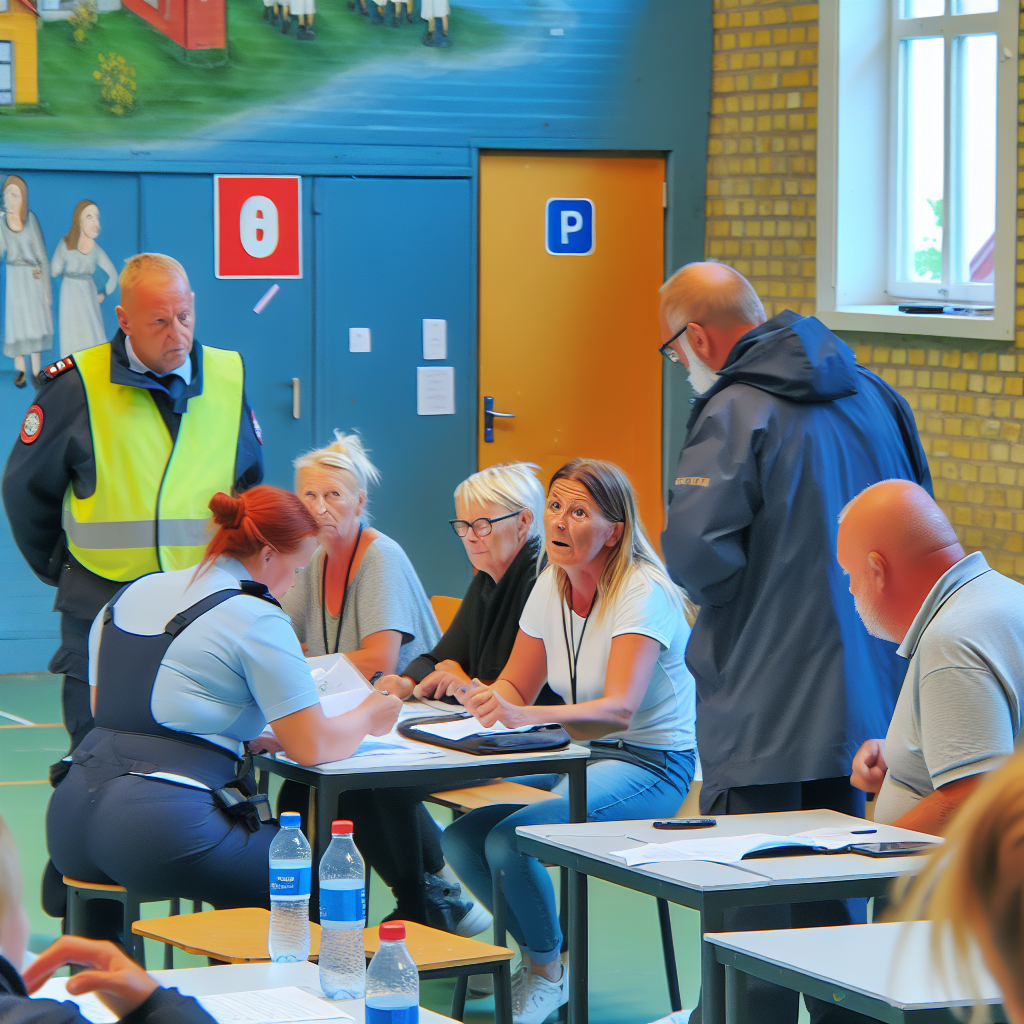
For years, De Grønlandske Huse has served as a beacon of support for Greenlanders living in Denmark, providing invaluable guidance and social counseling. This effort has historically been funded by the政府 (naalakkersuisut), but a shift in perspective is being advocated by Múte B. Egede, the Greenlandic Minister for Finance and Taxes from the Inuit Ataqatigiit party.
Egede asserts that these houses, along with the essential social work conducted within them, should fall under the purview of the Danish government. “The Greenlandic houses in Denmark, as well as the fundamental social support they provide, are inherently a Danish responsibility,” Egede remarked during an interview following the presentation of the new finance law. “We want Denmark to acknowledge and assume that responsibility.”
The Role of Greenlandic Houses
Currently, there are four Greenlandic Houses situated in Denmark’s major cities: Copenhagen, Aarhus, Odense, and Aalborg, with additional branches in smaller towns. Established in the 1970s to assist Greenlanders relocating to Denmark—particularly for educational opportunities—these houses have adapted their focus. Today, they play a crucial role in supporting Greenlandic students and new citizens transitioning into Danish life.
The Finance Act for 2025 has earmarked nearly DKK 20.3 million for these houses, along with an additional DKK 281 each month for every Greenlandic student receiving guidance. Approximately 250 students are expected to enroll in Danish post-secondary institutions in 2024. The houses also benefit from funds provided by the Danish municipalities where they operate, creating a framework of support that is increasingly reliant on various sources of financial aid.
Proposed Changes in Funding
The proposed Finance Act for 2026, recently concluded by the four governing parties, has also included provisions to investigate the potential reallocation of responsibilities. There’s a suggestion to reduce grants to De Grønlandske Huse and to explore whether certain tasks should be managed by the state. However, before any decisions are made, the government awaits the completion of a report, expected by February, which will clarify the current responsibilities and make recommendations for future organization.
Last year, the Inuit Ataqatigiit party had already championed the idea of Denmark financing the social initiatives of De Grønlandske Huse. Aaja Chemnitz, a parliamentary politician from the party, remains firm in her belief that it is only logical for the Danish government to take financial responsibility for Greenlanders living in Denmark, especially since they are Danish citizens. “This not only benefits those individuals but also the Danish municipalities that engage with them,” she noted.
Time is of the Essence
With general elections likely looming in Denmark, Chemnitz emphasizes the need for swift action. “The uncertainty that comes with elections can make things vulnerable,” she explained. “We don’t know what government will emerge, which adds an element of urgency to these discussions.”
In her view, the current Danish government appears more invested in the Greenlandic relationship than previous administrations. “For this reason, it’s imperative that we move quickly to establish clear agreements regarding De Grønlandske Huse,” she stated.
Advocating for Continued Support
Leise Johnsen, director of the Greenlandic House in Copenhagen, echoes the need for consistent financial support. “The priority is to ensure that we can continue our social initiatives, regardless of where the funding originates,” she said. With an increase in inquiries from both Greenlanders and Danish municipalities seeking guidance, Johnsen argues that reliable funding is essential.
While acknowledging the broader budget cuts affecting the Greenlandic representation in Copenhagen, which will see DKK 8 million trimmed over the next four years, Johnsen remains hopeful. “It’s clear that the needs of Greenlandic citizens in Denmark are evolving, and we must secure the necessary resources to respond effectively.”
Jeppe Bülow Sørensen, director of the Greenlandic House in Aalborg, emphasizes the importance of shifting funding mechanisms to ensure broader support. “As long as we continue to receive help, we’re open to where that funding comes from,” he declared. With an uptick in requests for assistance, the immediate priority is to ensure that resources are available to meet the growing demand for support among Greenlandic citizens in Denmark.
In this complex landscape of intergovernmental relations, the dialogue around financial responsibility for the well-being of Greenlanders continues—a conversation that calls for both urgency and understanding from all parties involved.