
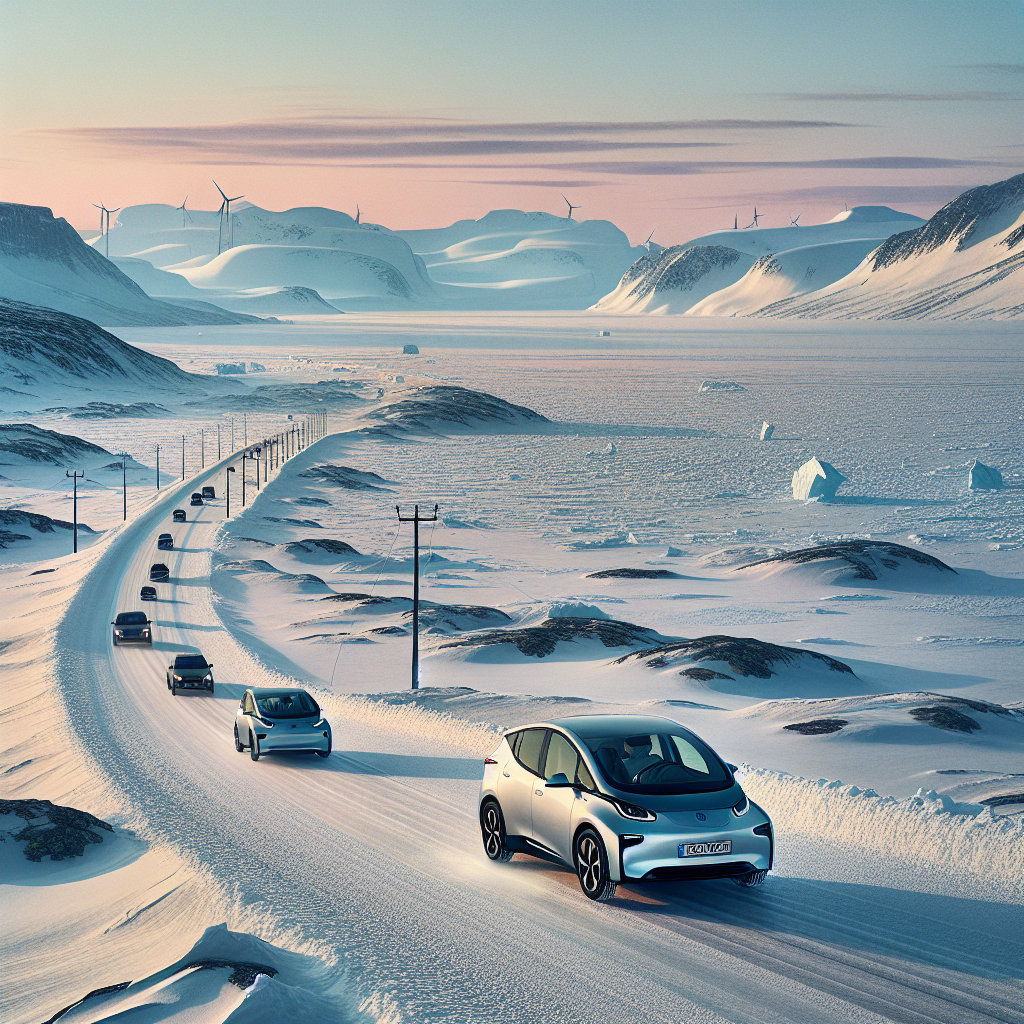
ELECTRIC VEHICLES FINDING A FOOTHOLD IN GREENLAND
As the tide of electric vehicles sweeps across the globe, Greenland is not being left behind. With advancements in technology leading to larger batteries and faster charging times, electric cars have become increasingly prevalent. “In our experience, they function reliably year-round, including during the harsh winter months,” says Palle Frederiksen, the sales manager at Deres Auto in Nuuk.
Most electric vehicles in Greenland are concentrated in Nuuk, where the charging infrastructure is more developed. As of May 2025, Statistics Greenland reports that 795 of the 7,088 passenger cars, vans, and trucks on the road are electric. This steady increase in the number of electric cars since 2020 shows no signs of slowing down.
In a broader context, this trend mirrors developments across Europe. As Torben Arent, news editor at FDM’s Motor magazine, observes, the popularity of electric cars can largely be attributed to their economic viability. He points out that in Denmark, for instance, electric vehicles accounted for an astonishing 80-90 percent of new car sales during the initial months of the year. In contrast, southern European countries lag, with electric cars holding merely 5 percent of market share. Yet, nations like Denmark, the Netherlands, Finland, and the UK boast electric vehicles making up roughly 20 percent of all cars currently on the road. As for the European average, it sits at about 19 percent.
A Vast Selection
Arent highlights that electric cars are appealing not just for their lower operating costs but also for the extensive range of choices available today. “This year alone, 65 new vehicles are set to hit the market, with 60 of them being electric,” he notes. The development of charging infrastructure, particularly in Denmark, has also been critical in facilitating this shift toward electric mobility.
Advancements in Technology
The technological leap in electric vehicles has been remarkable over recent years. Many new models now offer extended ranges and quicker charging options. For example, the latest version of a popular electric model has increased its charging speed from 82 kW to an impressive 220 kW, allowing drivers to charge from 10 to 80 percent in just 25 minutes. Additionally, battery capacities have risen, enhancing overall range.
However, challenges persist, particularly in colder climates. While advancements have introduced features like battery heating and heat pumps, Arent points out that significant heat loss can lead to a reduction in performance. “Typically, in freezing temperatures, electric vehicles can operate at about 40 percent below normal,” he notes.
Performance in Winter
Frederiksen acknowledges the impact of cold weather on electric vehicles, particularly in terms of range and charging duration. “That said, our experience shows they perform reliably even in winter conditions,” he asserts. He emphasizes that newer models have improved insulation and heating technologies, which help mitigate the cold’s effects. “So yes, cold does have an impact, but we don’t find that batteries stop functioning altogether,” he explains.
As Greenland embraces this electric revolution, the outlook appears bright, with continued advancements promising to enhance the electric driving experience, regardless of the weather.