
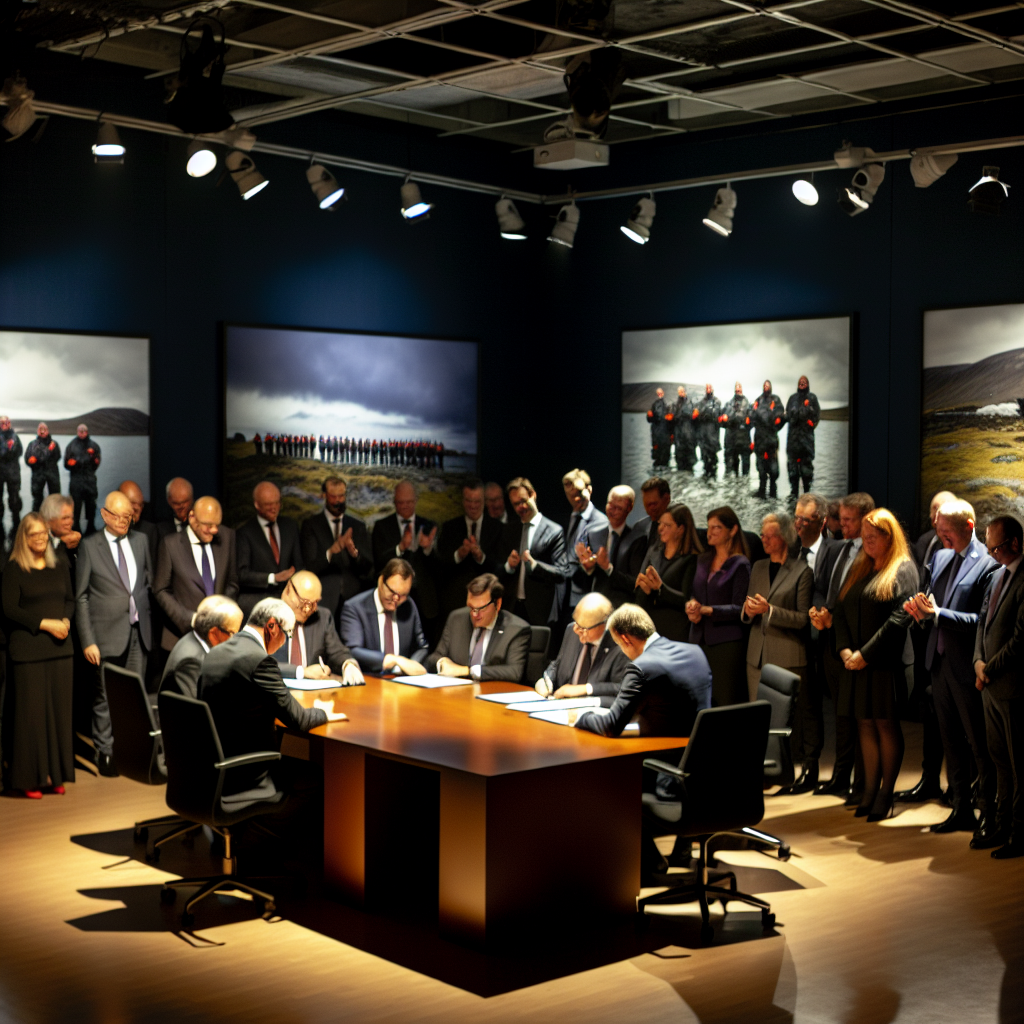
Greenland Strengthens Fishing Agreements with the Faroe Islands and EU
In a noteworthy development for the fishing industry, Greenland has finalized two significant agreements regarding fishing quotas for 2026—one with the Faroe Islands and the other with the European Union (EU). These agreements, while involving reduced quotas, aim to bolster the interests of Greenlandic fishermen.
A Shift in Quotas
Greenland’s partnership with the Faroe Islands entails a reciprocal reduction in fishing quotas. Notably, due to a 41% decline in scientific advice, the Faroe Islands have cut Greenland’s blue whiting quota by 3,350 tonnes. Concurrently, Greenland has adjusted its quotas for several fish species in East Greenland, reducing halibut by 50 tonnes, cod by 150 tonnes, tusk by 200 tonnes, and halibut again by 25 tonnes.
A visual summary of the quota exchange can be found below, illustrating the adjustments made between these two nations.
Framework with the EU
The agreement with the EU will lay the groundwork for fishing activities in Greenlandic waters in 2026. This arrangement is anchored in the Fisheries Protocol established for 2025-2030 as part of the broader Fisheries Partnership Agreement. Under this protocol, the EU will be allocated specific quotas in exchange for financial remuneration to Greenland.
These fishing opportunities are informed by preliminary figures in the Fisheries Protocol, ensuring that the arrangement remains beneficial for both parties.
Limiting Access to Foreign Vessels
In light of the scientific advice indicating diminished shrimp populations, fishing quotas for both West and East Greenland have been reduced significantly—by 181 and 950 tonnes, respectively. For the first time, Greenland has established a minimum limit for capelin at 30,000 tonnes, leading to the EU not being granted any capelin quota for 2026. Additionally, restrictions have been placed on the number of foreign vessels permitted to fish on the shrimp stock in East Greenland.
Naalakkersuisut emphasized that these quota reductions for the EU will expand the quota base available to Greenlandic boats and enhance their capacity utilization. This strategy is anticipated to yield greater revenues for the public sector through resource charges and taxes, thereby offsetting the decrease in payments from the EU.
Financial Implications
The Fisheries Partnership Agreement comprises two main components: a commercially driven fishing agreement that includes payment for fishing opportunities and a sector support program. Anticipated payments for fishing rights in 2026 are approximately 91.5 million DKK for fishing opportunities, alongside around 25 million DKK for licensing fees.
Collaborative Efforts
The Greenlandic delegation, which was instrumental in these negotiations, included representatives from multiple sectors—such as the Department of Fisheries, Agriculture, the Greenland Mission to the EU, and stakeholders from the fisheries industry. This collaborative approach highlights the strategic importance of fisheries to Greenland’s economy and well-being.
As the fishing landscape shifts, these agreements signify Greenland’s commitment to preserving its marine resources while ensuring that local fishermen reap the benefits of sustainable practices in an evolving marketplace.