
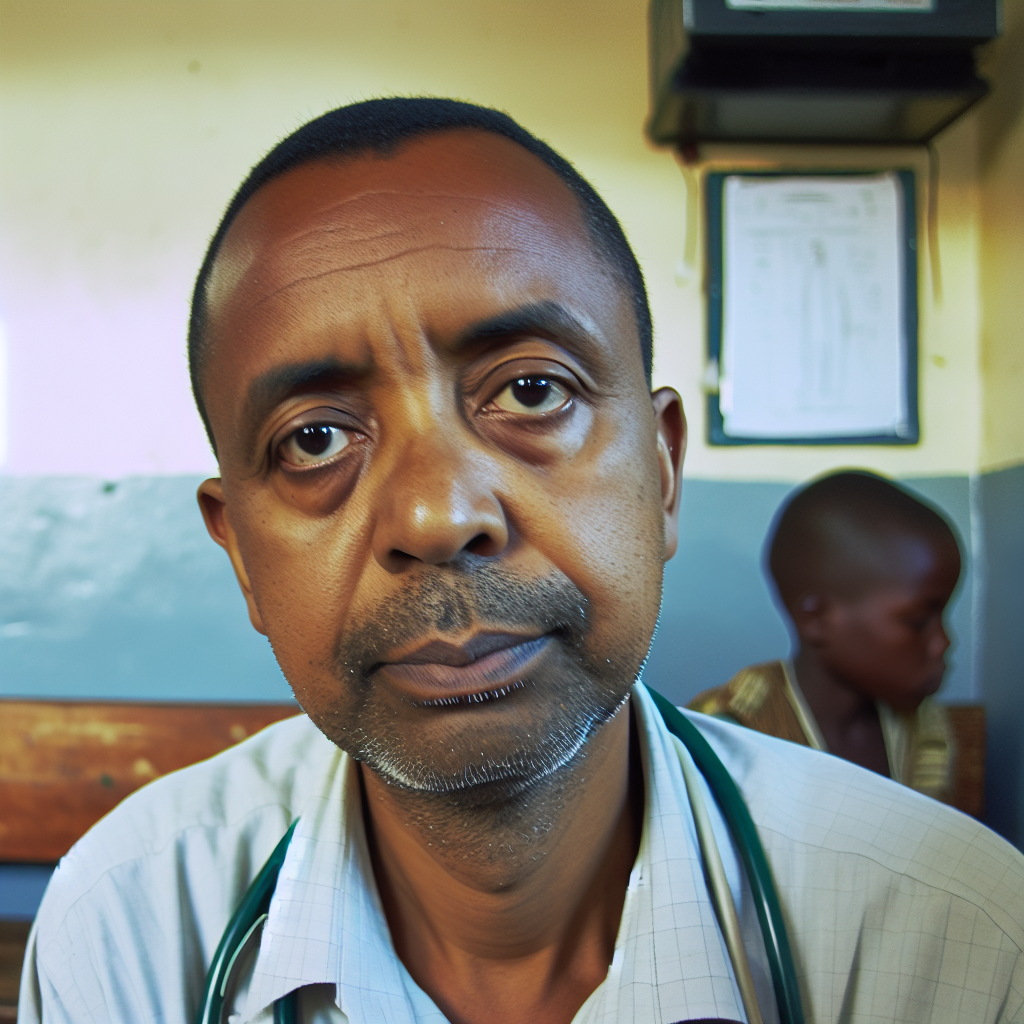
“There’s a notable distinction between making decisions and being a leader. And I aspire to be a leader.”
This is how Jesper Olsen began his remarks when KNR visited him in early November, marking his recent appointment as the chief medical officer for the healthcare service.
But what does it mean to step into the role of chief physician during a time when the healthcare system is stretched thin—financially, in terms of workforce, and with an overwhelming workload?
We sought to find out.
“We are facing a myriad of challenges,” he explained. “As our population ages, the pressure on our healthcare system only intensifies.”
Moreover, he noted the concerning trend of a dwindling working-age population as well.
“Essentially, we are not sufficiently staffed to maintain our current level of service. If things don’t change, we will encounter significant problems in just a few years,” he warned.
Olesen first set foot in Greenland over 26 years ago, entering the healthcare field as a young doctor at Queen Ingrid’s Hospital and Health Centre. He later specialized in general medicine and in 2008 took on the role of chief district physician at the medical clinic in Nuuk. A few years thereafter, he was appointed as the leading regional doctor in Region Sermersooq, a position he has held until now.
If you ask Olesen about his primary mission as chief physician, he emphasizes that it is to ensure that political decisions translate effectively into practical, everyday healthcare.
However, he hopes to influence the discourse in both directions.
“I want to advocate for citizens, but also engage with politicians about what’s realistic and pragmatic,” he said.
From his new vantage point, Olesen identifies several areas ripe for improvement, where slight adjustments could enable smarter resource allocation.
“We can enhance our current practices. Doing so would elevate the healthcare services available to the population,” he explained.
Finding Smarter Solutions
One pressing issue confronting the healthcare system is the outdated patient record system.
“Our electronic patient records cannot continue in their current format. They are becoming untenable; it’s our most vital work tool,” Olesen remarked.
Thus, it is imperative to promptly identify a modern replacement.
“Ideally, we could transition to a system that allows not only easier access for healthcare staff to patient data but also empowers citizens to view their own information,” he added.
He noted that healthcare staff currently spend “a considerable amount of time” relaying information about patients’ health data.
“For instance, how many prescriptions do they have left? It would be advantageous if patients could verify that information independently,” he said.
In addition, the healthcare system grapples with a considerable shortage of skilled professionals—a challenge previously highlighted by KNR.
On October 1, Denmark and Greenland signed a letter of intent promising advancements in the healthcare system, with DKK 1.6 billion allocated by Denmark to bolster health services at home.
Unfortunately, Olesen observes a concerning trend overseas: an increasing number of doctors are choosing highly specialized fields.
“Whether it’s eye diseases or certain types of stomach cancer, these specializations thrive, but they do not align well with Greenland’s healthcare needs due to our relatively low incidence of such cases,” he explained.
What’s required in Greenland, he emphasizes, are doctors with a broad skill set—generalists who can manage various issues, while super specialists are called upon as needed.
“We must ensure we remain versatile. It’s a daunting challenge, especially since fewer generalists are emerging globally,” he said.
When searching for doctors abroad fails, Olesen stresses the importance of cultivating talent domestically.
“This is fundamental for our success,” he stated, adding that starting in 2023, full specialist medical training in general medicine will be available in Greenland—a move he sincerely hopes more people will embrace.
“Among the permanent staff at SANA, we have many with backgrounds in general medicine,” he noted, remarking that this trend extends to other sectors of the healthcare system, including psychiatry.
“So they contribute their skills in a variety of contexts,” he added.
Bridging Misunderstandings
For some time now, the overarching narrative of the healthcare crisis has revolved around financial constraints.
“Indeed, the financial situation of the healthcare system is precarious. It’s no secret that we’re exceeding our allocated budget for health in Greenland, which poses significant issues,” stated Olesen.
However, he argues that it’s not solely budgetary limitations that are constraining the healthcare system.
“We also struggle to attract the right professionals. Many simply do not exist or are uninterested in working in Greenland,” he reflected.
On May 1 last year, healthcare workers held a demonstration in Nuuk, advocating for better working conditions for permanent staff.
Olesen also believes that much of the criticism directed at the healthcare system often stems from unrealistic expectations set by both politicians and the public.
“Regrettably, there are times when we face expectations that are simply beyond what we can deliver with our available resources,” he said.
Olesen insists that for the healthcare system to function effectively, there needs to be a better alignment of expectations with societal realities.
“We must come to a mutual understanding of what we can realistically achieve in Greenland, to prevent frontline staff from bearing the brunt of criticism,” he stated.
“Most of our employees genuinely wish to provide quality care. However, we are also constrained by our limits,” Olesen stressed.
In September, a wave of discontent erupted in Qeqertarsuaq when the health service announced the closure of the local health center after 4 p.m.
Healthcare administrators explained that these restricted hours were necessary for optimal resource management, reinforcing that citizens could still access health services around the clock.
In this context, Olesen contends that much of the criticism arises from misunderstandings.
“As far as I know, people were still able to contact the health service for assistance,” he noted.
He also highlighted the need for improved communication between citizens and the healthcare system.
“We often encounter patients who reach out wishing to speak with a doctor, and sometimes staff misunderstand the intent behind their requests,” he explained. “This is an area where we need to hone our skills—asking patients what they specifically wish to discuss.”
Having served as chief district doctor and leading regional doctor in Region Sermersooq, Jesper Olesen is well-acquainted with the healthcare system’s challenges. In his new role as chief physician, he acts as a bridge between the political landscape and healthcare administration.
Conversely, Olesen also posits that there is much citizens can do to alleviate the burden on healthcare staff.
“We operate within a constrained healthcare system. The more proactive you are in helping us manage incoming issues, the more effectively we can respond and the more accurate we can be,” he advised.
The desire to assist is, at its core, what drives healthcare professionals, he emphasizes.
“Anyone with a background in healthcare—be it nurses, doctors, or midwives—has likely chosen this path because they genuinely want to help others,” he noted.
“But we also have a duty to allocate our resources wisely, to assist as many people as possible at the right time and with the appropriate level of care,” Olesen concluded.