
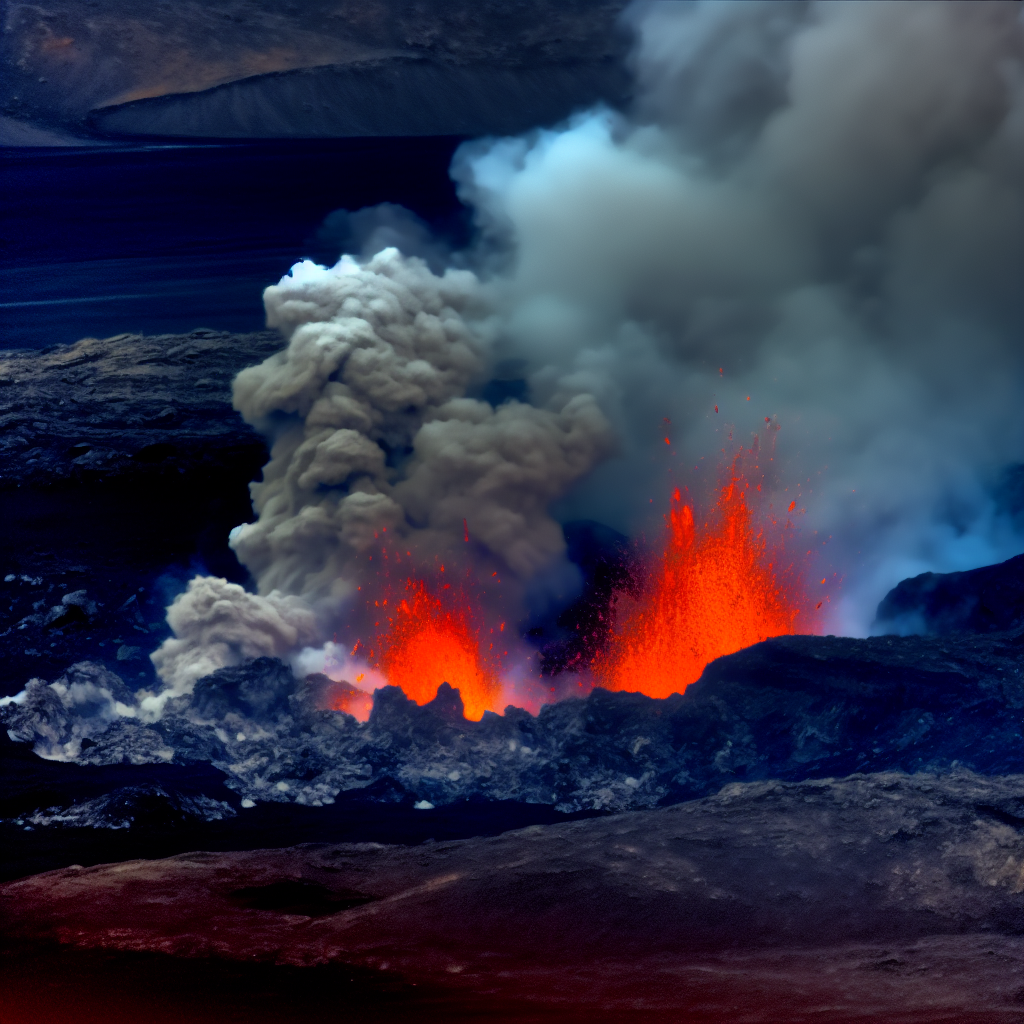
The eruption as seen from a Coast Guard helicopter during a surveillance flight. (Photo: The Icelandic Met Office/Halldór Björnsson)
Updated 5 August
Ninth Eruption on the Sundhnúkur Crater Row Has Concluded
– A New Hazard Map Issued
Activity at the Sundhnúkur crater row, which witnessed its ninth eruption, has come to a halt. As of yesterday, seismic tremors have diminished, and while a slight display of activity was observed overnight, no eruptions have been detected today. The eruption is officially considered over.
However, monitoring continues, as satellite and GNSS measurements indicate that uplift in the Svartsengi region has resumed, measuring approximately 2–3 centimeters. This suggests that magma is still accumulating underground. If this upward movement persists, it could set the stage for new magma intrusions and potential eruptions.
In recent days, the lava field’s expansion has stabilized; however, it remains unstable. Sudden advances at the lava front could still occur, posing significant risks. The collapse of the surface at the edge can happen without warning, sending molten lava surging forward— a dangerous situation that necessitates maintaining a safe distance from the lava margins even post-eruption.
Fortunately, over the past two days, gas emissions from the eruption have remained low, with no significant volcanic haze detected. Nevertheless, the potential for volcanic haze persists, sometimes lingering for several days following an eruption’s cessation.
A new hazard map has now been issued, effective for the coming week. It reflects that while the eruption has ended, risks remain associated with the new lava formations and potential gas emissions.
Updated 1 August
New Hazard Assessment: Risks of Lava Breakout and Gas Pollution
Dangers in the Area
-
Walking on newly solidified lava can be life-threatening; the crust may break unexpectedly, hiding glowing lava just beneath.
-
Approaching the edge of the lava poses risks, as thin lava tongues can surge forward suddenly, and the edge can collapse.
-
Gas emissions can occasionally exceed safety levels near the eruption site.
Eruption Status
-
Magma accumulation beneath Svartsengi has resumed.
-
The lava field continues to thicken, with portions flowing beneath the surface.
-
A new hazard assessment map remains in effect until 5 August unless changes in volcanic activity necessitate a revision.
Current Eruption Activity
The eruption on the Reykjanes Peninsula, which began on July 16, continues at a steady intensity, although the dramatic fountaining has decreased markedly.
Satellite images from ICEYE, coupled with measurements from Verkís and Efla, confirm that while the lava field continues to thicken, no significant changes in its spread have occurred recently. This thickening indicates a buildup of pressure that could trigger sudden breakouts at the lava edge— a situation that remains perilous, warranting a safe distance from the lava margins.
Flow path analyses suggest that lava may move toward Innri Sandhóll, a site popular with tourists. Consequently, visitors should be cautious and well-informed.
Measurements Confirming Ongoing Magma Accumulation
Recent deformation measurements indicate continued uplift in Svartsengi, with GNSS instruments and InSAR satellite data indicating ground movement between July 21 and 28.
Weather and Gas Pollution Updates
The forecast for tonight suggests sharp frontal systems, with potential thunderstorms in the southwest. Gas pollution may drift northwest across the country on Sunday. Current light winds are likely to inhibit gas dispersion, increasing the risk of sulfur dioxide (SO₂) accumulation in populated areas.
Updated Hazard Assessment Map
The hazard assessment map has been revised and remains valid until August 5, barring significant changes in volcanic activity. This latest update indicates low hazard levels in areas like Vogar and Keflavík, while a low to moderate risk persists in Grindavík. Monitoring is essential, particularly due to potential gas pollution.
For those in the affected areas, the Icelandic Meteorological Office urges vigilance and encourages the public to remain informed through daily updates and advisories.