
The Sound of Silence on Nuuk’s Slopes: Unprecedented Winter Warmth
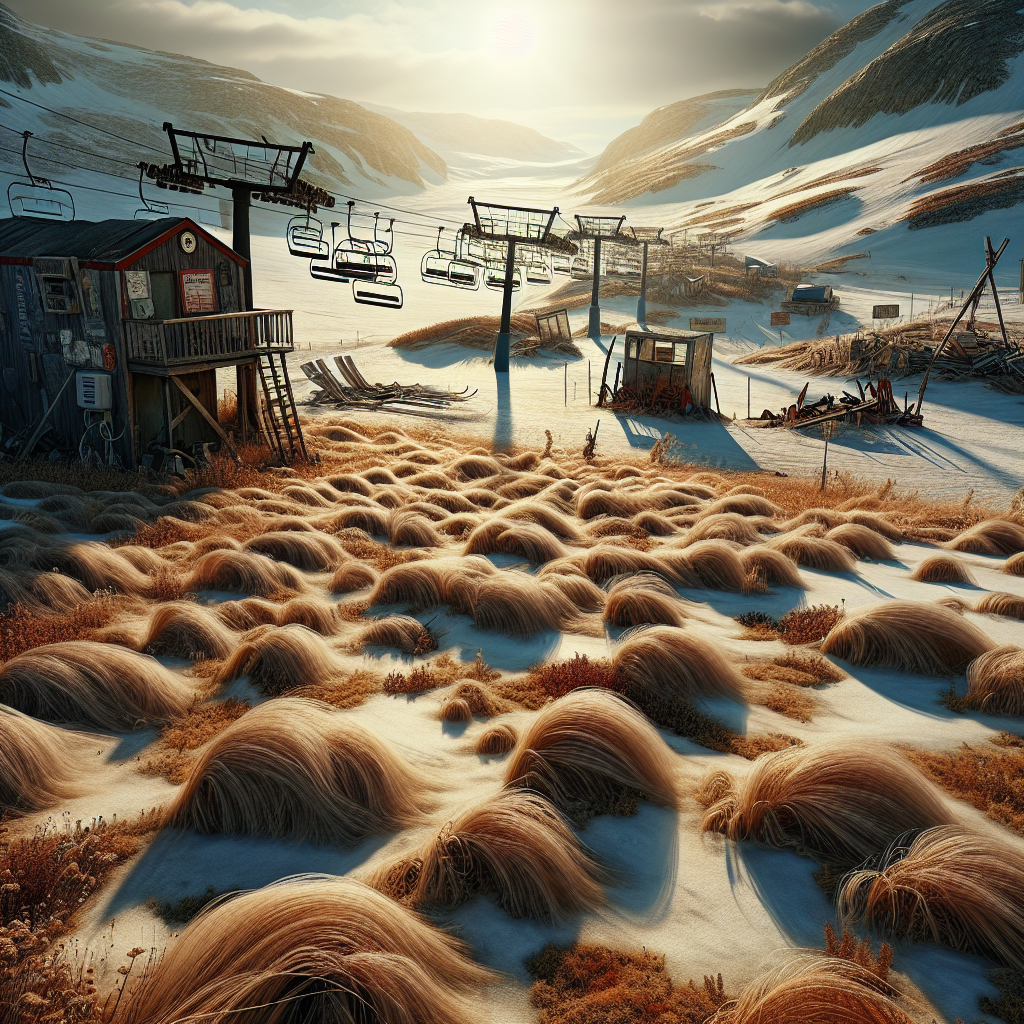
As February rolls in, one might expect the crisp sound of snow crunching under skis and a bustling ski slope alive with activity in Nuuk. Instead, the sun shines warmly on bare mountain faces, and the Sisorarfiit Ski Lift remains motionless, a monument to an unusually warm winter.
Greenland is currently grappling with a winter that defies seasonality. Record high temperatures have rendered any hopes of opening the Sisorarfiit Ski Lift akin to a distant dream. While climatologists gather data on these exceptional heat records, the real impact is felt by skiers, families, and local clubs in a city where winter has traditionally united the community.
Record Highs Transforming Nuuk
In stark contrast to the expected winter chill, thermometers in Nuuk have registered unprecedented warmth. Caroline Drost Jensen, a climatologist at Denmark’s Meteorological Institute (DMI), notes that in her eight years of analyzing Greenland’s climate data, she’s never encountered such a situation.
“I’ve never witnessed so many simultaneous heat records,” Jensen remarks. The recorded highs along Greenland’s west coast reveal that January brought temperatures unlike any previously recorded for that time—dating back to 1884. Nuuk’s average temperature for January settled at a surprising -0.2 degrees Celsius, even topping Denmark’s -0.6 degrees. Historically, January’s average for Nuuk is a much frostier -7.7 degrees Celsius. “Right now, Nuuk is experiencing its warmest January ever. It’s almost surreal,” she explains.
An Empty Ski Slope
At Sisorarfiit Ski Lift, the atmosphere is far from festive. With a glaring sun overhead and the slopes stripped bare, operations manager Qulu Heilmann stands in stark disbelief. “We’ve never experienced anything like this—not to this degree,” he says, gesturing toward the empty expanse where the slope typically draws locals.
Last season, the ski lift opened by December 30, with snow shoveling efforts beginning as early as November. This year, however, the snow has refused to fall. “Our chances of opening now are zero. We’ve been inundated with questions about when we’ll welcome skiers back, but for now, we can only monitor the weather,” Heilmann asserts.
The ski lift holds a unique place in winter life in Nuuk, and its closure resonates deeply across the community. “It impacts everyone—clubs, families. There’s a rich history here; many have fond memories tied to this slope. For competitive skiers, not being able to train is particularly disheartening,” he adds with a heavy sigh.
The Weight of Warming
Alpinist Jesper Labansen embodies the challenges faced under these circumstances. The sport is more than a pastime for him; it shapes his winter routines. “Skiing takes up a significant part of my life. It’s painful not to train for slalom and giant slalom now when we should be building strength for the upcoming championship events,” he shares.
Labansen emphasizes that this late start is symptomatic of a broader trend. “I can’t recall a season starting this late before, and unfortunately, this isn’t just an anomaly. It’s indicative of a larger pattern,” he states. He advocates for improved infrastructure at the ski lift, aimed at better snow production. “If we want alpine sports to thrive, we need significant enhancements compared to what we currently have,” he explains.
The Push for Snow Production
Qulu Heilmann shares a similar sentiment, actively working with fellow enthusiasts toward the goal of artificial snow production. “What we need most are snow cannons. Even in temperatures just below freezing, we could produce enough snow to maintain the slopes,” he explains.
Recently, Heilmann took a trip to Norway to study snow cannon technology, realizing that such innovations could be pivotal for the ski lift’s future. However, he recognizes the financial hurdles ahead. “Investments are necessary, and we need backers who believe in the possibility of winter in a warming Greenland,” he adds.
Unraveling the Causes of Heat
The warm spell in Nuuk can be attributed to a myriad of factors, according to climatologist Jensen. Presently, a temperature seesaw is sending milder air to Greenland while colder conditions linger over Denmark. Local weather dynamics, such as warm winds descending from mountain ranges, further amplify temperature fluctuations. Earlier in January, Nuuk recorded a notable high of 11.3 degrees Celsius, a stark indication of climate change’s unrelenting progression.
“The Arctic is experiencing climate change at a rate up to four times faster than the global average. When we factor in current weather phenomena, we can expect more instances like this in the future,” Jensen warns.
Forecasts for additional snowfall remain bleak. Meteorologist Lene Dolmer notes that while light snow showers are on the horizon, they are unlikely to provide sufficient coverage for the ski lift to operate anytime soon.
A Broader Perspective
As Jensen points out, Nuuk’s plight is part of a larger narrative about warming in Greenland. “We see an alarming number of high temperature records, significantly outweighing lower ones. The heat along the west coast is pronounced, marking a troubling shift in our climate.”
The empty ski slopes aren’t merely a local inconvenience; they serve as a stark reminder of the immediate effects of climate change on everyday life in Greenland. The pressing question isn’t whether winter conditions will alter—it’s how the community will adapt to a future where snow may become merely a memory. As Groenland’s temperatures rise, the dream of skiing in Nuuk hangs precariously between sharp investments, changing climates, and a commitment to preserving winter traditions.