
Uncertainty Surrounds Royal Greenland Amid Trump’s Tariff Threats
In a time of heightened international tension, Toke Binzer, CEO of Royal Greenland, has chosen a cautious stance regarding U.S. President Donald Trump’s threats of punitive tariffs. As the largest company in Greenland grapples with the implications of potential trade restrictions, Binzer remains tight-lipped about how these might affect the community-owned enterprise.
“Royal Greenland is committed to long-term value creation, and we prefer not to comment on international political matters,” he stated in a written response to Sermitsiaq. His focus remains on the company’s resilience and adaptability in a fluctuating global market. “With our extensive experience and presence across continents, we are optimistic in our ability to achieve our strategic objectives—even amid challenges.”
Gazing Towards the U.S. Economy
With a population of 340 million, the United States stands as the world’s largest economy. Recently, Denmark—and by extension, Greenland—has found itself glancing warily toward this economic powerhouse.
Trump’s announcement of punitive tariffs has raised alarms, targeting Denmark alongside seven other NATO allies and EU countries exporting goods to the U.S. This includes Sweden, Norway, Finland, France, Germany, the Netherlands, and Great Britain, all of which have recently deployed troops or military equipment to Greenland.
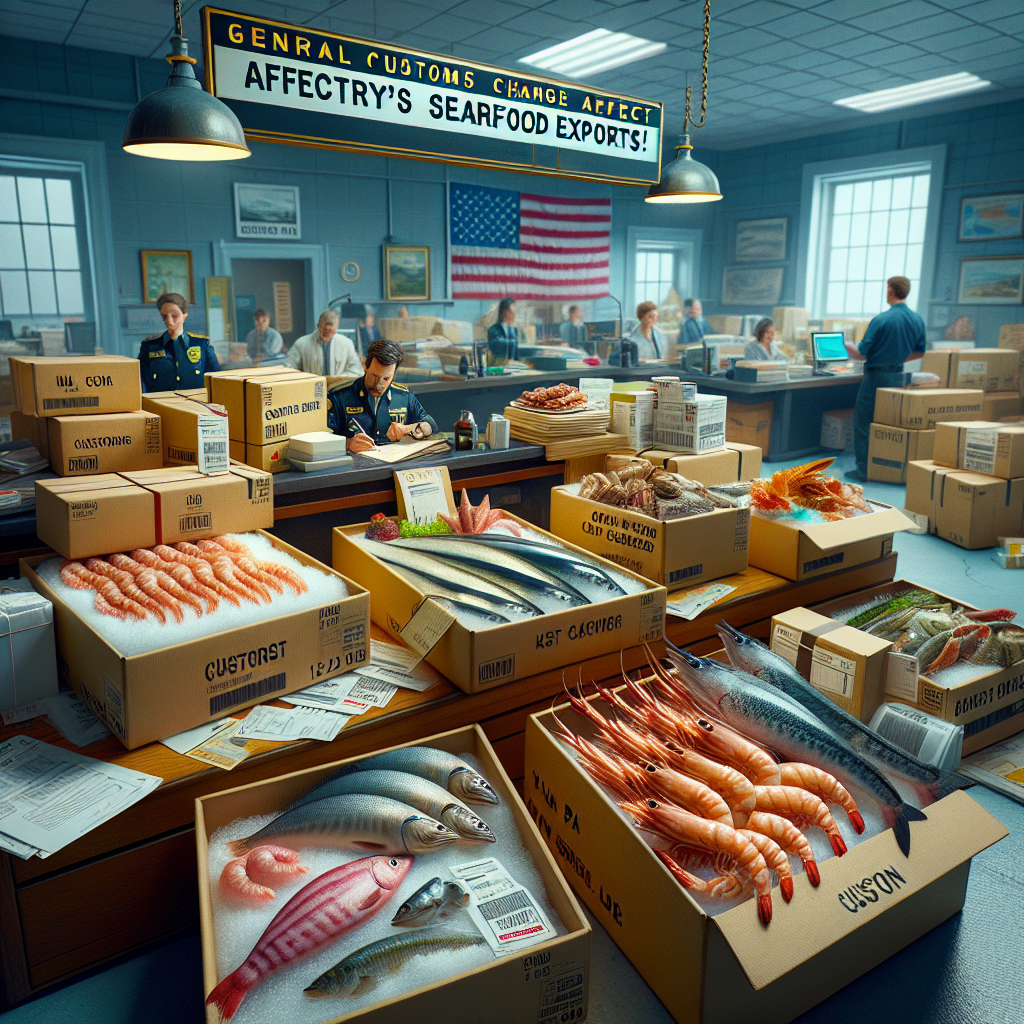
But what does this tariff threat mean for Royal Greenland’s seafood exports to the U.S.? Binzer remains resolute: “Royal Greenland does not engage with trade restrictions that have yet to be implemented. We comply with all applicable trade laws and continuously adjust our operations to align with market developments.”
As a global export company, he emphasizes, the firm is adept at navigating unstable conditions while focusing on market diversification and risk management.
Potential Tariff Impacts
If Trump’s threats materialize, the first wave of tariffs will take effect on February 1, imposing a 10 percent duty on European goods. This could escalate to a staggering 40 percent by June 1 if a resolution regarding Greenland’s status has not been reached—representing a significant hurdle for exporters.
Royal Greenland relies heavily on the U.S. market, with projections suggesting a turnover of one billion kroner in North America by 2024, equating to roughly 18 percent of the company’s total revenue. The firm imports goods both through Denmark and Canada, including popular products like Greenlandic shell prawns and Nutaaq cod from its Maniitsoq facility.
“Our products, marked by high quality and a documented origin, have generated substantial interest in the U.S.,” Binzer notes. Yet, the looming tariffs raise pressing questions for key exports such as Nutaaq cod. “Nutaaq is a strategically important offering for us, cultivated through a diverse customer base across multiple markets. We actively evaluate how evolving conditions will influence our production and marketing strategies,” he cautions.
When asked whether Trump’s tariffs might halt all exports to the U.S., Binzer remains optimistic but realistic: “It’s premature to make such conclusions. Our flexible business model allows for sales across a variety of global markets, and we are constantly assessing market opportunities.”
Denmark’s Resilience
While the U.S. could potentially exert significant pressure on Denmark, experts believe the nation is unlikely to be fatally wounded. A recent article in Politiken highlighted insights from economists who assert that while punitive tariffs could inflict damage, substantial repercussions for the Danish economy may be avoided. “Our main scenario predicts little to no impact on Denmark’s economy,” suggested Søren Kristensen, chief economist at AL Sydbank. Higher tariffs may lead to increased consumer prices in the U.S., an ironic twist for a president elected on the promise of lowering costs.
Business Community Meetings
In light of these uncertainties, Naaja H. Nathanielsen, the business minister, has convened a meeting with the Greenland Business board and management of self-governing joint stock companies. The meeting, scheduled for this Friday, aims to address the unrest following Trump’s remarks about U.S. ownership of Greenland.
“The purpose is to provide an update on the situation and ensure that all parties share a clear understanding of the developments and their potential ramifications for Greenland,” a press release from the Naalakkersuisut states.
As the landscape shifts, the interplay between international politics and local enterprise remains under close scrutiny, with the outcome uncertain yet undoubtedly significant for all involved.