
Arctic Fish Greenland Faces Financial Challenges Amid Climate Change
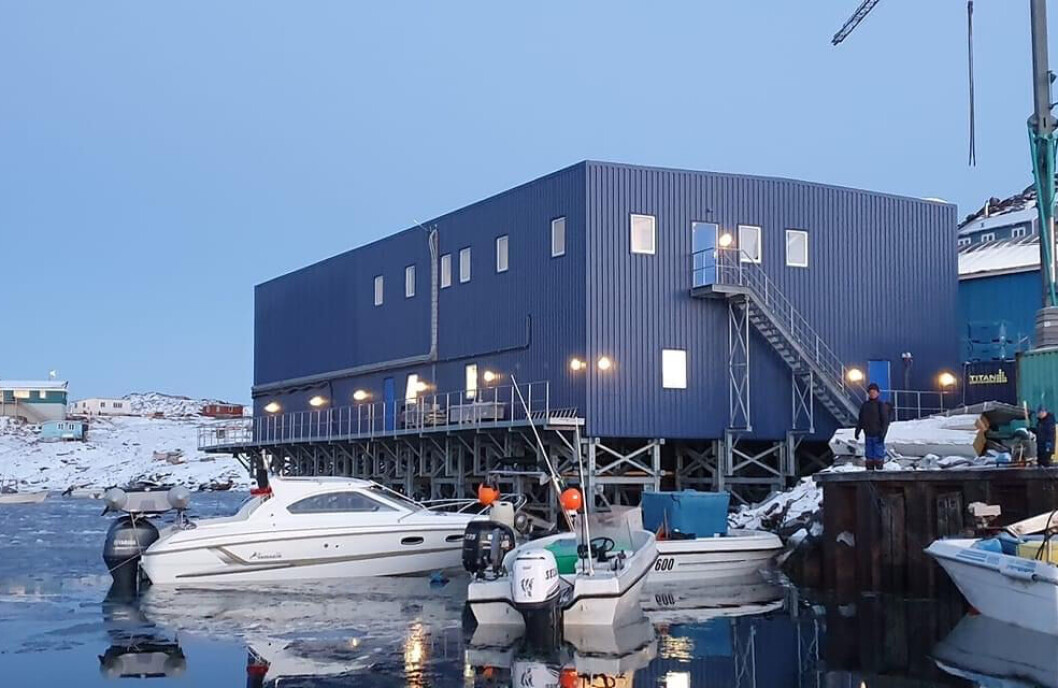
Arctic Fish Greenland A/S, founded in 2018 and partially owned by Royal Greenland A/S, operates production facilities in Kullorsuaq and Nuussuaq. Unfortunately, the company finds itself in a troubling financial predicament, as revealed in its accounts for 2025. A notable decline in halibut landings at its facilities over the past two years has significantly impacted its finances.
Director Frederik Olsen attributes this downturn primarily to changing ice conditions, which have led to an unusual increase in the narwhal population in the fishing areas. “The company did very well when it started in 2018. However, while we can’t change climate conditions, we can adapt,” Olsen stated, hinting at plans to acquire vessels that can better facilitate halibut fishing.
Continued Deficits
The financial reports paint a bleak picture. In 2024, Arctic Fish Greenland recorded a turnover of approximately DKK 41.1 million alongside a deficit of about DKK 11.2 million, prompting the need for various savings measures. By 2025, revenues dropped to DKK 31.5 million, with the deficit diminishing to just over DKK 4.5 million, a development the board considers still unsatisfactory.
Furthermore, the company has seen more than half of its equity vanish. Despite this dire situation, the board members assure stakeholders that several initiatives are underway to stabilize operations. “Our halibut landings have diminished by half in just two years,” Olsen remarked, explaining the pressing need for adjustments. The employment levels at the factories reflect this struggle: in Nuussuaq, the previous workforce of 15 to 20 has dwindled to about five.
The financial reports show a commitment to monitor compliance with financial obligations, with Royal Greenland poised to inject capital if necessary to sustain the company.
The Strain of Climate Change
The ongoing changes in ice conditions due to climate change have dramatically affected fishing in the region. Historically, the waters around Upernavik would freeze by November, allowing for ice fishing to commence. Nowadays, ice formation has shifted to January or February, severely limiting halibut fishing opportunities during the crucial late fall and early winter months.
Olsen emphasizes that this trend has further compounded the company’s challenges, leading to markedly lower catch rates.
Narwhals: An Increasing Concern
Recent assessments reveal that the rising narwhal population in Upernavik is straining the halibut stock. The Greenland Institute of Nature notes that narwhals in northern Baffin Bay may consume over 750 tons of halibut daily, while those in the south eat about 90 tons. This huge intake, occurring for five months during winter, raises concerns about the sustainability of halibut fishing in the area.
While exact figures for narwhals in Melville Bay remain elusive, the species is known to thrive near ice, relying on both shrimp and halibut within their diet.
A New Strategy in the Works
As traditional fishing methods falter, board member Timotheus Petersen advocates transitioning from dinghy fishing to larger vessels. “Given the changes in ice conditions, larger boats are essential for adapting to these new realities,” he stated.
The board is currently evaluating the feasibility of acquiring two vessels that could significantly enhance fishing operations. However, Petersen notes that this plan is still in its early stages, and detailed discussions are ongoing. He also highlighted the need for political support for Kullorsuaq and Nuussuaq fishermen during this transition.
As Arctic Fish Greenland navigates these turbulent waters, the convergence of climate change and market dynamics presents a formidable challenge—but with proactive strategies, there remains a glimmer of hope for the company’s future.