
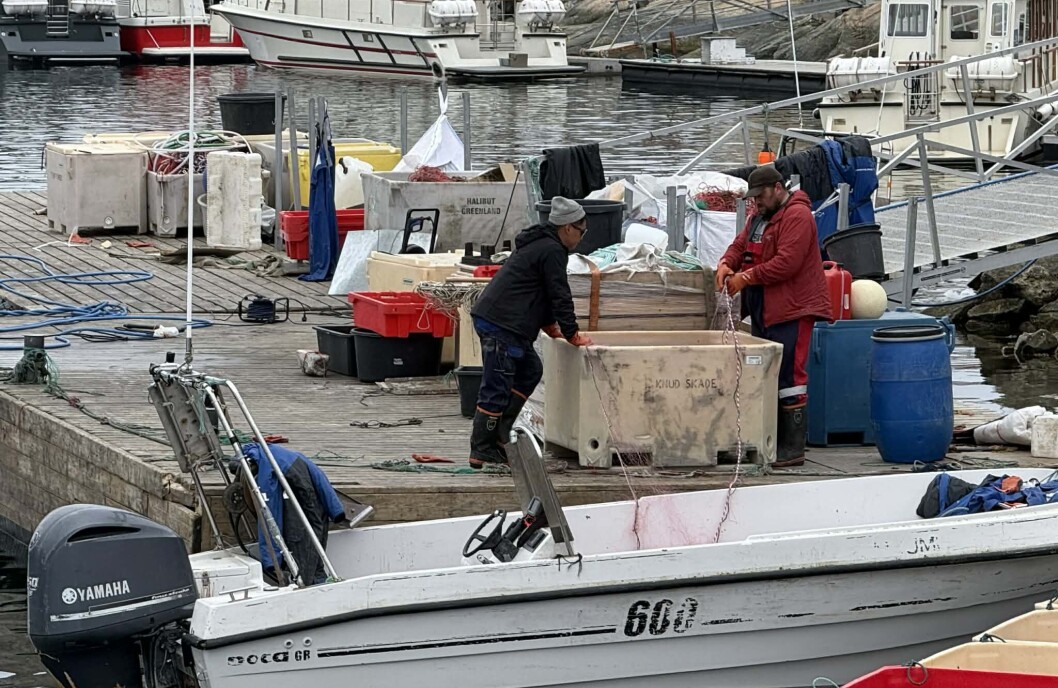
Uummannaq’s Fishing Community Faces Setbacks Following Power Plant Fire
Fishing is the lifeblood of Uummannaq, a picturesque town where rugged landscapes meet the sea. However, a recent fire at the Nukissiorfiit power plant on June 22 sent shockwaves through the community, halting all fishing activities and operations at the town’s trio of fish factories for approximately a week. This disruption resulted in severe financial setbacks for both fishermen and fishing companies alike.
In the wake of the incident, Ole Møller, chairman of the local fishermen’s and trappers’ association, and Sakio Fleischer, chairman of the municipal council’s technical committee, have called for the immediate formulation of a contingency strategy to prevent a recurrence of such a crisis. Their concerns are shared among many who rely on the fishery for their livelihoods.
A Heavy Toll: Loss of Fish and Income
Uummannaq houses several prominent fish factories, including those operated by Royal Greenland, Avannaa Seafood ApS, and Sigguk Uummannaq ApS, which play a crucial role in ensuring a stable market for local fisheries. The sudden power outage rendered fishing operations impossible, hitting companies like Sigguk Uummannaq ApS particularly hard. Office worker Jakobine Markussen recounted the day of the fire with frustration: “We were forced to send two vessels back that day, with a total of around 15 tonnes of fish that had to be unloaded at fish factories in nearby villages.”
On good days, the company can procure up to 20 tonnes of fish, but the week-long suspension meant substantial losses for many, transformative for the fishermen who depend on consistent catch to stay afloat.
Profound Economic Impact
The repercussions of the fishing halt were felt deeply. Møller himself refrained from fishing during this period, finding it economically unfeasible to travel to surrounding settlements to purchase catch. “I estimate my losses to be around DKK 20,000 for the days I didn’t fish,” he noted, adding that others who catch more had suffered even greater setbacks. In light of the circumstances, some vessels sought alternative fishing locations further south, including Disko Bay, to mitigate their losses.
The closure did not merely affect fishermen; it also deprived the municipality of tax revenue and impacted various local businesses such as restaurants and shops. “The fishing halt had far-reaching consequences across the entire Uummannaq community,” Møller lamented.
Formulating a Contingency Plan
To safeguard against future disruptions, Møller insists on the necessity of a well-structured contingency strategy. “All affected parties must come together to develop a plan informed by the lessons we’ve learned,” he urged. An evaluation of the incident within the municipal council should also be a priority as part of crafting a comprehensive emergency plan.
Fleischer conveyed that Avannaata Municipality is actively engaged in creating a contingency committee. “Once this committee is formed, drafting a contingency strategy will be a logical next step,” he stated.
Stabilizing the Supply Chain
In a silver lining to an otherwise challenging situation, Royal Greenland reported that its fish factories in nearby settlements—such as Ikerasak, Ukkusissat, and Saattut—remained largely unaffected by the fire. While operations in Uummannaq experienced a temporary stoppage, the procurement and production of halibut continued as normal in these neighboring areas.
Today, fishing activities in Uummannaq are back to business as usual, but the community is left reflecting on the importance of preparing for the unexpected, ensuring that such disruptions do not cast a shadow on its vibrant fishing heritage again.