
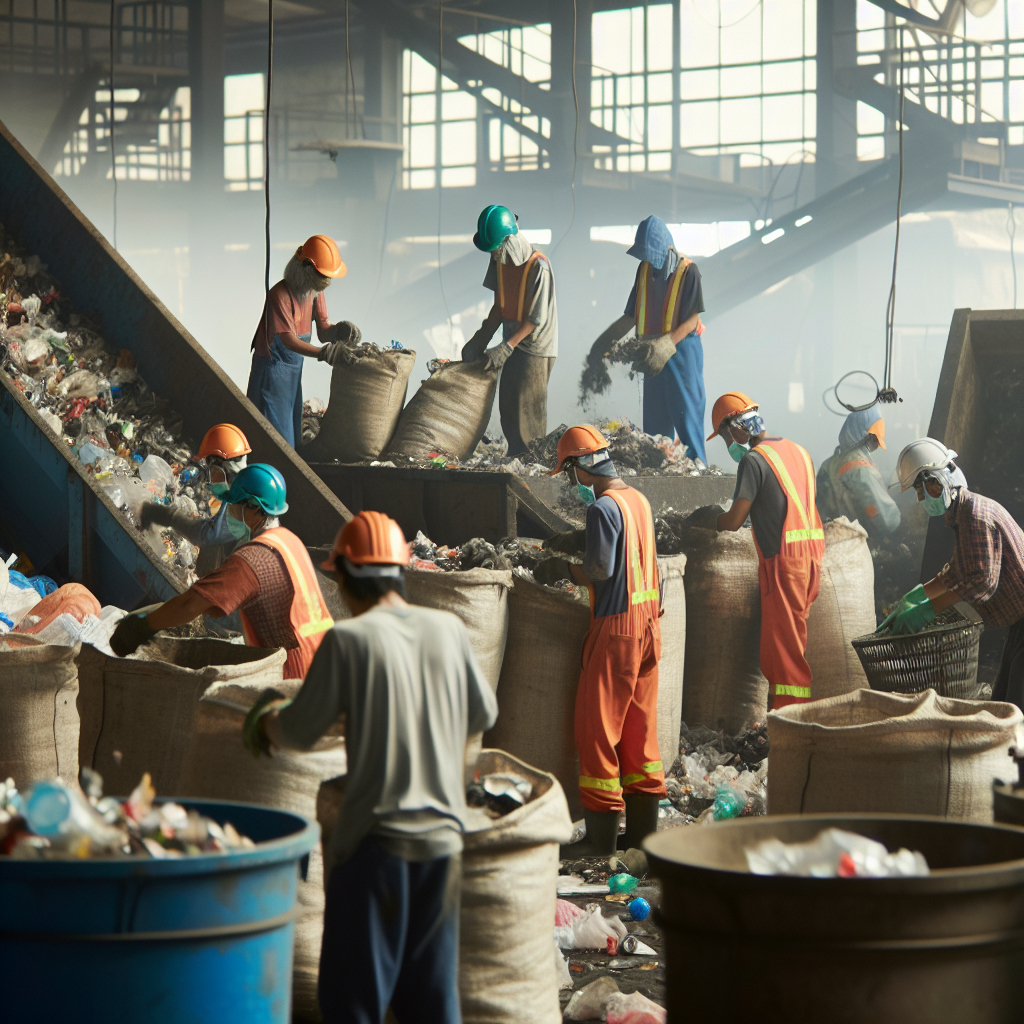
Advancing Waste Management in Avannaata Kommunia
In a significant move aimed at enhancing environmental management, Jens Napãtôk’ Naleraq, the 1st deputy mayor of Avannaata Kommunia and a member of the Inatsisartut, recently proposed a concerted effort during the municipal council meeting at the end of March. His plan seeks to ensure the effective implementation of the municipality’s waste management strategy, which is set to span from 2023 to 2035.
Notably, Avannaata Kommunia is the only one among Greenland’s five municipalities that has opted out of the collaborative waste management initiative offered by ESANI A/S. This absence raises concerns about the municipality’s waste management capabilities.
Napãtôk’ underscored multiple challenges facing towns and villages within the municipality, including mechanical failures, scarcity of spare parts, inadequate waste packaging and storage, and limited transport capacity. In light of these obstacles, the municipal board has agreed to incorporate improvement options into the waste plan and has committed to holding a seminar on waste management later this year.
Challenges Facing Waste Management
ESANI director Frank Rasmussen has previously expressed concerns about Avannaata Kommunia’s struggles with safe waste management, emphasizing the difficulties arising from not being a part of the waste company. While the municipality does have an agreement with ESANI for waste collection via bulk ship when necessary, the current system raises questions about efficiency.
The waste management plan for Avannaata Kommunia outlines key areas for improvement, such as waste transport, facility upgrades, and equipment purchases. Napãtôk’ has called for more rapid solutions to operational challenges, stressing that immediate attention to these matters is essential.
Proposed Solutions
Napãtôk’ insists that the municipality must secure readily available spare parts for waste management machinery and other equipment. He stated, “Our waste packaging issues arise continuously, and we must explore strategies for more efficient waste handling.”
He proposed that solutions should include establishing dedicated storage facilities in both larger and smaller residences, improving transport options throughout the expansive municipality, and constructing approved incineration plants in Ilulissat, Qaanaaq, Upernavik, and Uummannaq that meet local conditions.
Assuredly, Avannaata Kommunia is already making headway on several of these initiatives as part of its Waste Plan implementation.
Framework and Infrastructure
The municipality is also evaluating the financial aspects of the waste plan to ensure it aligns with practical experiences gained during its rollout. While adjustments may be necessary, the foundational principles of the plan remain intact and comply with national waste management guidelines.
The core strategy dictates that waste from smaller residences is to be collected in large bags and stored for pickup, while that from larger homes must be sorted and prepared for shipment to approved incineration facilities. Achieving this vision will require substantial infrastructural investments, including improved work facilities and, in some cases, enhanced roads and port conditions.
The administration prioritizes critical areas and closely collaborates with smaller settlements by focusing on tangible solutions. Local involvement has proven vital for success, exemplified by the effective removal of iron scrap from Saqqaq.
New Reception Station in Upernavik
Plans are underway to establish a new waste reception facility on the island of Saffiorfik in Upernavik. This ambitious project includes the construction of a dam, road access, and a quay to facilitate ship access.
Once operational, this facility will shift waste disposal from local incineration to a system where waste is packed and shipped for treatment elsewhere. The municipality also aims to decommission the existing dump in Upernavik. This proposal is currently open for public consultation until May 22.
The Broader Waste Management Landscape
Waste management authority in Greenland is shared between the Naalakkersuisut (the national government) and local municipalities. Each municipality holds the primary responsibility for managing waste disposal. Meanwhile, the national government provides the necessary legal framework and collaborates with municipalities to develop sustainable waste strategies, as outlined in its Waste Action Plan for 2020 to 2031.
In a recent delegation trip to Canada, members of the municipal council inspected incineration plants from Eco Waste, a firm known for its focus on sustainable waste management. The facilities were deemed suitable for smaller settlements and relatively easy to operate, prompting discussions about the potential for similar solutions in Greenland.
Despite the rigorous emission standards governed by the EU for incineration plants, there remains concern about the feasibility of refurbishing older facilities. The dialogue continues as Avannaata Kommunia strives to innovate and address its unique challenges in waste management.