
NAMMCO’s Ongoing Call to Protect Narwhal and Beluga Populations in East Greenland
Since 2019, the North Atlantic Marine Mammal Commission (NAMMCO) has advised a cessation of narwhal captures, a recommendation the organization has recently renewed. With the populations of both narwhals and beluga whales in East Greenland now classified as threatened, the commission is urging that all captures cease.
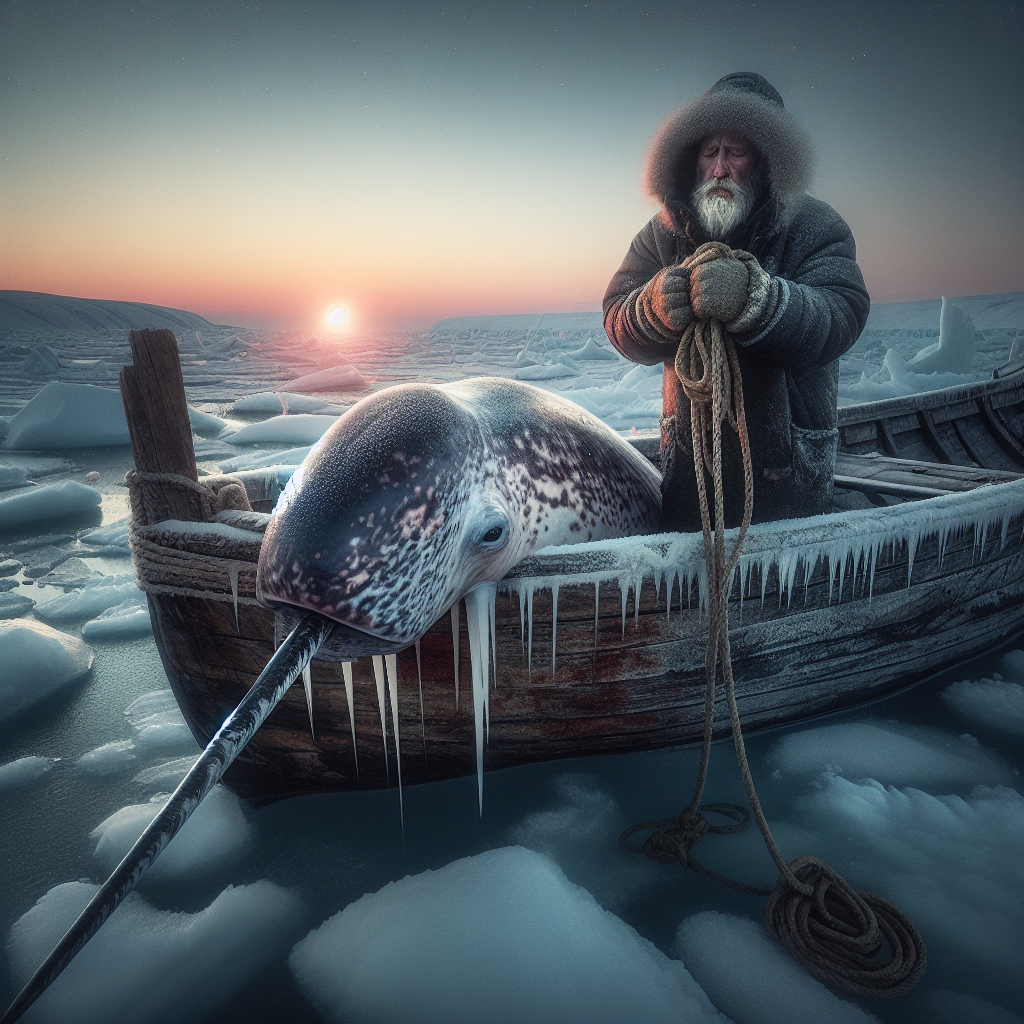
For commercial trappers like Åge Danielsen in Ittoqqortoormiit, this recommendation presents a bewildering challenge. “I don’t understand it at all,” he says, expressing frustration at the disconnect between the data and what he observes. “We see a considerable number of narwhals here—so many that I can’t even estimate. They pass by in large groups.”
At 38 years old, Danielsen has been relying on the narwhal for sustenance and income since he completed primary school in 2005. “It’s crucial for us; we simply cannot do without it.”
The Risks of Halted Quotas
This year, authorities allocated 41 quotas for narwhals in East Greenland, with the number captured exceeding that of belugas. Across the 2022–2027 period, only 30 beluga whales have been designated for capture, and seven of those remain uncaught. Danielsen fears for the future of this vital industry: “If quotas stop being issued, we nine trappers will be the last ones here. We’re trying to pass this tradition on, but these harsh quota restrictions make it nearly impossible.”
He believes that the authorities misinterpret the health of the narwhal population. “How can they be concerned when we’re still catching whales with fetuses?” he argues, illustrating his skepticism about the scientific assessments guiding quota decisions.
Greenland’s Nature Institute recommends quotas based on assessments from NAMMCO, which call for a total halt to narwhal and beluga captures. Ultimately, it falls to the minister responsible for fisheries, Peter Borg, to determine the number of quotas allocated. Danielsen invites Borg to visit Ittoqqortoormiit to better understand local trappers’ perspectives. “A resource as crucial as this whale shouldn’t face an outright ban,” he stresses.
A Day in the Life of a Narwhal Hunter
Reflecting on his experiences, Danielsen recounts a narwhal hunt from September 2022. After six days of effort, a Twin Otter aircraft flew over to count the whales. “Over 600 narwhals passed through during our time there,” he recalls, though he notes the challenges of aerial surveys. “When we spoke to a colleague who was on that flight, he mentioned they didn’t see any narwhals, only our boats.”
Danielsen explains that narwhals often travel in groups, which can vary in size but typically includes around ten individuals, sometimes exceeding 30. “This clearly shows how difficult it is to count them accurately from above,” he adds.
Unique Populations and the Fight for Understanding
Danielsen identifies three groups of narwhals near Ittoqqortoormiit. “The narwhals that come from the sea are taller and broader, and we refer to them as ‘the narrow ones’,” he elaborates. “We catch the common narwhals during the summer, while the other groups venture into our waters in the winter and spring.” He is adamant that narwhals continue to thrive, despite the recommendations suggesting otherwise.
“For a more accurate count, biologists should come out with us to our fishing spots. They could then observe the whales directly, rather than relying on aerial counts, which miss so much,” he concludes.
Despite numerous attempts, a spokesperson from the Greenland Institute of Nature has yet to comment on Danielsen’s concerns regarding the methods used to monitor narwhal populations.
Political tensions are also palpable. The Siumut party has previously criticized NAMMCO’s recommendation to halt quotas, asserting that the guidance lacks sufficient documentation and justification. In response, Fernando Ugarte from the Institute has noted that the underlying data is well-documented and readily accessible.
As this multifaceted dialogue continues, the stakes are high, both for the narwhals and the communities that rely on them for their very livelihoods.