
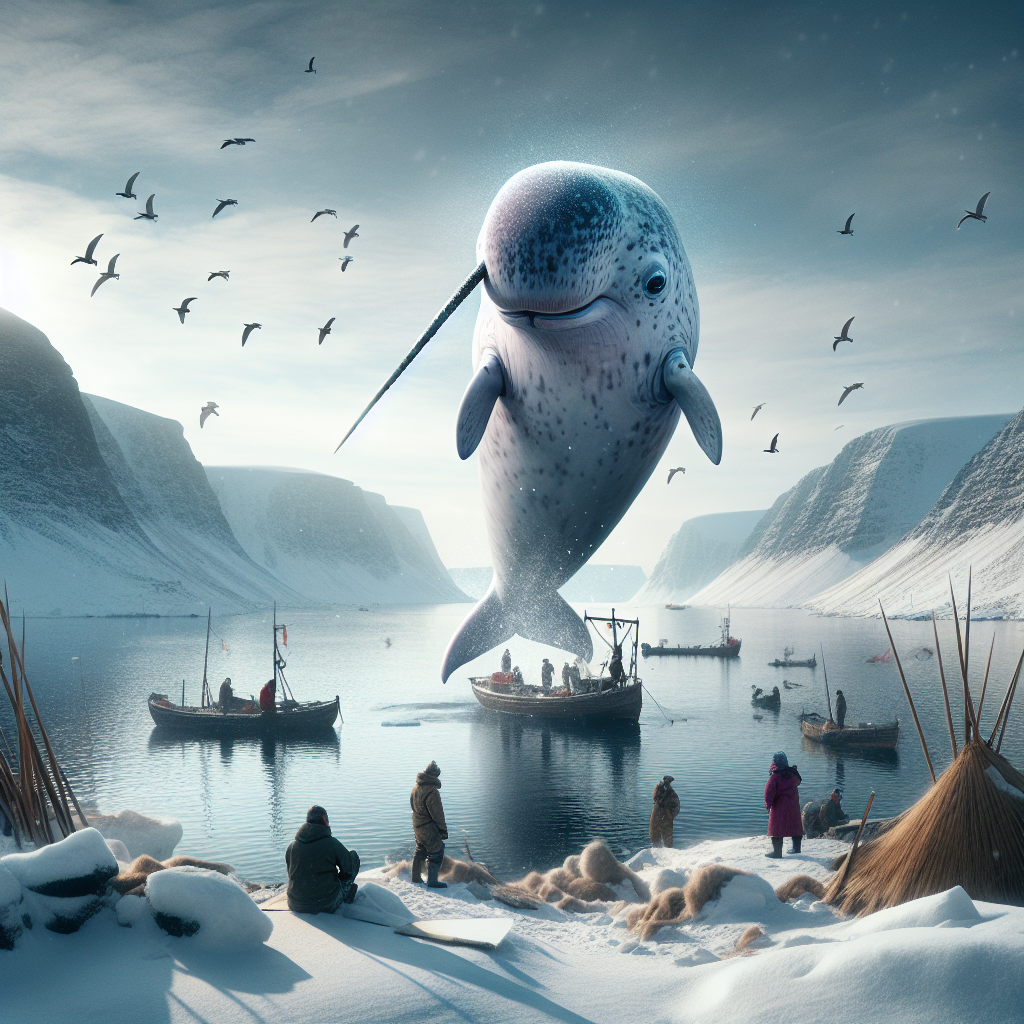
Biologists and Trappers Clash Over Narwhal Management
In a landscape where science and tradition often collide, biologists and trappers find themselves once again at an impasse. The North Atlantic Marine Mammal Commission (NAMMCO) has renewed its call for a halt to the capture of narwhals and beluga whales in East Greenland, citing concerns over declining populations. This recommendation, however, has been met with staunch resistance from local trappers.
Many in the fishing community, particularly those from Ittoqqortoormiit, contend that the whale counts are misleading. One trappers voiced earlier apprehensions, claiming that the actual number of whales far exceeds official estimates. They argue that an outright ban would be nothing short of a death knell for their trapping industry. Peter Borg, the Minister for Hunting, remains open to these concerns, emphasizing the need for dialogue.
“It’s certainly thought-provoking to hear their perspectives,” Borg remarked. “It’s worth noting that NAMMCO has been recommending a cessation of catches since 2019, so this year’s guidance isn’t novel.”
Quota Considerations
For this year, a quota of 41 narwhals has been established in East Greenland. If the recommendations from NAMMCO and the Nature Institute are adhered to, that number should drop to zero. However, the decision on quotas ultimately falls to the Naalakkersuisut.
“We are currently aligned with the position established by both the current and previous governments concerning supply security, cultural traditions, and sustainable hunting practices,” Borg stated, affirming that narwhals will continue to be hunted in East Greenland for the foreseeable future. “No additional decisions have been made at this time, and this reflects the current stance of the Naalakkersuisut.”
Future Projections
While there is speculation around next year’s quotas, Borg acknowledges that precise numbers remain uncertain. The evaluation process will incorporate various factors, including the total catches recorded this year.
“Right now, we’re taking a careful approach, combining scientific assessments with local knowledge,” he explained. “Understanding the dynamics is crucial for both marine species and terrestrial wildlife. If it becomes evident, through collective insights from both researchers and trappers, that narwhal populations are in distress, we will certainly re-evaluate future quotas.”
As he prepares for a trip to Tasiilaq, Borg is also considering visiting Ittoqqortoormiit to engage directly with local trappers who have extended an invitation to share their experiences and insights. “My plans include a visit to Ittoqqortoormiit,” he shared. “The specifics are still in the works, but I hope to make it happen before the year ends, in conjunction with visits to other coastal areas.”
In this ongoing dialogue, both sides remain hopeful that shared understanding can bridge the gap between scientific recommendations and the age-old traditions that define their livelihoods.