
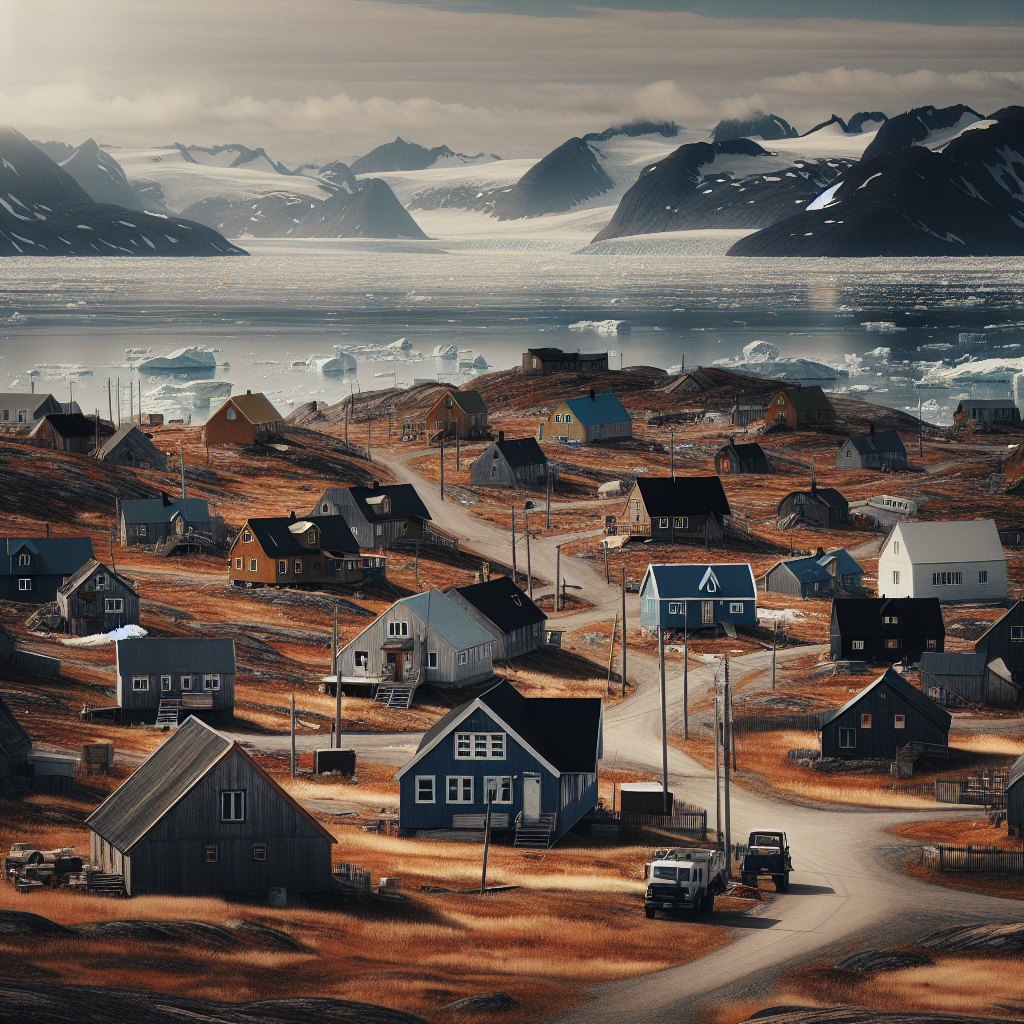
Ittoqqortoormiit: A Community on the Edge
In the remote town of Ittoqqortoormiit, frustration is palpable among its 328 residents. Many feel increasingly abandoned, grappling with a deteriorating infrastructure and a lack of essential services that their counterparts on Greenland’s western coast take for granted. For years, this neglect has festered, but the community is now resolved to raise their voices.
Last week, during a fierce storm, Hans Brønlund, the chairman of the local committee, gathered residents for a crucial meeting. They discussed two prospective resource projects—oil and mining operations—that could potentially tap into the area’s underground assets. However, many in the town are skeptical about these projects’ timelines and are demanding greater involvement in the decision-making process, along with significant investments in their community.
Among their urgent needs are repairs to a school plagued by mold for over a decade, the provision of clean drinking water for all residences, improved healthcare facilities, and the establishment of a deep-water port, along with a development fund to foster growth in this isolated community. In an open letter addressed to the companies eyeing these projects, the mayor, Brønlund, expressed the collective sentiment of his constituents: “We are left behind as a society,” he lamented to KNR.
An Urgent Call for Action
In his letter, Brønlund emphasized the dire need for investment in Ittoqqortoormiit’s basic infrastructure. Many residents still rely on water delivered in cans; some live in homes without functional showers, and key facilities, including the local school and hospital, are compromised by hazardous mold. The nursing home, slated for renovation long ago, remains unchanged.
“It may be that there will be investments now that I am writing to everyone,” Brønlund told KNR.
However, the situation isn’t new. Former mayor Erling Madsen, who served from 2013 to 2017, recalls increasing feelings of neglect since the municipality’s amalgamation in 2009. “You actually feel seriously let down,” he remarked. Once visited annually by representatives from the county council, the town has seen no such attention in recent years. Even the current mayor rarely visits; Madsen claims he has not met her in her two terms.
Transportation and Infrastructure Woes
The neglect extends beyond the crumbling school and hospital. The logistics of getting goods into Ittoqqortoormiit entails exorbitant costs since only smaller vessels can dock, making deliveries prohibitively cumbersome. “It can take three to four days to unload 40 to 60 containers,” Madsen explained. With the Royal Arctic Line consistently raising freight prices, essential items like food become increasingly expensive.
Air travel isn’t any better. Residents sometimes must navigate convoluted routes—flying to Nuuk, then to Iceland, and finally making their way back—while waiting weeks for important mail deliveries. “It can take months just to receive bills,” Madsen noted, illustrating the disarray in both transportation and logistics that residents endure.
In October, Madsen’s daughter and her children traveled from Tasiilaq to visit him, requiring a convoluted journey that cost nearly DKK 50,000. Despite this, there is a silver lining: funds have been allocated for a new airport, which Madsen hopes will progress soon.
Politicians Taking Notice
Perhaps a change is on the horizon. Recently, members of Inatsisartut convened to address the conveniences of travel to and from Ittoqqortoormiit. Mette Arqe-Hammeken, a representative from the town, highlighted the long-standing neglect. “We are invisible on the map of Greenland,” she asserted, stressing the need for immediate action, regardless of the costs involved, to better align local services with the rest of the country.
Encouragingly, Iddimanngiiu Jensen Bianco, the newly appointed minister for housing and infrastructure, announced an agreement to increase flight services and freight capacity to Ittoqqortoormiit. “We’re looking at the matter with an open eye,” she said, recognizing the community’s need for solutions.
A Hopeful Future
As the town’s residents band together to advocate for better conditions, Arqe-Hammeken remains optimistic. “It’s time,” she declared resolutely. “We won’t stop speaking up until we see change.”
While the municipality has acknowledged some shortcomings, particularly with the school renovations, it asserts that health care and transportation matters fall under self-government’s jurisdiction. Still, residents remain hopeful for concrete action.
As Ittoqqortoormiit seeks to reclaim its place on Greenland’s map, the question remains: will their voices reach the ears of those who can make a difference?