
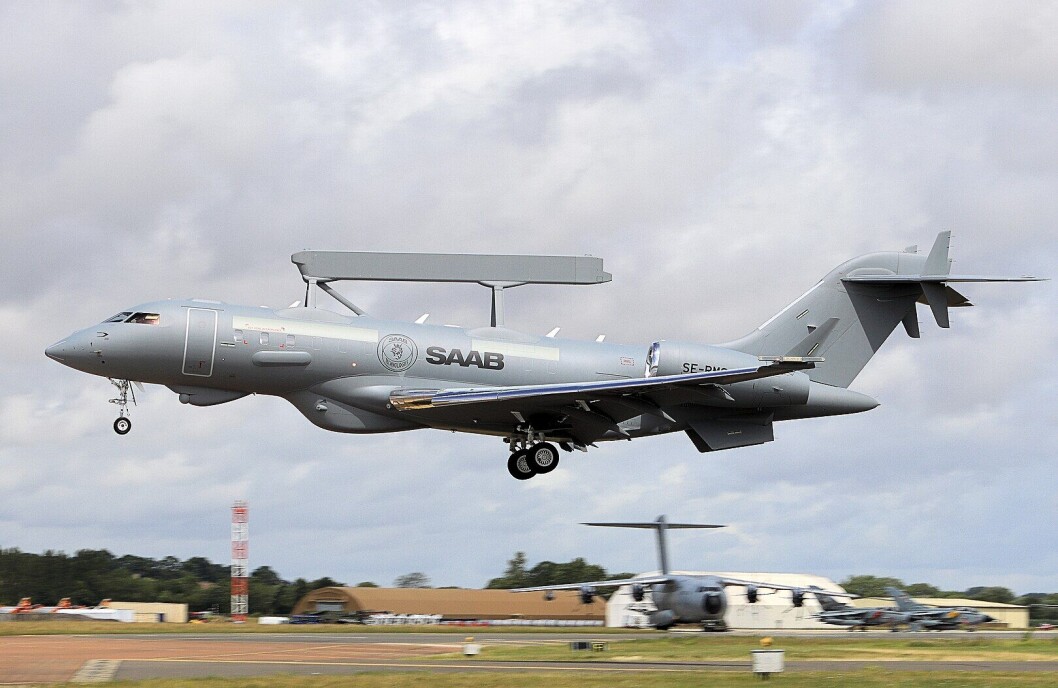
The Canadian Government Announces Acquisition of Saab GlobalEye Surveillance Aircraft
In a significant move to bolster national defense, Canadian Prime Minister Mark Carney revealed on May 27 that Canada will acquire six Saab GlobalEye surveillance aircraft. This announcement was made at the opening of a Canadian defense fair, marking a pivotal step away from reliance on the United States defense industry.
This shift comes in the wake of concerns about U.S. President Donald Trump’s past aspirations to integrate Canada and Greenland into a broader American framework. For Canada, the aim is clear: to diversify its defense partnerships and reduce over-dependence on its southern neighbor.
As Canada assesses its options for a new fighter fleet, the conversation has turned to whether to continue investing solely in Lockheed Martin’s F-35A or to consider integrating Saab’s F-39A Gripen into the mix. The attractive partnership with Saab for the surveillance aircraft stems, in part, from the use of the Toronto-built Bombardier Global 6500 business jet as the platform for the GlobalEye system.
During his address, Carney emphasized that “Saab’s GoldenEye will be a key resource for the Canadian Armed Forces, particularly for detecting and deterring threats in the Arctic.”
A Path Opened for Denmark
Interestingly, this same Swedish-Canadian surveillance system has also entered the discussions among Danish officials as they contemplate new surveillance aircraft. However, early indications suggest a preference for Boeing’s P-8 Poseidon, a trusted asset already utilized by key defense partners within NATO, including the United States, Norway, Canada, Germany, and the United Kingdom.
Should Denmark choose to follow Canada’s lead and adopt the GlobalEye system, the approval is already in place. Last April, the Swedish government granted permission to sell four surveillance aircraft to Denmark.
The GlobalEye system itself represents a collaboration between Saab and Bombardier, utilizing the Bombardier Global 6000 aircraft—a business jet variant that parallels Bombardier’s CRJ medium-haul passenger aircraft currently serving SAS on domestic routes. The CRJ-900 model accommodates around 90 passengers and has origins in the Challenger series, of which the Danish Air Force operates four units, purchased in 1997 and now facing limitations.
Saab’s adaptation of the aircraft into a surveillance platform incorporates advanced technology, including the Erieye Extended Range radar mounted atop the plane. This sophisticated radar system can detect low-flying targets from a distance of approximately 450 kilometers while monitoring airspace over a range of up to 650 kilometers.
With the capability to remain airborne for up to 11 hours, the GlobalEye aircraft is poised to play a pivotal role in Arctic surveillance and search-and-rescue operations—areas where the current Challenger aircraft has traditionally been deployed.
Despite the system’s relative novelty, the Saudi Arabian air force has already secured five of the aircraft, set to be delivered between 2020 and 2024. The Swedish air force has also placed an order for three units, expected by 2027. While the exact cost of these sophisticated surveillance aircraft remains undisclosed, estimates range between 1.75 and 2.5 billion kroner each.
This strategic acquisition not only marks a meaningful investment for Canada but also hints at changing dynamics in North American defense partnerships—a trend worth watching as it unfolds.