
Greenland Energy Company Rings Nasdaq Bell Amid Ambitious Plans for Jameson Land
On April 7, the American Oil Company Greenland Energy, in partnership with the British firm 80 Mile, marked a significant milestone by ringing the opening bell of the Nasdaq stock exchange in New York. This ceremonial act reflects not just a moment of celebration, but also the promise of a new venture in one of the world’s most resource-rich territories: Jameson Land.
A Vision for the Future
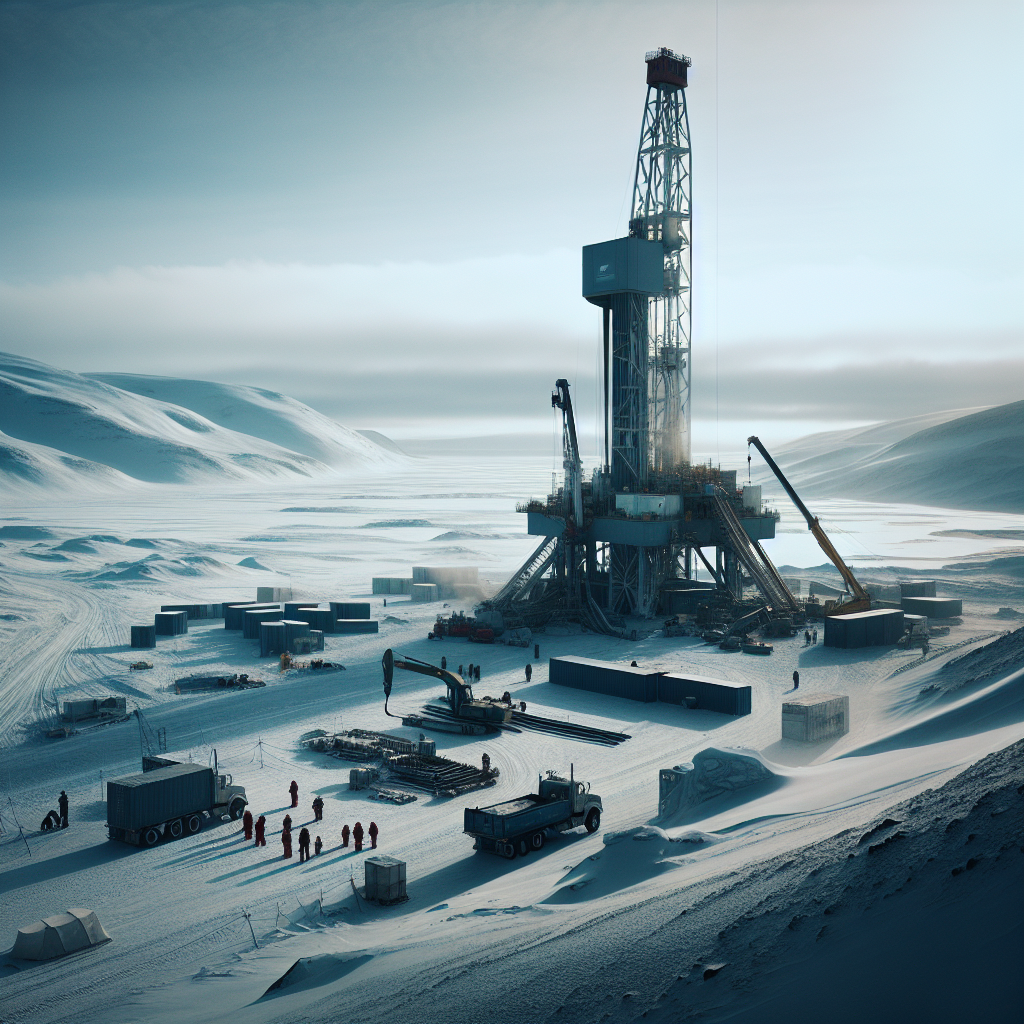
During the Nasdaq event, Director Robert Price shared the company’s intentions, revealing plans to deliver drilling equipment to Jameson Land in the third quarter and commence drilling operations by the fourth quarter of this year. This ambitious timeline is rooted in the vast potential of the region, which may contain up to 13 billion barrels of oil, as highlighted by Price.
“We are faced with a landmark opportunity to bridge American investment with one of the globe’s most geopolitically strategic and resource-rich areas,” he said. “Through responsible development, we aim not only to unlock Greenland’s resources but also to create enduring value for our stakeholders, including the Greenlandic populace.”
Price emphasized the interconnectedness of energy, economic security, and political stability. He underscored the ongoing preparations for drilling, mentioning that the necessary equipment is being mobilized with the aim of beginning operations by the end of the year.
In tandem with their Nasdaq announcement, Greenland Energy disclosed a strategic agreement with Canadian drilling firm Stampede Drilling to provide the manpower and rigs needed for upcoming projects in Jameson Land.
Navigating Regulatory Challenges
However, the pathway to drilling in Jameson Land is not without complications. The Ministry of Raw Materials has clarified that Greenland Energy currently holds only a green light for equipment mobilization and not for broader activities such as establishing camps, setting up quays, or beginning drilling.
Environmental management expert Per Nikolaj Bukh from Aalborg University expressed skepticism about the company’s optimistic claims. He pointed out that while the firm can state their focus on commencing drilling, they are still far from actual production. “If you interpret their statement closely, they are careful not to imply that drilling is already happening,” Bukh noted, emphasizing the inherent uncertainty in the project’s success.
Environmental Implications
The precarious Arctic environment, particularly in Jameson Land, poses an additional layer of complexity. Characterized by extensive contiguous lowland areas and rich wildlife—including musk oxen and various bird species—this region’s ecological value cannot be overstated, as pointed out in a 2012 environmental assessment.
Niels Henrik Hooge from the environmental organization NOAH raised concerns about the potential threats the project could bring to this delicate ecosystem. He noted that while the Greenlandic government suspended its oil strategy in 2021, allowing the company to proceed with their plans under a previously granted license, the larger conversation about environmental risks remains paramount.
“We regret that the ban didn’t arrive sooner,” Hooge said. “The hope lies in the government’s commitment to rigorously enforce all conditions, which might ultimately hinder the project’s execution.”
As Greenland Energy navigates these regulatory hurdles and environmental considerations, the coming months will be pivotal in determining the future of oil exploration in Jameson Land and its impact on both the local community and global energy dynamics.