
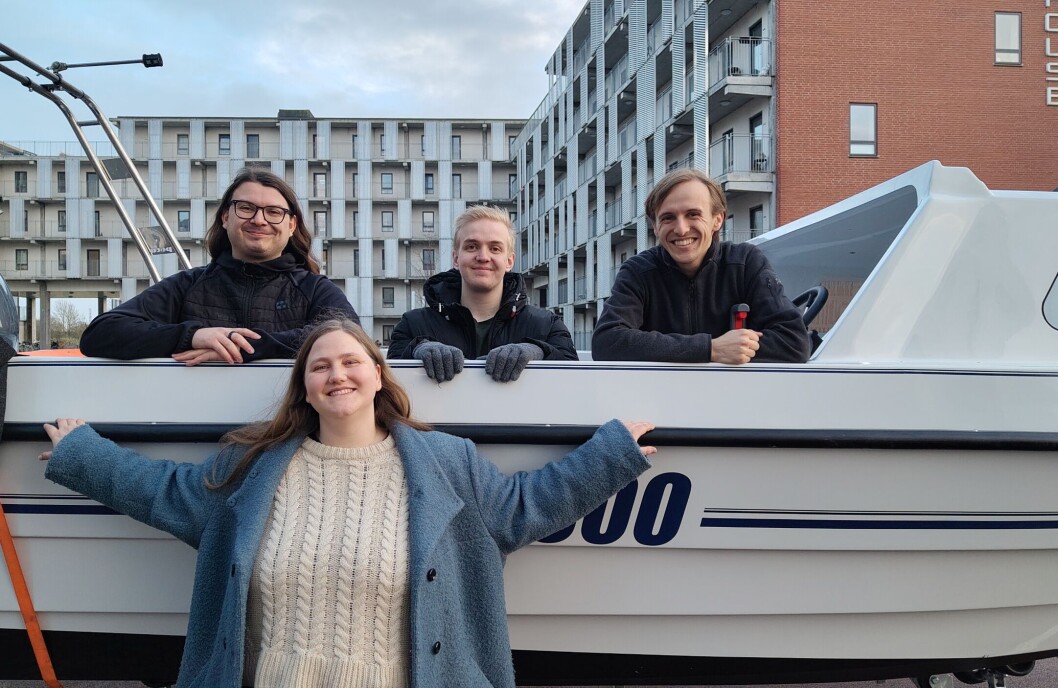
A Bold Leap: Driverless Poca Dinghies Offer Hope for Greenland’s Waste Challenges
In a refreshing blend of innovation and environmental responsibility, four enterprising minds from Aaveq Robotics in Odense are pioneering a solution that could transform waste management in Greenlandic settlements.
At the heart of their venture lies the Poca 600 GR MK1, a driverless dinghy engineered to navigate the icy waters using satellite signals. Final preparations are underway, and once equipped, this groundbreaking vessel is set to embark on a three-month trial in Greenland, collaborating with the waste management company Esani.
“We aim to employ autonomous boats to tackle the waste piling up in remote communities. Traditional maritime logistics have struggled to address this issue, but we believe our innovative approach can make a significant difference,” explains Nicoline Louise Thomsen, the company’s director.
Once dispatched to larger Greenlandic cities, these autonomous boats will sail to the settlements when favorable weather permits. This approach disrupts the existing logistics model, allowing for timely waste collection rather than waiting for infrequent visits from larger ships. “Using satellite-based navigation, the boats will autonomously head out, collect the waste, and return it to designated central points for proper processing,” Thomsen elaborates.
The scale of the waste problem in Greenland is increasingly daunting. Often, refuse accumulates while awaiting collection, posing risks of environmental degradation and even fire hazards—a reality starkly underscored by the significant dump fire in Qaqortoq earlier this year, which ignited the urgency for this initiative.
During a visit to Qaqortoq, Thomsen witnessed the intense fire firsthand. “It was a real eye-opener,” she recalls. “The smoke billowed for kilometers, highlighting that waste management challenges extend beyond individual communities and threaten our environment on a larger scale.”
For many settlements, waste collection remains a luxury, conducted only a few times yearly and wholly dependent on weather conditions. In places accessible solely by helicopter or boat, debris management has, regrettably, often been left to the elements.
“The status quo is unacceptable, and we are determined to change that,” Thomsen asserts, driven by their shared mission to improve conditions.
All four entrepreneurs have backgrounds in space technology from the University of Southern Denmark, with a personal connection to Greenland stemming from Magne Vethal Kanneworff, who spent his childhood there. Their project receives support from various organizations, including the Swedish Industry Foundation, the Innovation Foundation, and UArctic.
Aaveq Robotics’ endeavor stands as a testament to how innovative technology can bridge the gap between modern solutions and age-old challenges, bringing hope not just to the settlements but to the very landscape of Greenland itself.