
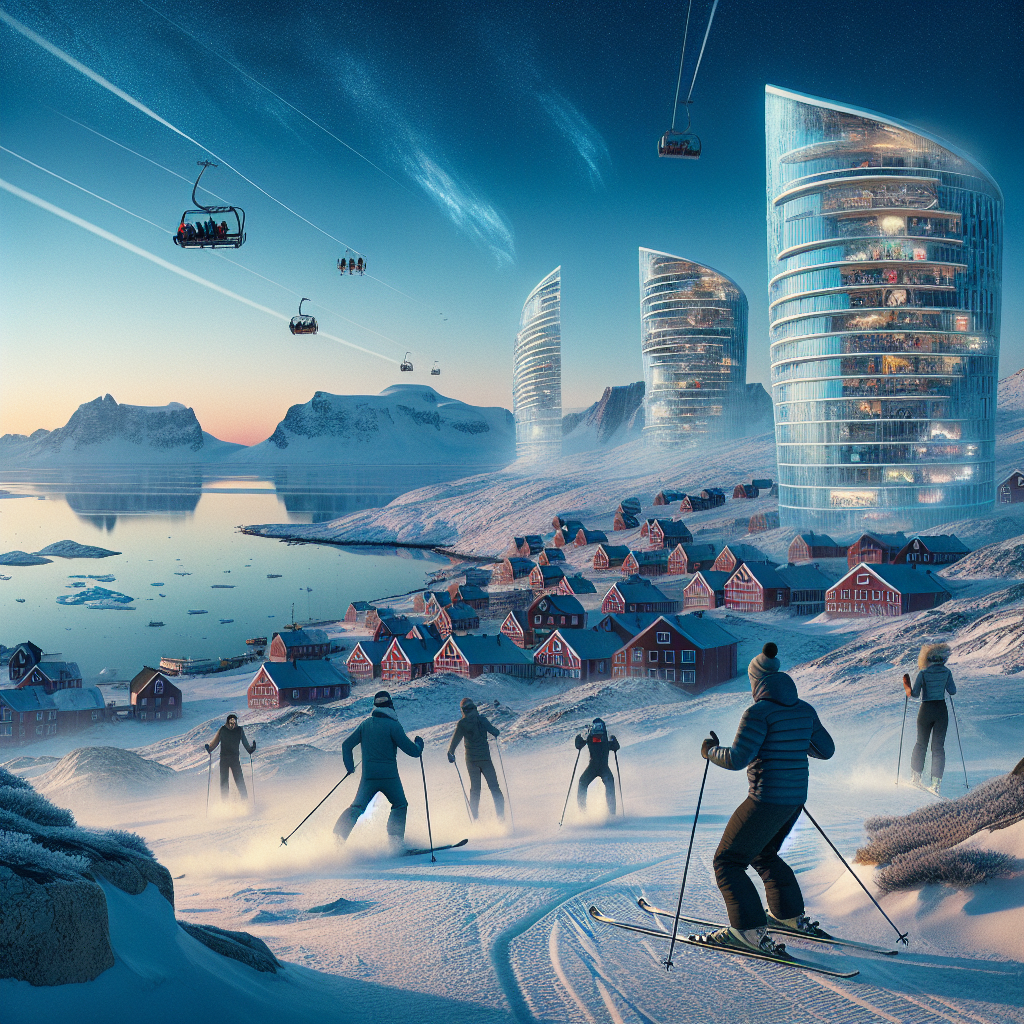
Visions of a Winter Wonderland: The Future of Skiing in Nuuk
As dawn breaks over Nuuk, the atmosphere in the Sisorarfiit café is deceptively tranquil. But behind the screens, a whirlwind of ideas is taking shape. Digital trail maps flicker to life, revealing the potential of the undulating terrain. Here, board chairman Peter Oluf Meyer and operations manager Qulu Heilmann are not just sketching plans for the upcoming ski season; they are drafting a vision for the future of skiing in Greenland.
Their mission is clear: for skiing in Nuuk and across Greenland to thrive, a commitment to long-term investment is essential. It’s not merely about tweaking the existing infrastructure; it’s about launching a renaissance that elevates both the alpine slopes and cross-country trails into a new era of possibility.
A Foundation with Deep Roots
Sisorarfiit’s operating area encompasses both alpine hills and expansive cross-country trails, making it a vibrant hub of winter activity for families, fitness enthusiasts, and seasoned skiers alike. This winter playground has its origins in the 1970s, when municipal funding helped construct the first lift in 1979. Over the years, improvements have trickled in, but the so-called “new” top lift is now a quarter of a century old.
While the evolution has been significant—from a solitary snowmobile to a fleet of four sophisticated grooming machines—challenges loom large. As winter seasons grow shorter and snow conditions increasingly erratic, the demand for innovative solutions becomes imperative.
“The gravel paths laid out at Nuussuup Manngua, or Ravnebakken as it’s commonly known, present immense potential,” Meyer states, emphasizing the importance of the terrain’s surface.
These flat paths allow for early snow preparation, utilizing snowmobiles and grooming machines even with just 20 centimeters of snow. This proactive approach enables the ski season to kick off sooner, even in lean winters. Today, the area boasts approximately two kilometers of gravel paths, but ambitions stretch further: the vision includes a five-kilometer circular trail around the cemetery and a 7.5-kilometer route that winds past Aanaas Hytte.
Bridging Old and New
On the alpine front, infrastructure improvements are urgently needed—not just for local skiers, but also for the influx of guests the area aims to attract. Operations manager Heilmann articulates this need without hesitation: “We must have snow cannons.”
In the past, the foundation invested in two snow cannons, now out of commission. Lessons learned from those initial tests have guided future efforts, culminating in the creation of a dedicated working group to explore more efficient, up-to-date solutions. Heilmann notes that investing in snow cannons is complex, hinging on factors like capacity, water supply, and energy consumption. They plan to enlist a Norwegian expert to help draft a project proposal that will pave the way for these necessary enhancements.
“New snow cannons are on the horizon,” Meyer affirms, nodding in agreement. “It’s not a matter of if, but when. Their impact could resonate well beyond Nuuk.”
He draws a parallel to the advent of artificial grass pitches in Greenland, describing how their introduction led to widespread adoption across the nation. He envisions a similar trajectory for snow cannons, bolstering a skiing culture that has deep-rooted significance in the region.
An All-Season Destination
Meyer and Heilmann’s ambitions extend far beyond winter sports; they envision a year-round recreation destination. The proposed trail systems would not only enhance the skiing experience but also encourage outdoor activities throughout the seasons. Central to this vision is a cabin lift to the peak of Quassussuaq, commonly known as Lille Malene, which could operate year-round for both skiing and hiking.
“It must make sense all year round—winter for skiing, summer for hiking,” Meyer exclaims, looking out towards the landscape with a conviction that underscores the magnitude of their goals.
As he reminisces about the possibilities, he highlights the dream of a café at the summit, a communal space where locals and visitors can gather to enjoy stunning views of Nuuk.
While these ambitions certainly appear grand, interest is already brewing among possible partners. “Our future neighbors include several hotel developments, such as hotel Aurora and the design studio PILU, which emphasizes outdoor experiences,” Meyer notes.
The collaboration extends beyond ideas, with discussions already underway about creating synergies between the airport, hotels, and Sisorarfiit’s offerings. The involvement of the design studio in visualizing these plans exemplifies robust support for the project.
Challenges on the Horizon
Yet, the journey from vision to reality is fraught with challenges. Securing funding and forging collaborations with governmental bodies and private enterprises will be crucial to turning these plans into action. But within the walls of Sisorarfiit’s café, one thing prevails: unwavering determination.
“We recognize the scale of our ambitions, but the alternative is not an option. If we want skiing to thrive in Nuuk for the next 10 or 20 years, we must act now,” Meyer states, refocusing on the trail map illuminating the screen before him.
As these plans crystallize, the hope is that they will transcend the confines of the café, spilling into the public domain—not merely as a proposal for discussion, but as the precursor to a new chapter in Nuuk’s skiing narrative, potentially impacting regions far beyond the city’s limits.