
Harnessing Nature’s Marvel: Ikaite and the Future of Carbon Capture
The natural phenomenon of ikaite, famously seen in the striking columns of Ikkafjorden in South Greenland, is evolving into a vibrant industry. This transformation involves utilizing carbon dioxide (CO₂) to produce highly pure calcium carbonate—an essential material that holds significant commercial value.
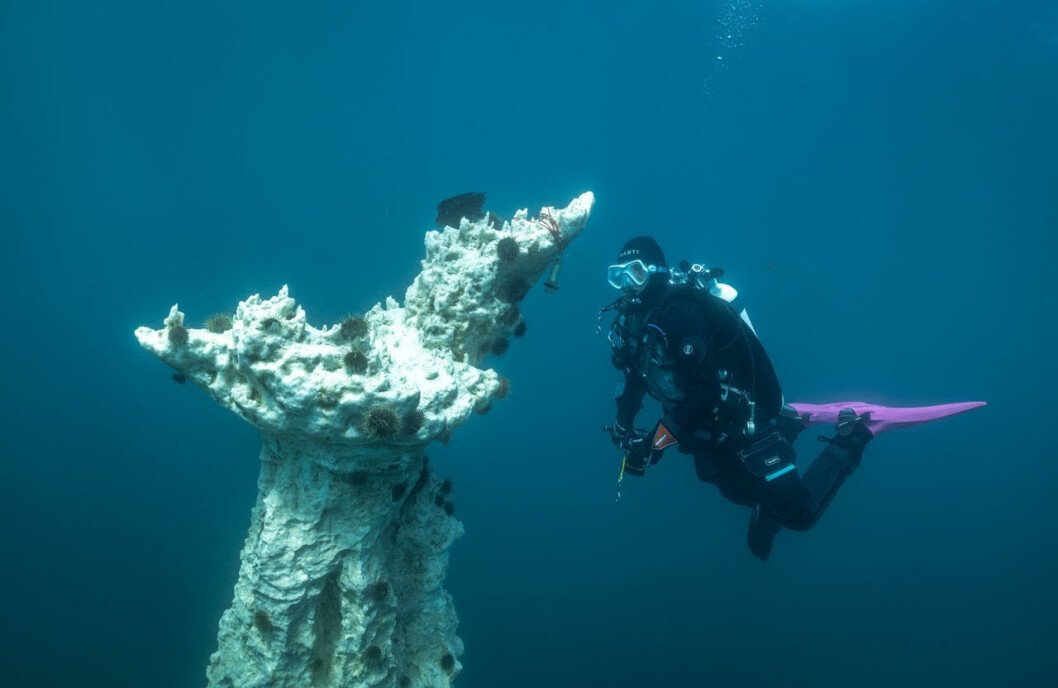
In Ikkafjord, ikaite forms when cold, carbonate-rich spring water rises through the seabed, mingling with mineral-rich seawater, ultimately creating stunning columns over time. This same mineral can also be found in deep-sea sediments, sea ice, and shrimp shells.
Leading this charge is Ikkaton, a company that has successfully translated this natural process into a controlled industrial operation. The journey begins with pre-treating seawater to enhance its capacity to absorb CO₂ from industrial flue gas. Once harvested, ikaite is dewatered and recrystallized into stable, pure calcium carbonate—ready for applications in industries such as paint, paper, and plastics.
Interestingly, during the crystallization process, ikaite absorbs water molecules from seawater, only to release very pure fresh water upon conversion to calcium carbonate. This fresh water, a precious commodity, can be utilized in industrial production.
New Funding Fuels Growth
Ikkaton has recently secured additional funding, enabling the shift from laboratory experiments and pilot programs to the construction of a demonstration plant in a real-world industrial setting. This facility, strategically located on the island of Fur in the Limfjord, is set to convert approximately 100 kilograms of CO₂ continuously, laying the groundwork for testing the process under realistic operational conditions.
The funding, amounting to a total of DKK 27.3 million, comes from two grants:
- IKKA-TECH: Granted by the Innovation Fund, amounting to 18 million kroner for the period from May 1, 2026, to May 1, 2028.
- IKKA-CCUS: Funded by INNO-CCUS—Pool 4, amounting to DKK 9.3 million from May 1, 2026, to May 1, 2029.
The project’s key partners include Valmet, Topsoe, Mettler-Toledo, the University of Copenhagen, the University of Gothenburg, and others, all joining forces to realize this groundbreaking initiative.
A Shift in Perspective on CO₂ Solutions
As traditional carbon capture techniques often focus solely on sequestering CO₂, Ikkaton’s approach seeks to create a product with market value. “Most CO₂ capture methods incur expenses, but ours yields a useful product,” says Erik Trampe, founder and director of Ikkaton, highlighting the sizable market for calcium carbonate—commonly known as lime or chalk—widely utilized across various industries.
Unlike conventional methods with significant carbon footprints, Ikkaton’s process sequesters CO₂ during production, allowing it to replace existing products rather than necessitating the creation of a wholly new market.
The Path Forward
The demonstration plant is modest in scale but serves as the first real test of the technology in an industrial environment. Its primary objective is to verify that the CO₂ can be effectively bound from actual flue gas, maintaining consistent product quality while ensuring efficient energy consumption throughout operations.
“This isn’t merely about conducting paper trials; we need a plant that’s operational around the clock, able to handle large flows and adapt to the fluctuations they bring,” Trampe says, emphasizing the challenges ahead.
The demonstration phase will last two to three years, focusing on integrating the plant with an existing industrial chimney without disrupting operations. The success of this project could pave the way for broader production capabilities across various scales, aligning with different emission sources.
A Warm Welcome in Nuuk
Recently, the Ikkaton team made the journey to Nuuk, where they received encouraging support from local stakeholders and authorities. The method not only draws inspiration from the ika columns but also stands to benefit from Greenland’s natural advantages, such as year-round cold seawater and access to hydroelectric power.
“We’re also exploring the potential to run processes in warmer conditions,” Trampe notes. The intention is clear: to capitalize on Greenland’s unique offerings while keeping the door open for future production capabilities, potentially expanding to larger operations once foundational elements are validated on Fur.
As Ikkaton moves forward, the promise of combining environmental sustainability with industrial production remains at the forefront of its mission. With each step, the vision of transforming CO₂ into a valuable resource becomes increasingly tangible.