
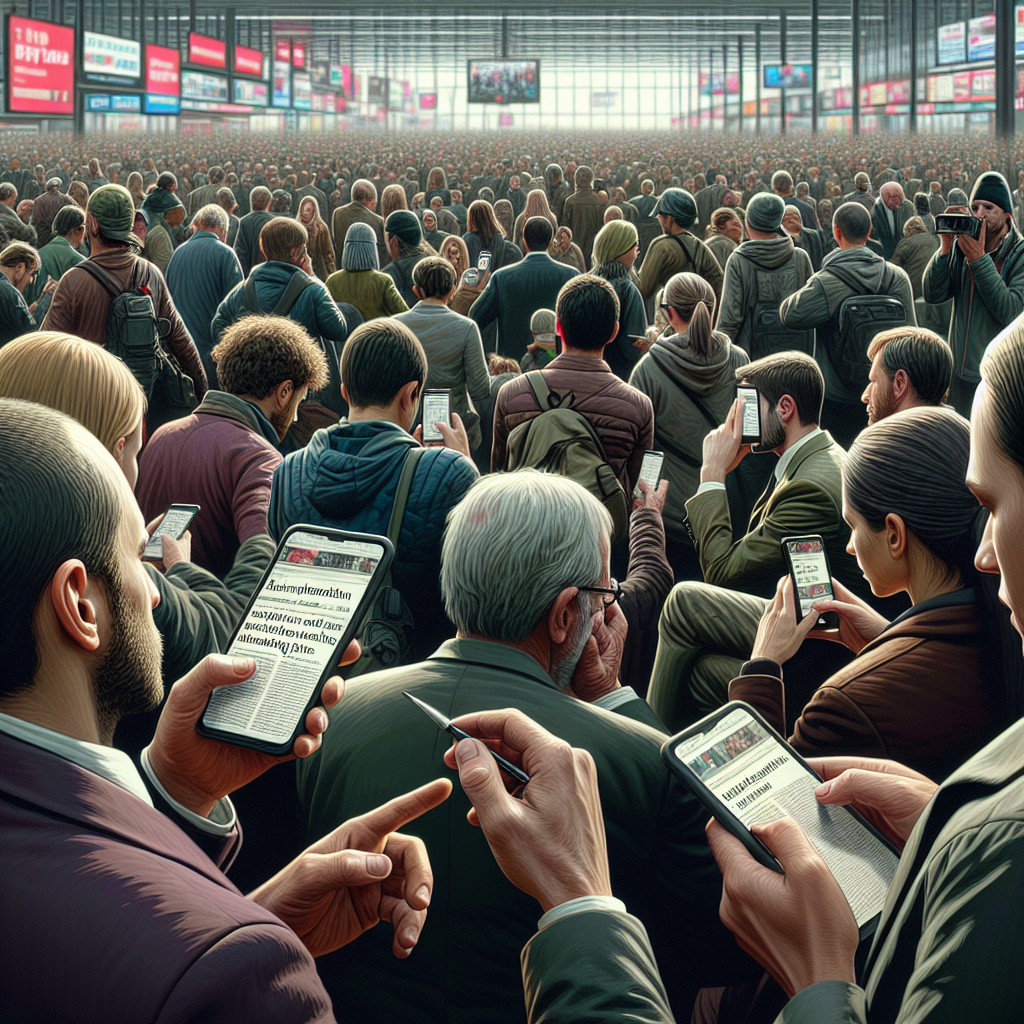
The Vital Armor Against Disinformation
In this digital age, where information spreads like wildfire, the most effective antidote to disinformation is understanding its origins and the tactics employed to propagate it. This insight comes from Jānis Sārts, the director of the NATO Strategic Communications Center of Excellence (StratCom COE), who is set to address the Future Greenland conference this May.
Since taking the helm of the StratCom COE in 2015, Sārts has led efforts to research how adversarial states and organizations wield new technologies to disseminate misleading or outright false narratives. These efforts have illuminated various pressing instances of disinformation, including interference in elections in Romania and Moldova, attacks on the credibility of NATO’s support for Ukraine, and a recent disinformation campaign aimed at suggesting an imminent Russian invasion of the Baltic nations.
Reflecting on his upcoming trip to Greenland, Sārts expressed enthusiasm, saying, “It will be my first visit, and I’m looking forward to it.” His extensive background in the defense sector, including a seven-year tenure as Latvia’s state secretary for defense, equips him with a unique perspective on the complexities of information warfare.
The Preemptive Approach
The StratCom COE was established in the wake of Russia’s annexation of Crimea in 2014, a move that significantly heightened the threat of disinformation. Sārts notes that the center has been inundated with work, as the scope of disinformation campaigns has expanded exponentially, fueled by adversarial nations like Russia and China, as well as various terrorist groups and criminal organizations.
“Our focus is on analyzing the genesis of false information and preventing its recurrence,” he explains. Prevention, he asserts, is far more effective than merely addressing the symptoms after misinformation has taken root.
“While it’s instinctive to correct misunderstandings, such responses can sometimes reinforce false narratives,” Sārts warns. Instead, he champions the concept of “prebunking”—exposing and warning against disinformation before it spreads.
“The best medicine against disinformation is to bolster public resilience against it. It’s akin to vaccination,” he explains. Measures also include shutting down specific networks, such as Russian propaganda channels, as some Baltic nations have undertaken, further limiting the spread of misleading information.
Navigating the Misinformation Landscape
Distinguishing between disinformation and misinformation is paramount. While disinformation refers to the intentional spread of falsehoods by those aware of their deception, misinformation involves the circulation of incorrect information believed to be true by the sender.
“Studies highlight that humans lie, on average, about four times a day. The spread of falsehoods isn’t new,” Sārts notes. “Disinformation, however, typically emerges from coordinated efforts aimed at achieving specific goals.” His team actively monitors these campaigns across digital platforms.
Crucially, Sārts emphasizes the need to uphold freedom of expression while combatting disinformation. “We aim to develop mechanisms that respond effectively to falsehoods without stifling free speech, which remains a cornerstone of democratic societies,” he asserts.
The Challenge of Social Media
Sārts underscores the critical role traditional media must play in promoting source criticism and fact-checking. “A society cannot depend solely on government assertions as benchmarks for truth. It requires independent voices—journalists and others—who can investigate the narratives and mechanisms at play,” he stresses.
In today’s complex media landscape, where misinformation can be amplified by purchasing fake engagement—like 100,000 likes for a mere 300 euros—social media has become a potent vector for falsehoods.
With the rise of AI technologies, Sārts raises a concerning point: “Many AI systems are now more adept at persuasion and debate than most people. We must address this potential threat seriously, as it could lead to troubling scenarios for our collective cognitive landscape.”
In conclusion, as disinformation continues to evolve, the fight against it requires vigilance, public education, and a steadfast commitment to safeguarding the principles of free expression. This is a battle not just for truth but for the very fabric of informed democratic discourse.
This article is sponsored by Grønlands Erhverv.