
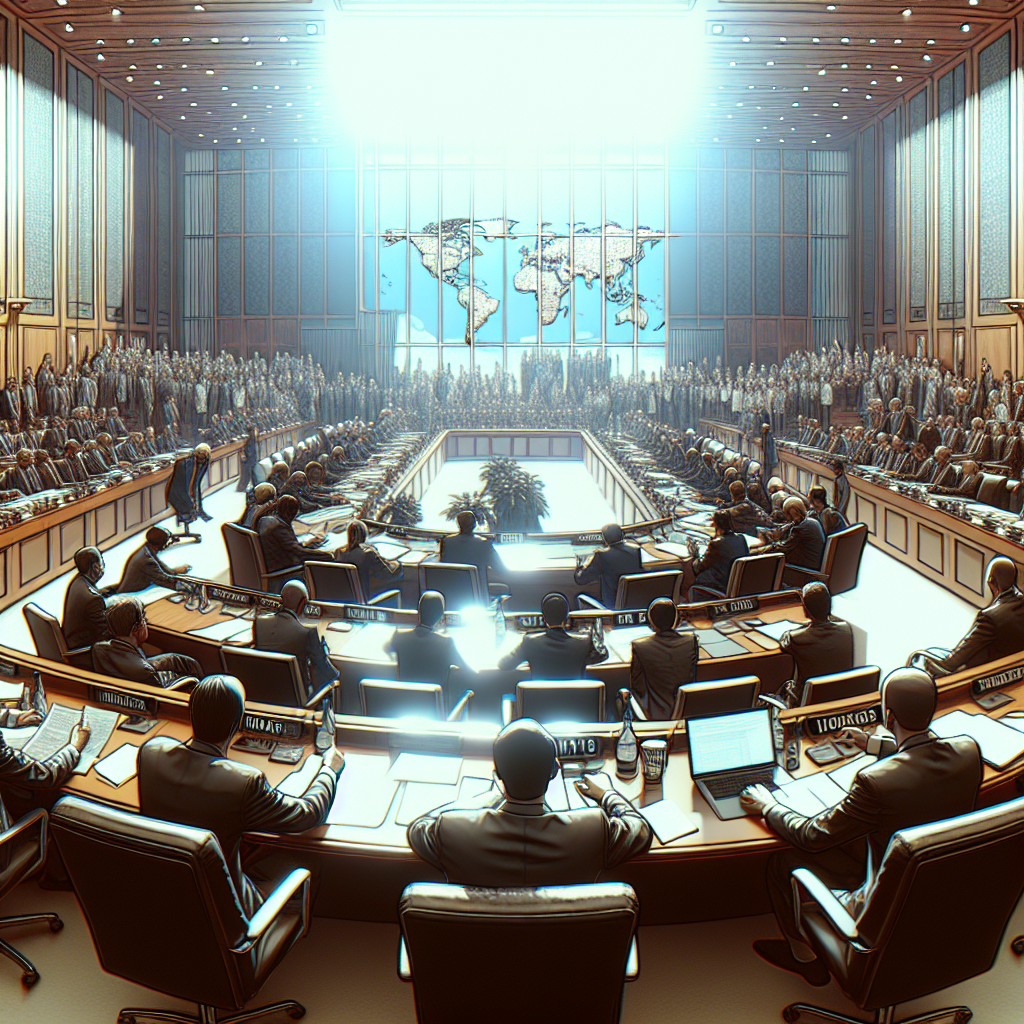
The calendar is swiftly filling up, marking the arrival of a new routine at Christiansborg. In a notable shift, Naaja H. Nathanielsen of the Inuit Ataqatigiit party has transitioned from the title of naalakkersuisoq—responsible for business, raw materials, energy, and justice—to that of a member of parliament.
This change comes at a pivotal moment for Greenland, as the eyes of the world are trained on this Arctic territory. Jens-Frederik Nielsen, chairman of the Naalakkersuisut, has declared that the recent general election in March was perhaps the most significant in Greenland’s history.
Nathanielsen has been vocal about her commitment to reform the existing political structure, which currently allows just two mandates for both Greenland and the Faroe Islands in the Danish Parliament, the Folketing. Her aim is to amplify Greenland’s independent voice, particularly in foreign affairs.
Achieving this, she argues, necessitates amendments to both the Constitution and the Self-Government Act, as it is presently the Danish government that speaks for the Commonwealth in matters of foreign policy.
“Almost all political parties envision independence down the line, yet there is a consensus that we are not quite ready. If we wish to remain within the Kingdom, we must exert the utmost influence possible—something we’re sorely lacking at the moment,” Nathanielsen points out.
Last Call for Change
Nathanielsen believes that a constitutional commission, featuring representatives from both Greenland and the Faroe Islands, is crucial for creating genuine equality among the three regions of the Kingdom.
The last constitutional amendment took place in 1953, a time when Greenlanders were excluded from the voting process, even as the territory transitioned from a colony to a Danish county. “What was presented as equality feels more like a façade,” she argues. “The Constitution is antiquated and fails to capture the democratic ideals we now aspire to.”
In the wake of escalating geopolitical tensions—exacerbated by former U.S. President Donald Trump’s controversial remarks suggesting Greenland should be part of the U.S.—the relationship between Greenland and Denmark appears tighter than ever. This sentiment was echoed by Nielsen during a January press conference, where he stated, “If we must choose between the U.S. and Denmark right now, we choose Denmark. We choose NATO and the Kingdom of Denmark, along with the EU.”
Yet, Nathanielsen insists that a renewed partnership is essential if both Greenland and Denmark are to thrive together.
“Some may argue that reform efforts could detract from our unity, but I contend the opposite. Now is the critical time for change. If we delay, frustrations will inevitably escalate. For those wishing to preserve the Kingdom, it’s imperative to act quickly—it’s nearly a last call,” she asserts.
“If this remains unaddressed, I have genuine concerns about the next four years. Again and again, we find ourselves sidelined, watching as our reality unfolds without the opportunity to influence it meaningfully.”
A Call for Greater Representation
Criticism directed at the Danish Parliament has been growing louder, particularly from Pipaluk Lynge, chairman of the Foreign Affairs and Security Policy Committee in Inatsisartut. Lynge condemned the exclusion of Inatsisartut members from a key Foreign Policy Council meeting in January, especially during a time of heightened geopolitical concern focused solely on the Kingdom’s relationship with the United States.
Nathanielsen supported Lynge’s criticism, observing, “There’s an imbalance when Folketing members receive more information about matters affecting Greenland than their counterparts in Inatsisartut. The framework is clearly flawed. When I converse with my political colleagues in Denmark, Greenland, and the Faroe Islands, the desire for collaboration is evident. So, why does the system say otherwise? We must change that.”
Even decisions unrelated to Greenland can have significant ramifications for the territory. “We might not always be in the engine room, but we’re still impacted when Denmark makes choices, such as joining military campaigns. It’s vital that we are taken seriously and not relegated to the role of a mere satellite or subdivision of the Danish government,” she states.
A Journey Toward Reconciliation
While reform is essential, Nathanielsen emphasizes that reconciliation between Greenland and Denmark is equally important. One of her demands for Acting Prime Minister Mette Frederiksen, who is weighing the formation of a new government, is compensation for women affected by the spiral scandal, those identified as legally fatherless, and those adopted under questionable circumstances.
“There’s a pressing need for reconciliation if we aim to move forward together. If we were to choose separate paths, we should acknowledge that our history has been intertwined—filled with both uplifting moments and dark chapters,” she reflects.
Back in 2014, the Naalakkersuisut initiated a reconciliation commission, underscoring a commitment to moving away from colonial legacies. Despite this, then-Prime Minister Helle Thorning-Schmidt did not recognize the need for Danish involvement, claiming that Denmark had no obligations for reconciliation.
Nathanielsen argues that the impetus for a new reconciliation commission must come from Denmark. “It requires a willingness on their part to reflect on their past behaviors instead of dismissing them as historical footnotes. Recent studies show that discrimination against Greenlanders is still prevalent,” she concludes.